 Anahita Attarian
Istanbul vs Antalya property is mainly a choice between a large urban market and a lifestyle-driven coastal market. Istanbul is usually better for buyers who want liquidity, long-term local demand, business access, universities, hospitals, and a deeper resale market. Antalya is usually better for buyers who want coastal living, tourism-linked rental demand, foreign-resident communities, and personal use as part of the investment logic. Neither city is automatically better. The right choice depends on whether the buyer wants rental income, Turkish citizenship planning, long-term residence, lifestyle value, resale depth, or lower operational complexity.
Is Istanbul or Antalya Better for Property Investment?
Istanbul is better for property investment if the priority is market depth, year-round tenant demand, resale liquidity, and access to Turkey’s largest economic center. Antalya is better if the buyer wants coastal lifestyle, tourism demand, lower daily intensity, and a property that can combine personal use with rental income.
For a purely investment-led buyer, Istanbul usually gives a stronger resale and tenant-demand base. For a lifestyle buyer who also wants rental potential, Antalya can be more suitable. The weaker choice in both cities is the same: an overpriced project sold mainly to foreigners without clear local demand.
Istanbul vs Antalya Property: Quick Comparison
Factor | Istanbul | Antalya |
|---|---|---|
Best for | Liquidity, local demand, long-term rental, citizenship buyers | Lifestyle, tourism, foreign residents, holiday homes |
Main buyer base | Local residents, investors, foreign buyers, professionals | Foreign residents, tourists, retirees, local families, investors |
Rental profile | More year-round urban demand | Mix of year-round and seasonal demand |
Resale liquidity | Generally stronger | Good in popular areas, weaker in oversupplied projects |
Market complexity | Higher | Moderate, but district and seasonality matter |
Earthquake due diligence | Very important | Important, but usually discussed less than Istanbul |
Lifestyle appeal | Urban, business, cultural, dense | Coastal, slower, tourism-driven |
Best property types | Apartments near transport, urban family homes, central units | Coastal apartments, family homes, serviced-style units, villas |
Main risk | Earthquake safety, overpricing, district-level variation | Seasonality, oversupply, foreign-buyer dependency |
Better for citizenship | Often stronger because of inventory depth | Possible, but project and valuation quality matter |
Istanbul is the stronger “market” choice. Antalya is the stronger “use and enjoy” choice. The best investment depends on which of those matters more.
Market Size and Liquidity
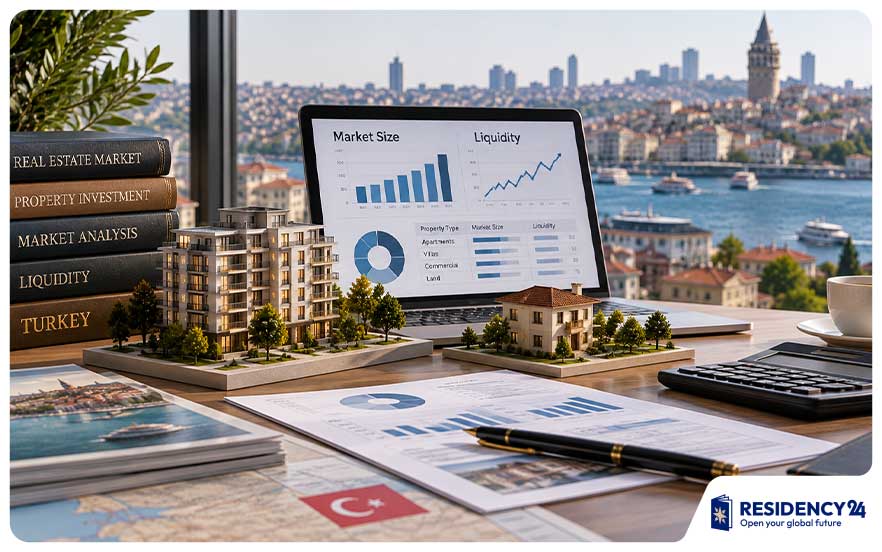
Both markets carry the same structural cautions - see Risks of Buying Property in Turkey before comparing cities. Istanbul is Turkey’s largest property market and usually offers deeper liquidity than Antalya. It has more districts, more transaction volume, more property types, and a larger local buyer base. That matters when the buyer wants to sell later, refinance, change strategy, or rent to local tenants.
Antalya is smaller but still one of the most important cities for foreign buyers. In 2025, TURKSTAT reported that the highest number of house sales to foreigners took place in Istanbul with 7,989 sales, followed by Antalya with 7,118 and Mersin with 1,800. This shows that both Istanbul and Antalya are core foreign-buyer markets, but Istanbul also has much larger domestic depth beyond foreign demand.
In the first half of 2026, foreign-buyer demand across Turkey weakened: house sales to foreigners fell by 9.2% year on year to 9,083 units, while June 2026 foreign sales reached 2,015 units and represented 1.6% of total house sales. This matters more for Antalya projects that depend heavily on foreign buyers than for Istanbul properties with broader local demand.
Price Growth and Rent Context
Turkey’s property market should be read through inflation-adjusted numbers, not only nominal price growth. In July 2026, Turkey’s Residential Property Price Index increased 25.0% year on year in nominal terms but decreased 5.1% in real terms. Istanbul recorded a 27.7% annual nominal increase, while the Antalya-Burdur-Isparta region recorded 24.7%.
New-tenant rents also increased nominally but declined in real terms. In July 2026, the New Tenant Rent Index rose 28.4% year on year in nominal terms and fell 2.6% in real terms. Istanbul’s new-tenant rent index increased 32.4% annually, while the Antalya-Burdur-Isparta region increased 23.6%.
For investors, the point is clear: Istanbul currently looks stronger on nominal rent growth, but both markets must be tested in real terms and in the buyer’s base currency. A property can rise in Turkish lira and still underperform in USD, EUR, GBP, or AED.
Istanbul Property: Main Advantages
Istanbul’s main advantage is demand diversity. A good apartment in Istanbul can appeal to local tenants, families, students, professionals, investors, foreign buyers, and citizenship applicants. This creates more exit options than a property that depends only on tourists or seasonal demand.
Istanbul is especially suitable for buyers who want:
Long-term rental demand
Resale liquidity
Access to Turkey’s largest business market
Universities, hospitals, offices, and transport corridors
Citizenship investment options with larger inventory
Urban lifestyle and cultural access
A property that can appeal to both local and foreign buyers
The best Istanbul properties are usually not the most aggressively marketed units. They are practical homes in districts with transport, daily services, building safety, and proven tenant demand.
Istanbul Property: Main Risks
Istanbul is more complex than Antalya. Two properties in the same district can have very different investment quality because of building age, earthquake safety, transport access, title deed status, neighborhood profile, and local pricing.
The main Istanbul property risks include:
Earthquake and building safety risk
Older housing stock in some districts
Overpriced projects sold to citizenship buyers
Heavy district-level variation
Traffic and commute problems
Large supply in some new-development zones
High competition for rentals in certain areas
Higher due diligence burden
Earthquake due diligence is especially important. AFAD advises people buying or renting a home to investigate building safety, not only size, view, or location, and separately states that buildings should be designed and constructed according to earthquake-resistant techniques and regulations.
Antalya Property: Main Advantages
Antalya’s main advantage is lifestyle demand. It is a coastal city with tourism, international residents, retirees, long-stay visitors, and buyers who want a property they can personally use. This makes Antalya attractive for people who do not want a purely financial asset.
Antalya is especially suitable for buyers who want:
Coastal living
Holiday-home use
Long-stay rental potential
Tourism-linked demand
Foreign-resident communities
A slower pace than Istanbul
Easier lifestyle appeal for families or retirees
Lower urban intensity
Antalya’s tourism profile supports rental demand in the right areas. The Antalya Provincial Directorate of Culture and Tourism publishes dedicated foreign-visitor statistics for Antalya, and the Ministry of Culture and Tourism also publishes regular tourism statistics, which is useful for buyers analyzing tourism-linked rental demand.
Antalya Property: Main Risks

Antalya’s main risk is dependence on the exact buyer strategy. A property that works well as a personal-use coastal home may not work as a high-yield rental. A property that performs in summer may not perform equally in winter. A project that attracts foreign buyers may not have the same resale depth among local buyers.
The main Antalya property risks include:
Seasonal rental demand in some areas
Oversupply in foreign-buyer-focused projects
Weak winter occupancy for holiday units
Resale dependence on foreign demand
Building management and site-fee issues
Overpricing in coastal or expat-heavy districts
Short-term rental regulation and permit risk
Distance from the airport, beaches, hospitals, and daily services
Antalya can be a strong choice, but buyers should avoid treating every coastal apartment as a rental investment. Year-round demand matters more than brochure photos.
Best for Rental Income
Istanbul is usually better for stable long-term rental income because the tenant base is broader. Antalya can be good for rental income when the property is in a year-round area or when the short-term rental model is legal, well managed, and realistic.
Rental Goal | Better City | Reason |
|---|---|---|
Stable long-term rent | Istanbul | Larger local tenant base and more employment-linked demand |
Student or professional tenants | Istanbul | More universities, offices, hospitals, and transport corridors |
Holiday rental | Antalya | Stronger coastal and tourism appeal |
Mixed personal use and rental | Antalya | Easier to combine owner stays with seasonal rental |
Year-round furnished rental | Depends on district | Istanbul has urban depth; Antalya has long-stay foreign demand in selected areas |
Lower management complexity | Istanbul for long-term rent | Short-term tourism rental needs more active management |
For most passive investors, long-term rental in Istanbul is simpler. For active investors who understand tourism operations, selected Antalya properties can work well.
Best for Resale
Istanbul generally has better resale liquidity because it has a larger local market. A well-located Istanbul property can attract end-users, investors, families, and foreign buyers. Antalya resale can also be strong, but it is more sensitive to foreign-buyer demand, tourism sentiment, and project-level supply.
A property with good resale potential usually has:
Clean Tapu
Proper habitation certificate
Safe construction
Local buyer appeal
Reasonable price per square meter
Strong transport or lifestyle access
Manageable site fees
Practical layout
Clear rental demand
Limited oversupply in the immediate area
If the future buyer is likely to be only another foreign investor, the resale risk is higher. This applies more often to certain Antalya and Alanya projects than to well-located Istanbul homes.
Best for Turkish Citizenship by Investment
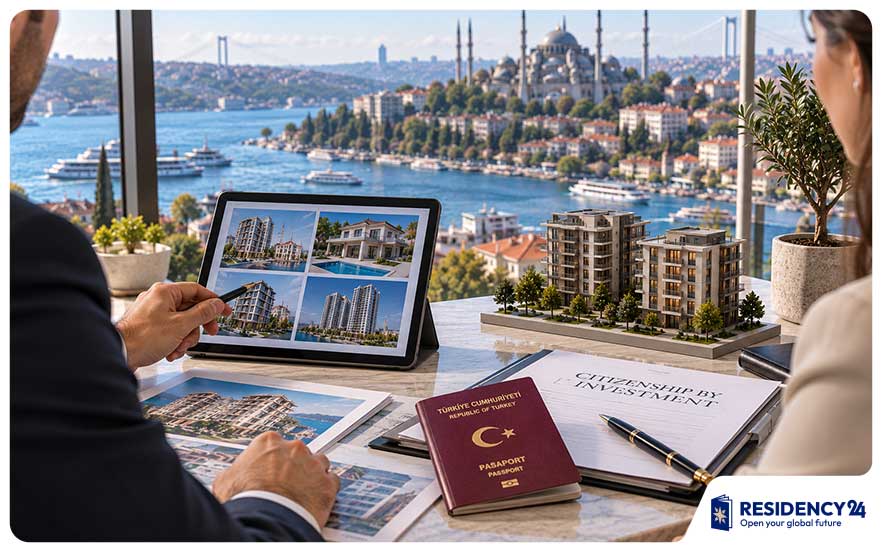
The qualifying amount and process are on the Turkish citizenship by investment page. Both Istanbul and Antalya can work for Turkish citizenship by investment, but Istanbul often gives more inventory and more resale depth. Antalya can be suitable if the buyer also wants lifestyle use, but citizenship buyers must be careful not to overpay for properties packaged mainly around the passport benefit.
Official Invest in Türkiye guidance states that foreigners may qualify for Turkish citizenship through property worth at least USD 400,000, with a title deed restriction preventing resale for at least three years.
For citizenship buyers, the better city is the one where the property still makes sense after the three-year restriction. Check:
Official valuation
Real local-market price
Resale demand after three years
Title deed status
Payment documentation
Building quality
District demand
Whether the property appeals beyond citizenship buyers
Istanbul is often stronger for liquidity. Antalya is stronger when personal use is part of the plan.
Best for Residence and Lifestyle
Buying and residing are separate questions: Does Buying Property in Turkey Give You Residency? covers where they diverge, and moving to Turkey sets out the residence permit routes. Antalya is usually better for lifestyle buyers who want a calmer coastal base. It can suit retirees, families, remote workers, and buyers who value weather, beaches, sea access, and a more relaxed pace.
Istanbul is better for buyers who need business access, urban culture, education, healthcare, and professional networks. It suits people who want to live in Turkey’s largest city rather than in a resort-oriented environment.
Lifestyle Priority | Better City |
|---|---|
Business and networking | Istanbul |
Coastal living | Antalya |
International schools and universities | Istanbul |
Retirement lifestyle | Antalya |
Cultural density | Istanbul |
Beach and outdoor lifestyle | Antalya |
Healthcare depth | Istanbul |
Slower family routine | Antalya |
Airport connectivity | Both, depending on route |
Year-round urban services | Istanbul |
Antalya feels easier for daily lifestyle. Istanbul gives more professional and institutional depth.
District-Level Differences in Istanbul
Istanbul property investment should never be judged at city level only. District choice determines most of the result.
Common Istanbul buyer profiles include:
Central lifestyle buyers often compare Beşiktaş, Şişli, Kadıköy, Üsküdar, and parts of Beyoğlu.
Family buyers may look at Sarıyer, Ataşehir, Bahçeşehir, Başakşehir, Beylikdüzü, and selected gated communities.
Rental investors often review transport-linked districts near metro, universities, offices, and hospitals.
Citizenship buyers may compare ready apartments in liquid districts rather than off-plan projects in remote areas.
The main mistake is buying only because a district name is known. In Istanbul, street, building age, earthquake safety, commute, and actual local rent matter more than the district label.
District-Level Differences in Antalya
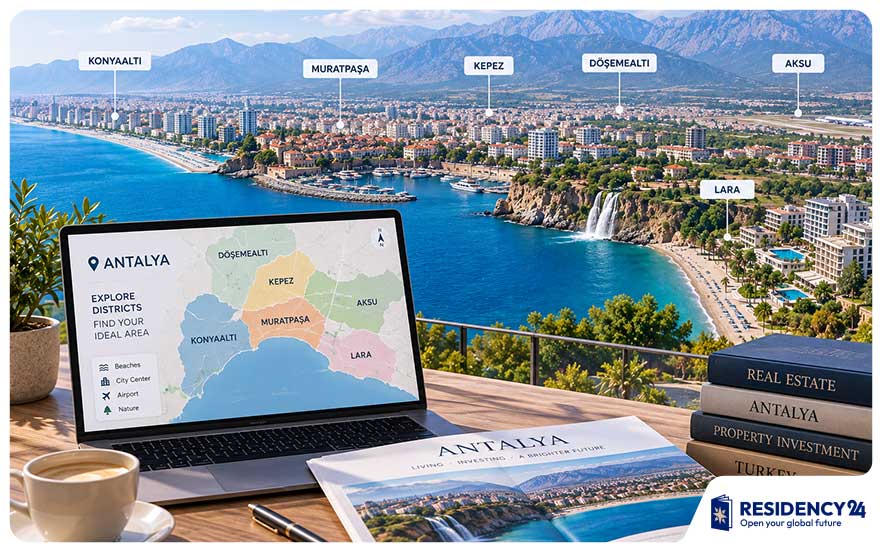
Antalya also needs district-level analysis. The city center, beach areas, foreign-resident zones, and outer developments can perform very differently.
Common Antalya buyer profiles include:
Lifestyle buyers often compare Konyaaltı, Lara, and central residential districts.
Foreign-resident buyers may look at areas with established international communities and daily services.
Holiday-rental investors usually focus on beach access, airport access, and tourist demand.
Lower-budget buyers may compare outer districts, but resale and rental depth should be checked carefully.
Villa buyers may look beyond the city center, but maintenance, transport, and year-round demand become more important.
The main mistake in Antalya is assuming that “near the coast” is enough. A good property still needs legal clarity, realistic pricing, building quality, and rental demand outside the peak season.
Ready Property vs Off-Plan in Istanbul and Antalya
Ready property is usually safer in both Istanbul and Antalya because the buyer can inspect the unit, check the title, compare real rents, review the building, and understand the neighborhood before paying. Off-plan property can work, but it requires stronger legal and developer due diligence.
Factor | Istanbul | Antalya |
|---|---|---|
Ready property | Better for legal clarity and rental history | Better for lifestyle buyers and immediate use |
Off-plan property | Can work in strong growth corridors, but supply risk matters | Can be risky if sold mainly to foreign buyers |
Main due diligence | Earthquake safety, title, transport, local demand | Seasonality, management fees, title, project supply |
Safer buyer profile | Long-term investor | Lifestyle buyer with realistic rental expectations |
In Istanbul, off-plan risk often comes from location and market-cycle assumptions. In Antalya, off-plan risk often comes from foreign-buyer pricing, oversupply, and future resale depth.
Cost and Holding Expenses
Buying costs in Istanbul and Antalya are broadly shaped by the same Turkish transaction system, but actual holding costs differ by property type. A central Istanbul apartment may have higher purchase price and urban maintenance costs. An Antalya resort-style apartment or villa may have higher site fees, pool costs, garden maintenance, furniture replacement, and rental-management expenses.
Key costs to compare:
Title deed transfer tax
Agency commission
Valuation
Legal review
DASK earthquake insurance
Annual property tax
Site maintenance fee
Furniture and appliances
Utility transfer
Rental income tax
Property management
Repairs
Selling costs later
A cheaper Antalya unit may not be cheaper to hold if it sits in a project with high monthly fees. A more expensive Istanbul unit may produce better net performance if it rents steadily and resells easily.
Earthquake and Building Safety
Earthquake safety matters in both cities, but it is a central issue in Istanbul due to the city’s seismic exposure and older housing stock in many districts. Antalya buyers should still check building quality, permits, and structural condition, but Istanbul requires more disciplined technical due diligence.
Before buying in either city, check:
Construction year
Building permit
Habitation certificate
Earthquake regulation compliance
Structural condition
Soil and location risk
Damage history
Retrofitting history
DASK insurance
Independent engineering review for older buildings
AFAD’s earthquake guidance stresses that homes should not be assessed only by visible features and that structural safety should be investigated before buying or renting.
Which City Is Better for Foreign Buyers?
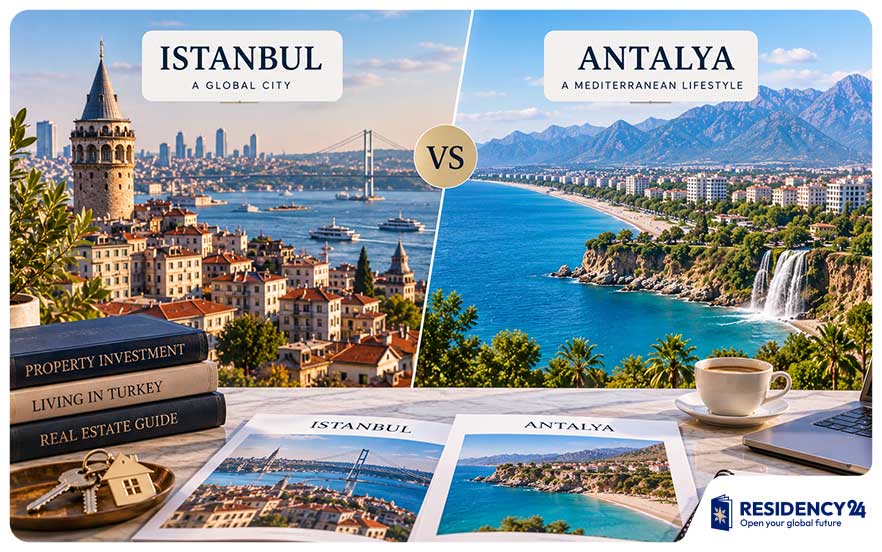
Antalya is often easier for foreign buyers from a lifestyle perspective because it has many foreign residents, coastal neighborhoods, and a market used to international buyers. Istanbul is better for foreign buyers who want a stronger investment base, broader resale demand, and urban flexibility.
Foreign buyers should choose Istanbul if they want:
Larger resale market
More local buyer demand
Better year-round rental depth
Business and education access
More citizenship-eligible inventory
Stronger urban fundamentals
Foreign buyers should choose Antalya if they want:
Coastal living
Personal use
Tourism-linked rental potential
Lower daily intensity
Foreign-resident communities
A property that works as a second home
The safest foreign-buyer strategy is to avoid properties that only foreigners want.
Which City Is Better for Families?
Antalya is often better for families seeking a quieter lifestyle, coastal access, and less urban pressure. Istanbul is better for families who need broader school choices, universities, specialist healthcare, professional access, and more cultural infrastructure.
Family Need | Better City |
|---|---|
International-city education depth | Istanbul |
Calmer lifestyle | Antalya |
Beach access | Antalya |
Specialist healthcare | Istanbul |
Less traffic pressure | Antalya |
More professional opportunities | Istanbul |
Retirement with family visits | Antalya |
Long-term local career base | Istanbul |
For families buying to live, the best decision may not be the best investment decision. A home that improves daily life can be valid even if rental yield is not the highest.
Which City Is Better for Remote Workers and Retirees?
Antalya is usually more suitable for remote workers and retirees who want climate, sea access, lower pressure, and a simpler lifestyle. Istanbul is better for remote workers who still need networking, clients, events, flights, and cultural density.
Remote workers should compare:
Internet quality in the exact building
Airport access
Coworking availability
Healthcare
Noise
Winter activity
Long-stay rental demand
Foreign community
Residence-permit suitability
Retirees should compare healthcare access, walkability, building elevators, heating and cooling, language support, and year-round services. Antalya often scores better for lifestyle, but Istanbul is stronger for specialist services.
When Istanbul Is the Better Choice
Choose Istanbul property if the priority is investment fundamentals over lifestyle simplicity.
Istanbul is better if:
You want a larger local buyer base.
You need stronger resale liquidity.
You prefer long-term rental demand.
You want access to universities, offices, and hospitals.
You are buying for citizenship and want more inventory.
You can handle district-level complexity.
You are willing to pay for proper earthquake and title due diligence.
You want a property that local residents would also buy or rent.
Istanbul is not better if the buyer wants a quiet coastal lifestyle or easy personal use without urban pressure.
When Antalya Is the Better Choice
Choose Antalya property if the priority is lifestyle value with investment potential.
Antalya is better if:
You want a coastal home.
You plan to use the property yourself.
You want tourism-linked rental demand.
You prefer a slower daily routine.
You are buying for retirement or seasonal living.
You understand seasonality.
You can choose a year-round area, not only a summer market.
You avoid projects priced only for foreigners.
Antalya is not better if the buyer needs maximum resale liquidity or a deep local employment-linked rental market.
Practical Buyer Checklist
Title checks and the deed transfer are handled on the buy property in Turkey page, and Residency24 works across residency, property purchase, company formation and investment planning. Before choosing between Istanbul and Antalya, run the same checklist for both cities.
Is the Tapu clean?
Is the seller the registered owner?
Is there any mortgage, lien, or restriction?
Does the building have a habitation certificate?
Is the property earthquake-safe?
Is the price supported by local comparables?
Does the property appeal to local buyers?
Is rental demand year-round or seasonal?
Are site fees reasonable?
Is the property suitable for residence or citizenship goals, if relevant?
Are there many similar resale units?
Is short-term rental legal and practical?
Can you hold the property for at least three to five years?
Does the investment still work in your base currency?
Would you still buy it without an immigration promise?
If the answer is weak in either city, choose another property rather than forcing the location decision.
Conclusion
Istanbul vs Antalya property is not a simple question of which city is better. Istanbul is usually better for investors who want liquidity, year-round rental demand, local buyer depth, business access, and broader resale options. Antalya is usually better for buyers who want coastal lifestyle, personal use, foreign-resident communities, and tourism-linked rental potential. Istanbul carries higher complexity, especially around earthquake safety, district selection, and overpricing in citizenship-focused projects. Antalya carries different risks, especially seasonality, oversupply, short-term rental dependency, and resale reliance on foreign buyers. A strong Istanbul purchase is usually an urban asset with local demand; a strong Antalya purchase is usually a lifestyle asset with realistic rental support. The better investment is the one that passes legal, technical, rental, and resale due diligence at the property level.