 Anahita Attarian
A UAE Tax Residency Certificate, or TRC, is an official certificate issued by the Federal Tax Authority to prove that an individual or company is tax resident in the UAE for a selected tax period or 12-month period. It is mainly used to claim benefits under a Double Taxation Agreement, support bank or investor documentation, prove UAE tax residence to a foreign authority, or confirm domestic UAE tax residency status. A UAE residence visa, Emirates ID, Golden Visa, or trade license can support the application, but none of them automatically guarantees a TRC. The applicant must meet the relevant tax residency rules and provide documents that prove physical presence, residence, income, company registration, effective management, or treaty eligibility.
What Is a UAE Tax Residency Certificate?
A UAE Tax Residency Certificate is a certificate issued by the Federal Tax Authority proving that a person is a tax resident in the UAE. The FTA guide states that a TRC can be obtained for Double Taxation Agreement purposes and for purposes other than the application of a DTA.
The certificate is useful when a foreign tax authority, bank, investment platform, employer, client, or treaty country asks for evidence that the applicant is resident in the UAE for tax purposes. The FTA service page states that the TRC service covers certificates for applicants who want to benefit from UAE Double Taxation Agreements, certificates for non-DTA purposes, and international forms stamped by the FTA to confirm tax residency status.
UAE TRC: Quick Summary
Point | What It Means |
|---|---|
Issuing authority | Federal Tax Authority |
Main use | Proof of UAE tax residency |
Applicant types | Natural persons, juridical persons, and government-related applicants |
Main purposes | DTA benefits or non-DTA tax residency proof |
Application portal | EmaraTax / TRC platform |
Individual 183-day route | Physical presence in the UAE for 183 days or more in a relevant 12-month period |
Individual 90-day route | 90 days or more, plus UAE/GCC nationality or UAE residence permit, plus UAE home, employment, or business |
Company route | UAE-incorporated or UAE-recognised juridical person, or otherwise UAE tax resident under UAE tax law |
Free zone companies | Can apply if incorporated or formed in a UAE free zone and conditions are met |
Newly incorporated companies | Must be established for 12 months before applying |
Certificate period | Current or prior tax period / 12-month period, not longer than 12 months |
Future period | Cannot be issued for a period that has not commenced |
FTA response time | Generally 10 business days for a completed application |
Submission fee | AED 50 |
Electronic TRC fee with Corporate Tax TRN | AED 500 |
Electronic TRC fee for natural person without Corporate Tax TRN | AED 1,000 |
Electronic TRC fee for legal person without Corporate Tax TRN | AED 1,750 |
Hard copy fee | AED 250 per printed certificate |
The important point is that a TRC is not the same as a residence visa. Immigration residence helps, but tax residence has its own rules.
UAE Tax Residency vs UAE Residence Visa
A visa alone does not make you tax resident - the residence routes themselves are on UAE residency. UAE tax residency and UAE immigration residency are different. The FTA guide states clearly that tax residency is different from other types of residency, and that holding a UAE residence permit or right to reside under immigration rules does not automatically make a natural person UAE tax resident.
This distinction matters for expats, investors, Golden Visa holders, freelancers, digital nomads, property owners, and company founders. A person may have a UAE residence visa but spend too little time in the UAE or fail to prove that their home and centre of interests are in the UAE. In that case, the TRC application may be weak.
Status | What It Proves |
|---|---|
UAE residence visa | Immigration permission to live in the UAE |
Emirates ID | UAE identity document for residents and citizens |
UAE Golden Visa | Long-term residence status |
Trade license | Legal business registration |
UAE TRC | Tax residency for a selected period |
Tax Registration Number | Tax registration with the FTA, where applicable |
A UAE Golden Visa can support a stronger tax-residency position, but it does not replace physical presence, residence evidence, income evidence, or treaty requirements.
Who Can Apply for a UAE Tax Residency Certificate?
Natural persons and juridical persons can apply for a UAE Tax Residency Certificate through the FTA’s online EmaraTax portal. The FTA guide states that both juridical persons and natural persons can apply through EmaraTax using their account.
The main applicant categories are:
Individuals
UAE mainland companies
UAE free zone companies
UAE-incorporated entities
Some exempt persons
Government entities and government-controlled entities
Foreign companies effectively managed and controlled in the UAE, where applicable
A foreign company with UAE clients is not automatically UAE tax resident. The FTA guide gives an example of a foreign company with many UAE customers but no UAE presence or dependent agent, and states that this does not make it a UAE tax resident.
Individual UAE Tax Residency Criteria
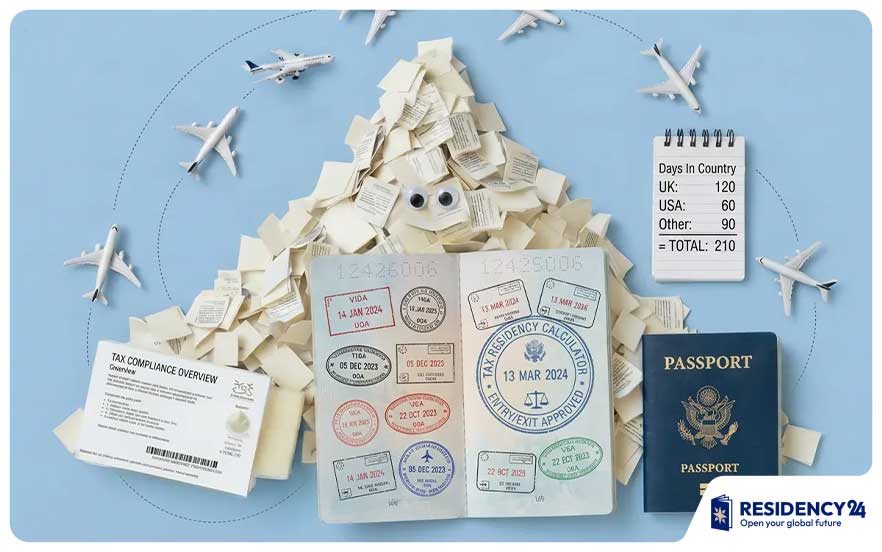
An individual can be considered tax resident in the UAE for domestic tax purposes if at least one of the three main conditions is met. The FTA guide states that a natural person is UAE tax resident if they meet the 183-day test, the 90-day test with additional conditions, or the usual residence and centre-of-interests test.
The three routes are:
Route | Requirement |
|---|---|
183-day test | Physical presence in the UAE for 183 days or more within the relevant 12 consecutive months |
90-day test | Physical presence for 90 days or more, plus UAE/GCC nationality or valid UAE residence permit, plus UAE permanent home, employment, or business |
Primary residence and centre of interests | Usual or primary residence and centre of financial and personal interests are in the UAE |
For most expats, the 183-day route is the cleanest. The 90-day route can work, but it needs more supporting evidence. The centre-of-interests route is more fact-sensitive and depends on personal and financial ties.
The 183-Day Rule
The 183-day rule is the simplest individual TRC route. If a natural person is physically present in the UAE for 183 days or more in the relevant continuous 12-month period, they are considered UAE tax resident for that period. The FTA guide also states that the days do not need to be consecutive.
For day-counting, any part of a day spent in the UAE counts as a full day. The FTA guide states that travel days to and from the UAE are included when calculating physical presence.
Example:
UAE Stay | Days Counted |
|---|---|
January 1 to March 31 | 90 |
June 1 to August 31 | 92 |
Short UAE trip in October | 5 |
Total | 187 |
This person may satisfy the 183-day test if the official entry and exit report supports the count.
The 90-Day Rule
The 90-day rule is useful for individuals who spend significant time in the UAE but do not reach 183 days. Under this test, the person must be physically present in the UAE for at least 90 days in the relevant 12-month period, must be a UAE national, GCC national, or holder of a valid UAE residence permit, and must also have a permanent place of residence in the UAE or carry on employment or business in the UAE.
A permanent place of residence does not need to be owned. The FTA guide states that it can be rented or otherwise occupied, provided it is continuously available to the person as a dwelling with some degree of permanency and stability.
The 90-day route may fit:
UAE Golden Visa holders who spend 90–182 days in the UAE
UAE residence visa holders with a rented home
UAE employees who travel often
UAE business owners with a real place of residence
GCC nationals with UAE residence ties
Investors who maintain a permanent home and business in the UAE
A hotel stay, short business trip, or occasional accommodation will usually be weaker than a proper long-term residence arrangement.
Primary Residence and Centre of Financial and Personal Interests
An individual may also be considered UAE tax resident if both their usual or primary place of residence and centre of financial and personal interests are in the UAE. The FTA guide states that both conditions must be satisfied at the same time.
The usual or primary place of residence means the country where the person normally lives as part of their settled routine and where they spend most of their time compared with other places. The centre of financial and personal interests considers factors such as place of employment, place of business, investments, family ties, social connections, clubs, associations, and cultural activities.
Evidence may include:
UAE tenancy contract
UAE title deed
Utility bills
UAE employment contract
UAE business license
UAE bank statements
Family residence in the UAE
School records for children
UAE investment records
UAE insurance and healthcare documents
Written explanation of personal and financial ties
This route is more judgment-based than the 183-day test. A person with family, job, home, and business mainly outside the UAE may struggle to prove that the UAE is the centre of interests.
UAE TRC for Companies

A juridical person is considered UAE tax resident if it is incorporated, formed, or recognised in the UAE, or if it is otherwise treated as tax resident under UAE tax laws. The FTA guide states that UAE tax residency rules also apply to persons established and operating in free zones, so a juridical person formed in a UAE free zone can be UAE tax resident and apply for a TRC.
Company applicants usually include:
Mainland LLCs
Free zone companies
Private companies
Public and private joint stock companies
Foundations
Certain UAE-recognised legal persons
Foreign companies effectively managed and controlled in the UAE, where applicable
A UAE branch of a foreign company is generally an extension of its parent and not a separate tax-resident juridical person in its own right, unless the foreign company is effectively managed and controlled in the UAE and therefore treated as resident under UAE Corporate Tax rules.
UAE TRC for Free Zone Companies
Zone status and corporate tax position interact - see Free Zone vs. Mainland in Dubai. A UAE free zone company can apply for a TRC if it is a UAE tax resident and satisfies the FTA requirements. The FTA guide states that UAE tax residency rules for juridical persons apply equally to persons established and operating in free zones.
A free zone company should prepare:
Valid free zone license
Lease agreement or office/flexi-desk evidence
Certificate of incorporation
Memorandum of Association
Corporate Tax TRN, if available
Authorized signatory Emirates ID and passport
Proof of authorization
Evidence of effective management and control in the UAE, where applicable
A free zone license alone may not be enough if the application requires proof that real management, control, business activity, or treaty residence is in the UAE.
TRC for DTA Purposes vs Domestic Purposes
A UAE TRC can be issued for Double Taxation Agreement purposes or for purposes other than a DTA. The FTA service page states that a TRC for DTA purposes is used to help applicants take advantage of provisions under Double Taxation Agreements signed by the UAE, while a non-DTA certificate can be issued for other tax-residency purposes.
The distinction affects:
Which country is selected in the application
Which treaty article applies
Whether the foreign country requires an additional form
Which documents the applicant must upload
Whether domestic UAE tax-residency rules also need to be met
Whether a Corporate Tax TRN is required by the other contracting state
For DTA cases, the applicant should check the exact treaty and foreign authority requirement before applying. Some jurisdictions accept the UAE TRC alone, while others require a local form to be stamped by the FTA.
Required Documents for Individuals
For non-DTA purposes, the required documents depend on which individual tax-residency route is used. The FTA service page lists different document sets for the 183-day route, the 90–182-day route, and the primary residence / centre-of-interests route.
For the 183-day route, the individual usually needs:
Emirates ID, or
Passport with an official entry and exit report
For the 90–182-day route, the individual usually needs:
Emirates ID
Passport with official entry and exit report
Proof of UAE employment or business, or
Proof of a permanent place of residence in the UAE
For the centre-of-interests route, the individual usually needs:
Emirates ID
Passport with official entry and exit report
Proof of financial and personal interests in the UAE
Proof of usual or primary residence in the UAE
Proof of source of income, if applicable
For DTA purposes, the FTA service page states that a natural person must submit Emirates ID and/or passport with an official entry and exit report, proof of UAE income or salary if applicable, and any additional evidence required under the relevant DTA.
Required Documents for Companies
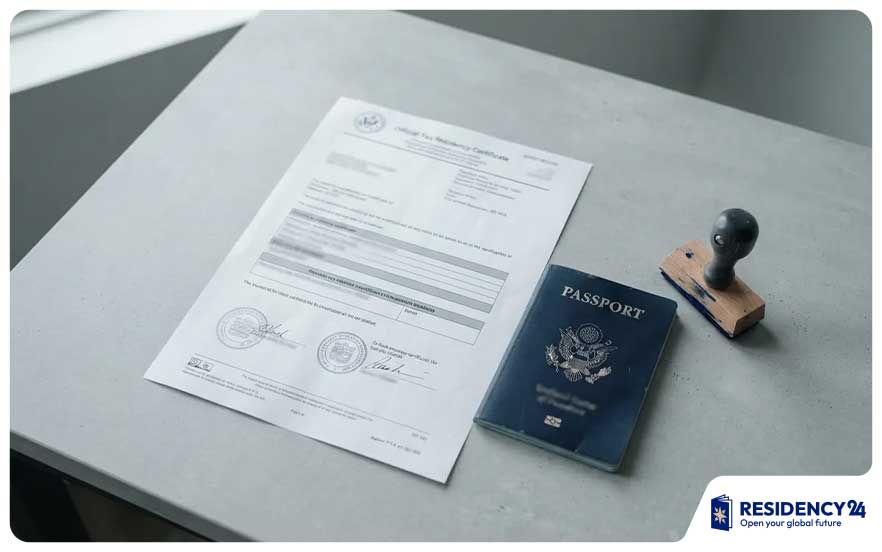
The licence and incorporation documents come from setup - LLC Company Formation in the UAE covers what a UAE entity holds. For juridical persons, the FTA guide lists company documents such as a license, lease agreement, UAE Corporate Tax TRN if applicable, certificate of incorporation, certified Memorandum of Association, authorized signatory identification, proof of authorization, and proof of effective management and control in the UAE where applicable.
A company TRC file usually includes:
Trade license or free zone license
Lease agreement
Certificate of incorporation
Memorandum of Association
Corporate Tax TRN, if available
Authorized signatory Emirates ID
Authorized signatory passport
Power of Attorney or establishment contract
Board resolution, where relevant
Financial statements, where requested
Management and control statement, where applicable
Supporting documents showing UAE-based decision-making
For DTA purposes, the FTA service page lists similar documents and notes that eligibility and additional documentation may vary depending on the residence provisions of the relevant Double Taxation Agreement.
UAE TRC Fees
The FTA service page lists a submission fee of AED 50 for a TRC application. It also lists processing fees of AED 500 for tax registrants with a Corporate Tax TRN, AED 1,000 for natural persons without a Corporate Tax TRN, and AED 1,750 for legal persons without a Corporate Tax TRN. A hard copy certificate costs AED 250 per certificate.
Fee Type | Amount |
|---|---|
Submission fee | AED 50 |
Electronic TRC for FTA registrant with Corporate Tax TRN | AED 500 |
Electronic TRC for natural person without Corporate Tax TRN | AED 1,000 |
Electronic TRC for legal person without Corporate Tax TRN | AED 1,750 |
Hard copy certificate | AED 250 |
The FTA notes that having a Corporate Tax TRN can reduce the application fee and allows auto-population of application details.
How to Apply for a UAE Tax Residency Certificate
A UAE TRC application is submitted through the FTA’s EmaraTax / TRC platform. The FTA guide explains that the applicant should log in to EmaraTax, select “Other Services,” choose “Tax Residency Certificate,” select a Corporate Tax TRN if available, choose the type of certificate, complete the fields, upload supporting documents, pay the submission fee, and submit the application.
A practical process looks like this:
Decide whether the TRC is for DTA or non-DTA purposes.
Choose the relevant 12-month period or tax period.
Confirm that the applicant meets the tax-residency criteria.
Create or access the EmaraTax account.
Select the applicant profile or TRN, if available.
Complete the TRC application form.
Upload supporting documents.
Request international form stamping if required.
Pay the submission fee and review fee.
Submit the application.
Respond to FTA queries if requested.
Download the digital certificate after approval.
The FTA states that after approval and payment, the digital certificate can be downloaded from the TRC platform and is also sent to the registered email address.
Processing Time

The FTA service page states that the estimated time to submit the application is 10 minutes, while the FTA generally completes a TRC application within 10 business days from the date the completed application is received. If a hard copy is requested, the hard copy processing time is five business days from the date the relevant fee payment is completed.
The FTA may approve, reject, or request further information. The FTA guide states that if further information is requested, the applicant has 30 business days to respond, with an option to request an extension through resubmission.
Validity and Period Covered by the TRC
A UAE TRC covers the selected tax period or another 12-month period. The FTA guide states that the certificate cannot be obtained for a period longer than 12 months and cannot be issued for a future period that has not commenced.
For juridical persons, the tax period is usually the financial year. For natural persons, the tax period is the Gregorian calendar year. The FTA guide also states that for a current period, juridical persons can apply after three months into the period, while natural persons can apply as soon as the tax-residency criteria are met.
This means a TRC is not a permanent document. It proves tax residency only for the selected period.
When Can a New UAE Company Apply?
A newly incorporated company cannot apply immediately. The FTA service page states that a juridical person applying for a TRC must already be incorporated or established for at least 12 months. The FTA guide also states that newly incorporated companies that have not yet filed a Corporate Tax return must be established for 12 months before being eligible to apply for a TRC.
This is important for founders who create a UAE company only to request a TRC quickly. A new trade license may support a future TRC, but it does not usually produce immediate company tax-residency certification.
International Form Stamping
Some foreign tax authorities require their own tax residency form to be stamped by the UAE tax authority. The FTA guide states that the FTA can stamp forms provided by other jurisdictions, but the form must be properly completed, signed, and for juridical persons, stamped by the applicant. It must cover the same 12-month period and the same country as the related TRC.
The FTA may reject an international form stamping request if:
The applicant did not request attestation in the application.
The form was incomplete.
The form was not properly signed or stamped.
The form was not received by the FTA.
The period does not match the TRC application.
The country does not match the TRC application.
If a foreign authority requires its own form, prepare it before submitting the TRC application.
Does a UAE TRC Mean No Tax Anywhere?
No. A UAE TRC proves UAE tax residency for a specific period, but it does not automatically eliminate tax in another country. Treaty relief depends on the relevant Double Taxation Agreement, income type, source country, tie-breaker rules, and the foreign country’s interpretation. The FTA guide explains that where a DTA applies, treaty provisions can affect a person’s tax residency status, and tie-breaker tests such as permanent home, centre of vital interests, habitual abode, and nationality may be relevant.
A UAE TRC also does not automatically mean the person is liable to UAE Corporate Tax. The FTA guide states that being tax resident under domestic law does not necessarily mean a person is subject to Corporate Tax; the person must still be a taxable person under the Corporate Tax Law.
This distinction matters for employees, freelancers, consultants, business owners, crypto investors, landlords, and high-net-worth individuals.
UAE TRC for Golden Visa Holders
Long-term residence makes the day-count test easier to satisfy - see UAE Golden Visa 2026. A UAE Golden Visa can support a TRC application because it proves a long-term immigration right to reside in the UAE, but it does not automatically make the holder a UAE tax resident. The applicant still needs to meet the 183-day rule, the 90-day rule with additional conditions, or the centre-of-interests test.
A Golden Visa holder applying for a TRC should prepare:
Emirates ID
Passport
Official entry and exit report
UAE tenancy contract or title deed
UAE utility bill, where available
Salary certificate or business income proof
UAE bank statements
Family residence documents, where relevant
Evidence of UAE-based personal and financial interests
Residency24 can help UAE investors align residence status, property ownership, company setup, and TRC documentation before submitting a tax-residency file.
UAE TRC for Employees
Employees can apply for a TRC if they meet the tax-residency criteria and can prove their UAE presence and employment status. The 183-day test is the most straightforward route. The 90-day test can work if the employee holds a valid UAE residence permit and either has a permanent UAE home or employment in the UAE.
Employee documents may include:
Emirates ID
Passport
Entry and exit report
UAE residence visa
Employment contract
Salary certificate
Payslips
UAE bank salary statements
Tenancy contract
Utility bill
If the employee has a foreign employer but lives in the UAE, the file should clearly explain where the employment is performed and why the UAE is the applicant’s tax residence.
UAE TRC for Freelancers and Consultants

Freelancers and consultants may apply if they satisfy the individual tax-residency criteria. If they run a business or business activity in the UAE, they should also check whether Corporate Tax registration is relevant. The FTA guide notes that for natural persons, Corporate Tax relevance can arise where the person conducts business or business activity in the UAE and turnover from that activity exceeds AED 1 million in a Gregorian calendar year.
A freelancer TRC file may include:
Emirates ID
Residence visa
Entry and exit report
Freelance permit or trade license
Client invoices
UAE bank statements
Tenancy contract
Proof of UAE work activity
Corporate Tax TRN, if applicable
Freelancers should not assume that a freelance permit alone is enough. The TRC still depends on tax-residency evidence.
UAE TRC for Companies and Corporate Tax
A UAE company may need a TRC to claim treaty benefits, prove UAE tax residency to foreign clients, reduce withholding tax abroad, support banking documentation, or satisfy group tax documentation. A UAE-incorporated juridical person is generally tax resident in the UAE, including persons formed in free zones, but the applicant must still submit the required documents and meet the FTA service conditions.
A company should prepare:
Corporate Tax TRN if available
License
Lease agreement
Certificate of incorporation
MOA or constitutional documents
Authorized signatory documents
Power of Attorney or proof of authorization
Financial statements, if requested
Board minutes or management evidence
Substance evidence in the UAE
The TRC supports foreign tax documentation, but it does not replace Corporate Tax registration, return filing, VAT compliance, accounting, or transfer pricing documentation.
Why a UAE TRC Application May Be Rejected
A TRC application may be rejected when the applicant does not meet the relevant tax-residency criteria or does not provide enough evidence. The FTA can also withdraw a TRC if it becomes aware of incorrect information or changes in facts that prevent the applicant from being a UAE tax resident.
Common rejection reasons include:
Days in the UAE are below the required threshold.
Entry and exit report does not support the application period.
UAE residence visa exists, but physical presence is weak.
Tenancy contract is short-term or not continuously available.
No proof of UAE employment or business.
Centre-of-interests explanation is weak.
Company is less than 12 months old.
Company license is expired.
Lease agreement is missing.
Authorized signatory proof is missing.
DTA country or period is selected incorrectly.
International form does not match the TRC period.
Corporate Tax TRN or company profile is inconsistent.
Documents have different names, dates, or legal details.
A weak application often fails because it treats TRC as an immigration certificate rather than a tax-residency file.
UAE TRC Checklist for Individuals
A bank account and a documented address are usually the two hardest items - Bank Account for Non-Residents in the UAE covers the first. Before applying as an individual, check:
The selected 12-month period is correct.
The period is not longer than 12 months.
The period has already started.
Days in the UAE are calculated using official entry and exit records.
Travel days are included correctly.
Emirates ID and passport details match.
Residence visa is valid where relevant.
Tenancy contract, title deed, or residence proof is available.
Salary certificate or income proof is available.
UAE employment or business evidence is available.
Centre-of-interests evidence is prepared if using that route.
Foreign country DTA requirements are checked.
International form is ready if needed.
For a straightforward file, the 183-day route is usually the easiest to prove.
UAE TRC Checklist for Companies

Before applying as a company, check:
Company is established for at least 12 months.
License is valid.
Lease agreement is valid.
Certificate of incorporation is available.
MOA or constitutional document is available.
Corporate Tax TRN is available, if applicable.
Authorized signatory documents are correct.
Power of Attorney or authorization proof is available.
Effective management and control evidence is prepared where relevant.
DTA country and period are selected correctly.
Foreign international form is complete if required.
Company stamp and signature are ready where needed.
A company should also check whether the foreign jurisdiction requires the UAE company to have a Corporate Tax TRN before accepting the certificate for treaty purposes.
Common Mistakes
Residency, licence and tax position are best planned as one file: Residency24 works across residency, company formation, property purchase and investment planning. The most common mistake is assuming that a UAE visa automatically equals UAE tax residency. The FTA guide specifically warns that immigration residence and tax residency are different.
Other common mistakes include:
Applying before reaching the day-count threshold
Applying for a future period
Selecting the wrong 12-month period
Applying with a new company less than 12 months old
Using a hotel stay as residence proof
Not obtaining an official entry and exit report
Not checking the relevant DTA
Uploading incomplete international forms
Using expired trade license or lease documents
Assuming a free zone company is automatically enough
Ignoring effective management and control evidence
Not responding to FTA information requests within the required period
Confusing a TRC with Corporate Tax registration
The safest approach is to build the file around the exact test being used.
Conclusion
A UAE Tax Residency Certificate is an official FTA certificate proving that an individual or company is tax resident in the UAE for a selected period. Individuals can qualify through the 183-day test, the 90-day test with additional conditions, or the usual residence and centre-of-interests test. Companies can apply if they are incorporated, formed, or recognised in the UAE, including free zone companies, or otherwise treated as UAE tax resident under UAE tax law. The certificate can be issued for Double Taxation Agreement purposes or for non-DTA tax residency proof, but it cannot cover a future period or a period longer than 12 months. A company must generally be established for at least 12 months before applying. The application is submitted through EmaraTax, with a AED 50 submission fee and processing fees depending on whether the applicant has a Corporate Tax TRN. A strong TRC application should prove the exact tax-residency route with official entry and exit records, residence evidence, income proof, company documents, and treaty-specific documents where required.