 Anahita Attarian
Oman free zones are special investment areas designed for foreign investors, exporters, logistics companies, manufacturers, industrial operators, and businesses that need access to ports, airports, customs facilities, and regional trade routes. The main free-zone and special-zone system is overseen by the Public Authority for Special Economic Zones and Free Zones, known as OPAZ. The best-known options are Sohar Free Zone, Salalah Free Zone, Al Mazunah Free Zone, Muscat Airport Free Zone, and the Special Economic Zone at Duqm. These zones can offer 100% foreign ownership, customs advantages, profit repatriation, tax incentives, one-stop-shop services, and long-term land or facility arrangements, but the right zone depends on the business activity, market, logistics route, and whether the company will sell inside Oman or mainly export.
What Are Oman Free Zones?
Oman free zones are designated business areas where investors can set up companies under special rules and incentives, usually for export, logistics, manufacturing, warehousing, industrial activity, regional distribution, or airport- and port-linked operations. They are different from ordinary mainland company registration because the investor operates inside a regulated zone with its own licensing process, land or facility allocation, customs treatment, and incentive framework.
OPAZ was established in August 2020 by Royal Decree No. 105/2020 to oversee the Special Economic Zone at Duqm, Al Mazunah Free Zone, Salalah Free Zone, Sohar Free Zone, and any other special economic zone or free zone. The OPAZ website also lists Muscat Airport Free Zone among its zones.
Oman Free Zones: Quick Comparison
Zone | Best For | Main Advantage | Main Limitation |
|---|---|---|---|
Sohar Free Zone | Port logistics, manufacturing, petrochemicals, metals, food, regional trade | Access to Sohar Port and regional/global shipping routes | Less suitable for small service firms targeting only Muscat clients |
Salalah Free Zone | Logistics, export industries, processing, Arabian Sea trade, Indian Ocean routes | Port-linked access and 30-year profit/dividend tax incentives | Location is far from Muscat and more export-oriented |
Al Mazunah Free Zone | Yemen-border trade, re-export, warehousing, regional distribution | Border-market access and incentives tailored to Yemen-linked trade | Market is niche and location-specific |
Muscat Airport Free Zone | Air cargo, light industry, ecommerce logistics, high-value goods, fast-moving distribution | Direct access to Muscat International Airport and Asyad logistics ecosystem | Newer zone; best for air-linked models, not every business |
Special Economic Zone at Duqm | Heavy industry, logistics, energy, tourism, real estate, large-scale projects | Large land area, Arabian Sea access, long usufruct options | More suitable for larger or strategic projects than small businesses |
Duqm is technically a special economic zone, not a normal free zone, but investors often compare it with Oman’s free zones because it offers similar investment incentives and a zone-based setup model.
Main Benefits of Oman Free Zones
The zone-versus-mainland decision follows the same logic as in the UAE - Free Zone vs. Mainland in Dubai lays out the trade-off. The main benefits of Oman free zones are foreign ownership, tax incentives, customs treatment, logistics access, repatriation of capital and profit, and a dedicated regulatory structure. OPAZ describes its zones as offering tax exemptions for up to 30 years, 100% foreign ownership, full repatriation of capital and profits, a transparent legal system, and zero import or re-export duties.
Key benefits include:
100% foreign ownership in many zone structures
Customs exemption or zero import/re-export duties for qualifying zone activity
Corporate tax incentives, subject to zone and activity conditions
Repatriation of capital and profits
One-stop-shop licensing support
Long-term lease or usufruct arrangements
Port, airport, road, and logistics access
Lower barriers for export-focused businesses
Flexible foreign-currency and capital arrangements in some zones
Sector-specific infrastructure for industrial, logistics, and trade operations
These incentives are useful, but they are not automatic in every case. The exact benefit depends on the zone, activity, license, tax-exemption approval, customs treatment, and compliance with OPAZ and tax rules.
100% Foreign Ownership in Oman Free Zones
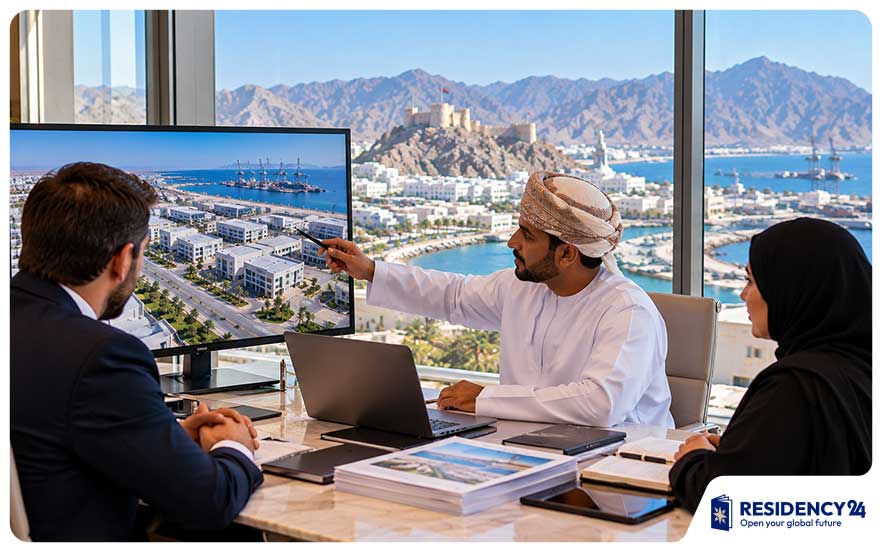
One of the main reasons expats and foreign investors consider Oman free zones is the ability to own the company fully. OPAZ lists 100% foreign ownership as a headline incentive, and the 2025 Law of Special Economic Zones and Free Zones allows the capital of the operator, enterprise, and real estate developer to be wholly owned by non-Omanis.
This makes free zones useful for investors who do not want a local equity partner by default. However, ownership is only one part of setup. The investor must still choose the correct activity, obtain the right license, sign the right facility or land agreement, meet operational requirements, and comply with tax, customs, labour, and reporting rules.
Tax Incentives in Oman Free Zones
Oman free zones can offer corporate tax incentives, but the exact exemption depends on the zone, activity, approval, and legal framework. OPAZ’s general investor material describes tax exemption up to 30 years, while Salalah Free Zone lists no taxes on profits or dividends for 30 years, Sohar Free Zone lists a corporate tax holiday of up to 25 years, and Duqm lists tax exemption up to 30 years from commencement of operations, renewable for a further 30 years.
The broader 2025 Law of Special Economic Zones and Free Zones gives a general legal framework for tax exemption, including a 10-year exemption period renewable for two similar periods for activities of a special nature, subject to conditions and exceptions. It also excludes some sectors from the exemption, including banks, financial institutions, insurance and reinsurance companies, telecommunications enterprises, construction companies, and land or maritime transportation companies in the zone.
The practical point is simple: do not rely only on the headline “tax holiday” phrase. Ask the zone operator which exemption applies to the exact activity and whether a formal tax-exemption application is required.
VAT and Customs in Oman Free Zones
VAT and customs treatment are important reasons investors choose Oman free zones. OPAZ states that the standard 5% VAT is not applicable in special economic or free zones under the relevant conditions, and that businesses must maintain records and comply with requirements for zero-rating.
The Oman Tax Authority’s VAT guidance for free zones states that the Special Economic Zone at Duqm and the free zones in Salalah, Sohar, and Al Mazunah are classified as Special Zones for VAT purposes, and that supplies of goods or services to, from, or within Special Zones may be zero-rated if the conditions in the VAT law and regulations are met.
For customs, the 2025 law states that machinery, equipment, raw materials, spare parts, and other items used for construction, preparation, or operation of an enterprise are not subject to customs taxes when introduced into the zone, and that products exported from the zone outside Oman are not subject to customs tax.
The important limitation is local-market entry. A free-zone company that brings goods into the Omani customs territory may need to follow normal customs, tax, and local-market rules. A free zone is not a shortcut for avoiding local compliance.
Sohar Free Zone
Sohar Free Zone is one of the strongest options for industrial, logistics, and port-linked businesses. It was established in 2010 by Royal Decree No. 123/2010 on a total area of 45 square kilometers, and OPAZ describes it as having access to global shipping routes and major ports, with outreach to Middle Eastern, Indian, and East African markets.
Sohar Free Zone is usually suitable for:
Manufacturing
Petrochemicals
Metals
Food processing
Warehousing
Import-export
Regional distribution
Logistics
Port-linked services
Industrial suppliers
Large-scale trading operations
Sohar’s listed incentives include 100% foreign ownership, a corporate tax holiday of up to 25 years, one-stop-shop clearance, 0% import or re-export duties, 0% personal income tax, low capital requirement, relaxed Omanisation levels, and free trade agreements with the U.S. and Singapore.
Sohar is strongest when the business needs port access, industrial infrastructure, and regional distribution. It is less logical for a small consulting company whose customers are mainly in Muscat.
Salalah Free Zone
Salalah Free Zone is designed around logistics, industry, export activity, and Arabian Sea trade. OPAZ describes Salalah as strategically located in the only part of the Arabian Peninsula touched by the Indian Ocean, allowing it to compete in regional and global trade and logistics.
Salalah Free Zone is usually suitable for:
Logistics
Export manufacturing
Food processing
Re-export
Warehousing
Chemicals
Light industry
Assembly
Packaging
Indian Ocean trade
Africa- and Asia-facing distribution
Its listed incentives include 100% foreign company ownership, no customs duties on imports and exports, no minimum capital investment requirement, no taxes on profits or dividends for 30 years, no personal income tax, no restrictions on repatriation of capital, profits, and investments, flexible customs procedures, one-stop-shop services, and excellent utility supply.
Salalah is attractive when the business model is port-linked or export-led. It is weaker if the investor needs immediate access to Muscat’s client base, government offices, or central consumer market.
Al Mazunah Free Zone
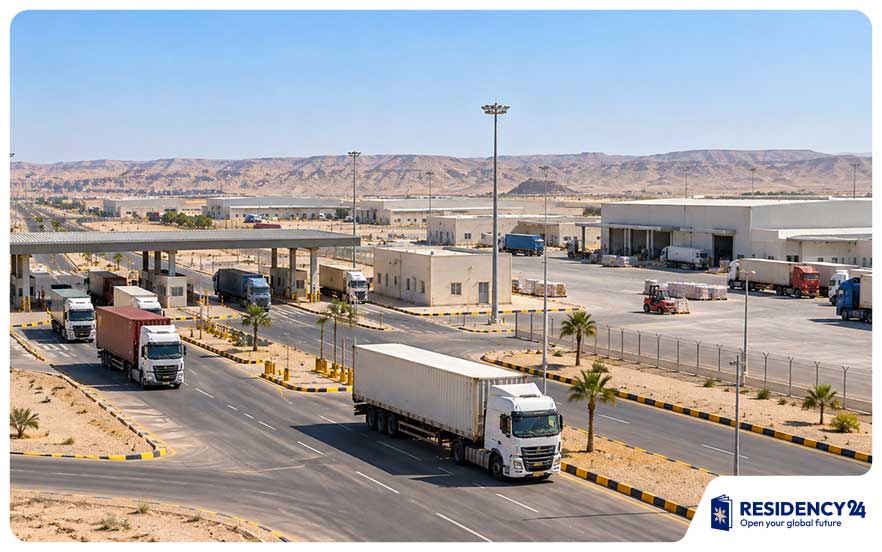
Al Mazunah Free Zone is a more specialized free zone near the Yemen border. It is suitable for investors focused on Yemen-linked trade, warehousing, re-export, border commerce, distribution, and regional movement of goods.
OPAZ lists Al Mazunah incentives including exemption of profits from income tax for 30 years, foreign-exchange flexibility, exemption from the law of commercial agencies, exemption from customs duties, permission to import eligible goods into Oman, no minimum investment requirement, 100% ownership of invested project capital, facilitation of residence visas for non-Omani investors, and the possibility of establishing a representative office inside Oman’s customs territory.
Al Mazunah is usually suitable for:
Yemen-border trade
Re-export
Wholesale distribution
Warehousing
Cross-border logistics
Regional supply chains
Omani-Yemeni product trade
Representative offices connected to zone activity
It is not the first choice for every investor. Its value is strongest when the business specifically benefits from its location and border-market structure.
Muscat Airport Free Zone
Muscat Airport Free Zone is designed for companies that benefit from air connectivity, integrated logistics, fast distribution, and access to Muscat International Airport. OPAZ describes it as offering direct airport access and integration into Asyad Group’s logistics ecosystem, with one-stop business setup and competitive incentives.
Muscat Airport Free Zone is usually suitable for:
Air cargo
Ecommerce logistics
High-value goods
Pharmaceuticals and medical logistics
Time-sensitive distribution
Light assembly
Express logistics
Regional fulfillment
Aviation support services
Technology-linked logistics
Royal Decree 10/2022 established free zones in Muscat International Airport, Sohar Airport, and Salalah Airport. This makes the airport free-zone model part of Oman’s broader effort to build logistics-linked investment areas around transport infrastructure.
Muscat Airport Free Zone is not the same as a port-based industrial zone. It is more logical for businesses where speed, air access, customs coordination, and Muscat proximity matter.
Special Economic Zone at Duqm
The Special Economic Zone at Duqm is one of Oman’s largest and most strategic investment areas. It is not a standard free zone, but it is often considered alongside Oman free zones because it offers zone-based incentives and infrastructure.
OPAZ states that Duqm was established in 2011, covers 2,000 square kilometers, overlooks the Arabian Sea and Indian Ocean, and can host industrial, tourism, trade, logistics, and real estate development projects.
Duqm is usually suitable for:
Heavy industry
Petrochemicals
Energy
Logistics
Port-linked manufacturing
Large-scale warehousing
Tourism projects
Real estate development
Fisheries and food processing
Mining-related processing
Strategic industrial projects
Duqm’s listed incentives include 100% foreign ownership, no currency restrictions, no minimum capital requirement, tax exemption up to 30 years from commencement of operations renewable for a further 30 years, 100% repatriation of capital and profit, and usufruct agreements up to 50 years renewable for similar periods.
Duqm is best for serious, larger, infrastructure-linked investments. It may be too heavy for a small trading office or simple consulting company.
Oman Free Zones vs Mainland Company Setup
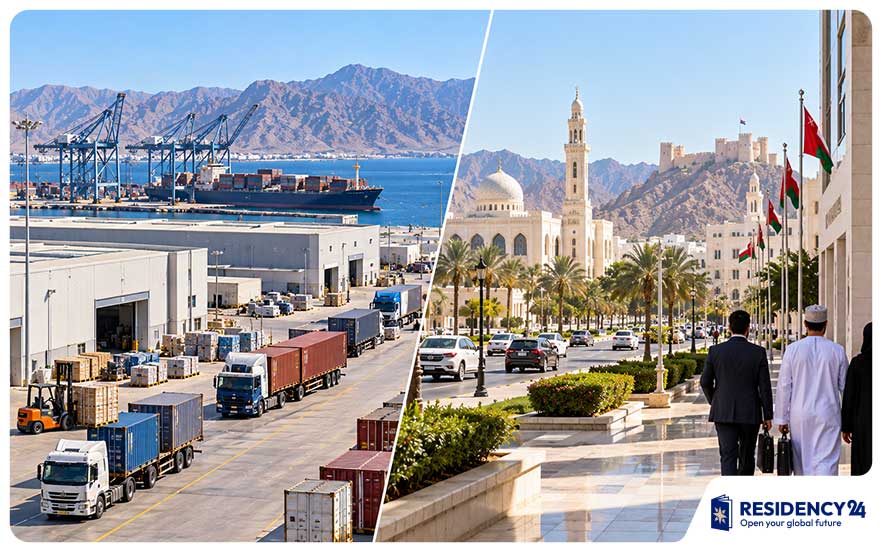
Mainland incorporation is covered on the register a company in Oman page. The choice between an Oman free zone and a mainland company depends on where the business will operate. A free zone is usually better for export, re-export, logistics, warehousing, manufacturing, and port or airport access. A mainland company is usually better for direct local-market services, retail, consulting, contracting, and businesses that mainly serve Omani clients inside the customs territory.
Factor | Oman Free Zone | Mainland Oman Company |
|---|---|---|
Best for | Export, logistics, manufacturing, warehousing, re-export | Local services, retail, consulting, local contracts |
Foreign ownership | Strong incentives and 100% ownership options | 100% foreign ownership possible in many activities |
Customs | Free-zone/customs advantages for qualifying activity | Normal customs territory rules |
Tax incentives | Possible zone-based exemptions | Normal Oman tax framework |
Local market access | May require customs/tax compliance when entering Oman | More direct local access |
Office/location | Inside the zone | Anywhere permitted by license |
Best company type | Exporter, manufacturer, distributor, logistics operator | Local service provider or Oman-facing business |
A free zone is not automatically better. It is better only if the business benefits from zone infrastructure and incentives.
Which Oman Free Zone Is Best?
The best Oman free zone depends on the business model. The wrong zone can increase logistics cost, reduce client access, or create unnecessary licensing complexity.
Business Model | Best Zone to Consider |
|---|---|
Port-linked manufacturing | Sohar or Salalah |
Heavy industry and large land need | Duqm |
Air cargo and fast distribution | Muscat Airport Free Zone |
Yemen-linked trade | Al Mazunah |
Re-export to East Africa or Indian Ocean markets | Salalah |
Regional logistics through northern Oman | Sohar |
Tourism and real estate development | Duqm |
High-value goods logistics | Muscat Airport Free Zone |
Small local consulting | Usually mainland, not free zone |
Retail serving Omani consumers | Usually mainland, not free zone |
The zone should be selected after mapping suppliers, customers, shipping routes, facility needs, visa needs, and tax treatment.
Business Activities Suitable for Oman Free Zones
Oman free zones are usually strongest for activities that depend on movement of goods, transformation of goods, storage, export, logistics, industrial production, or regional trade. They are less useful for businesses that only need a small local office to serve Omani customers.
Suitable activities include:
Manufacturing
Assembly
Packaging
Food processing
Logistics
Warehousing
Import-export
Re-export
Distribution
Light industry
Heavy industry
Energy-related services
Aviation logistics
Pharmaceutical logistics
Industrial maintenance
Customs-related services
Port support services
Tourism development in Duqm
Real estate development in Duqm
The activity must match the license. A company should not choose a free-zone activity only because it sounds cheaper or broader. Banks, customs, tax authorities, and zone operators will look at the real business model.
Oman Free Zone Company Formation Steps
OPAZ describes a simple three-step process for investors: request submission, plot allocation, and signing an agreement. This gives investors a clear path from application to licensing and registration.
A practical free-zone setup process usually includes:
Select the zone.
Define the business activity.
Check whether the activity is permitted.
Choose the legal form.
Prepare shareholder documents.
Submit the investment or company application.
Receive preliminary approval.
Choose land, office, warehouse, or facility.
Sign lease or usufruct agreement.
Obtain commercial registration and zone license.
Apply for tax or customs registrations where needed.
Arrange VAT authorization if the business uses special-zone VAT treatment.
Open a corporate bank account.
Apply for investor or employee visas, if required.
Start operations under the licensed activity.
The exact process differs by zone and activity. A logistics warehouse, industrial plant, and air-cargo company will not have the same requirements.
Documents Required for Oman Free Zone Company Setup
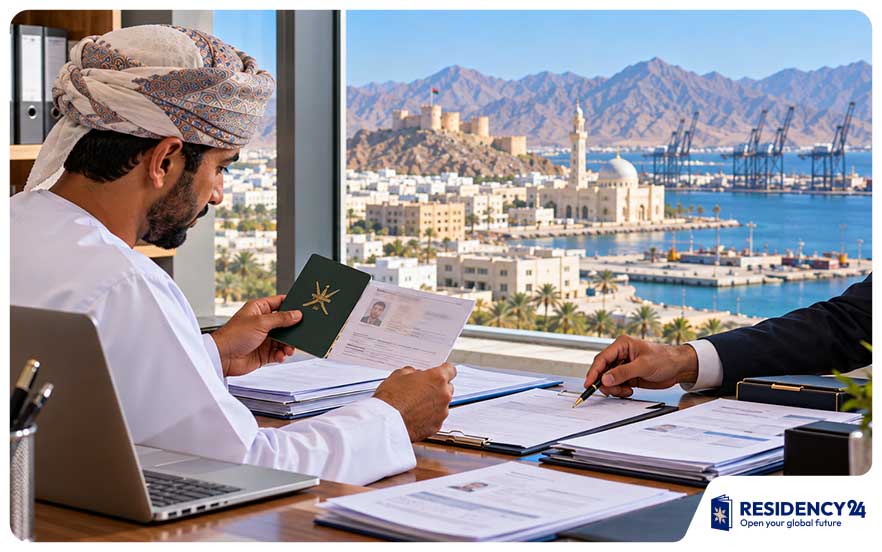
Documents depend on whether the shareholder is an individual, a foreign company, or an Omani entity. OPAZ’s FAQ notes that parent-company commercial registration, board resolution, and articles of association may be required for corporate shareholders, and that documents may need approval by the Omani Embassy and the Ministry of Foreign Affairs in the origin country.
Common documents may include:
Passport copies of shareholders
Company name proposal
Business activity description
Business plan or project summary
Shareholding structure
Parent company registration documents, if applicable
Board resolution, if applicable
Articles of Association
Power of attorney
Lease or facility application
Financial information
Ultimate beneficial owner details
Project timeline
Environmental or technical documents for industrial activity
Zone-specific forms
Corporate-shareholder setups usually require more time and cost because foreign company documents often need attestation and translation.
Costs of Setting Up in Oman Free Zones
For a reference point on the other side of the Gulf, see Business Setup Cost in Dubai. There is no single cost for all Oman free zones. The cost depends on the zone, activity, facility size, land or warehouse requirement, license type, number of visas, approvals, and professional support.
Cost items may include:
Company registration
Zone license
Office, warehouse, land, or facility lease
Usufruct agreement
Activity approval
Environmental approval
Construction or fit-out permit
Customs registration
VAT registration or special-zone VAT authorization
Legal document preparation
Translation and attestation
Bank account setup support
Investor visa
Employee work permits
Annual renewal
Accounting and tax compliance
A simple air-cargo office and a large industrial factory in Duqm are not comparable. Investors should request a written quote from the zone operator and include first-year, renewal, facility, and compliance costs.
Oman Free Zones and Visas
Company ownership and residence are linked but not identical - Oman investor residency sets out the thresholds. Oman free-zone companies can usually apply for investor and employee visas if they meet licensing, labour, facility, and immigration requirements. OPAZ’s FAQ lists work-visa durations such as 2-year, 9-month, 6-month, and 4-month options for foreign workers, depending on the employment or project duration.
Visa planning should be done before choosing the facility. A company that needs several staff members may need a larger office, warehouse, or industrial space to support labour approvals.
Investors should check:
Investor visa eligibility
Employee visa quota
Omanisation requirements
Job titles
Work permit fees
Medical and residence card process
Family visa eligibility
Renewal process
Whether temporary project visas are sufficient
A license does not automatically solve all immigration issues. Visa capacity should be part of the setup plan.
Omanisation in Free Zones
Omanisation means hiring Omani nationals according to requirements that vary by sector, company type, and zone. Free zones can offer more flexible employment rules in some cases, but Omanisation is still a compliance issue.
Sohar Free Zone lists a relaxed level of Omanisation among its incentives, while Al Mazunah lists an Omanisation percentage for the operating company of 20%.
Investors should check Omanisation rules before hiring because they can affect:
Work permits
Visa quota
Labour approvals
Renewal
Compliance inspections
Cost planning
HR structure
Long-term staffing
A company that needs many foreign staff should confirm labour rules before committing to a zone.
Banking for Oman Free Zone Companies
A free-zone company still needs to satisfy bank due diligence. The bank will review the activity, shareholders, source of funds, customer countries, supplier countries, expected transactions, facility lease, tax status, and beneficial ownership.
Banks may ask for:
Commercial registration
Zone license
Shareholder documents
Board resolution
Lease or facility agreement
Business plan
Supplier contracts
Customer contracts
Customs or logistics documents
Tax registration
VAT authorization, if relevant
Ultimate beneficial owner information
Source of funds
Banking should be planned early. A company can be registered faster than it can open a fully functional corporate bank account.
Tax Compliance After Setup

Even with zone incentives, companies must understand tax compliance. OPAZ’s FAQ states that businesses applying for tax exemptions must complete the relevant tax-exemption form and attach documents such as commercial registration, project licenses, and Omanisation certificate. It also says businesses must maintain accurate VAT-related records and comply with reporting requirements.
The 2025 law also states that, in all cases, enterprises and operators must submit tax returns and attached documents according to the Income Tax Law, even where exemptions apply under the law.
This means “tax exemption” does not mean “no compliance.” A free-zone company may still need accounting, records, returns, tax-exemption approval, VAT documentation, and customs records.
Selling Into the Omani Mainland
A key limitation of a free-zone company is local-market entry. Oman free zones are ideal for export, re-export, logistics, and zone-based activity, but selling goods or services into Oman’s customs territory can trigger normal mainland rules.
The 2025 law says a working company may not practice any activity it is not licensed to practice and may not practice business in the customs territory except according to the laws, regulations, and systems in force.
This matters for:
Importing goods into Oman
Selling to Omani consumers
Supplying mainland companies
Opening a showroom
Running local retail
Delivering services outside the zone
Hiring local mainland teams
Paying customs and VAT when applicable
If the business mainly serves the Omani local market, a mainland company may be more suitable than a free-zone company.
Oman Free Zones vs UAE Free Zones
Oman free zones can be attractive for investors who want lower operating pressure, port access, industrial land, logistics routes, and strategic access to the Indian Ocean, East Africa, GCC, and South Asia. UAE free zones, especially in Dubai, usually offer a larger service ecosystem, more banks, more consultants, more global visibility, and a bigger expat business network.
Factor | Oman Free Zones | UAE Free Zones |
|---|---|---|
Best for | Logistics, manufacturing, industrial, port-linked trade | Services, trading, tech, regional HQ, ecommerce, consulting |
Market size | Smaller | Larger |
Competition | Lower in some sectors | Higher |
Costs | Can be lower depending on facility | Often higher in premium zones |
Banking ecosystem | Smaller | Larger |
Logistics advantage | Strong for ports, Indian Ocean, East Africa routes | Strong for global air/sea/logistics networks |
Lifestyle base | Quieter | More international and faster |
Best investor fit | Industrial and trade investors seeking lower-pressure operations | Service, tech, consulting, trade, and regional expansion businesses |
Oman is not a direct replacement for Dubai. It is better for certain types of physical trade, production, logistics, and long-term industrial strategy.
Advantages of Oman Free Zones
Oman free zones can be useful when the business needs operational substance rather than only a low-cost registration.
Main advantages include:
100% foreign ownership
Strong logistics locations
Port and airport access
Export and re-export support
Zone-based customs treatment
Potential tax holidays
Repatriation of profits and capital
No minimum capital requirement in many zone frameworks
Long-term land or facility arrangements
Industrial and warehousing infrastructure
One-stop-shop support
Lower regional competition than some UAE markets
The biggest advantage is not only tax. It is the combination of location, logistics, and operational infrastructure.
Disadvantages of Oman Free Zones
Oman free zones are not right for every company. They can be inefficient for small local service providers, businesses targeting only Muscat clients, or companies that do not need logistics or export infrastructure.
Possible disadvantages include:
Smaller domestic market than UAE or Saudi Arabia
Location may be far from Muscat clients
Facility costs can be high for industrial users
Banking can still require detailed due diligence
Local-market sales may require additional compliance
Tax incentives require conditions and documentation
Labour and Omanisation rules still matter
Some zones are activity-specific
Not ideal for every ecommerce or consulting model
Renewal and facility costs must be understood before setup
A free zone should be chosen because it fits the business model, not because “free zone” sounds simpler.
Who Should Use Oman Free Zones?
Oman free zones are best for investors whose businesses physically or commercially benefit from being inside a logistics, port, airport, industrial, or border-linked zone.
They are suitable for:
Exporters
Manufacturers
Logistics companies
Warehousing operators
Re-export businesses
Industrial suppliers
Food processors
Packaging companies
Air-cargo operators
Port-linked service providers
Cross-border traders
Large-scale distribution companies
Energy and heavy-industry investors
Businesses needing long-term land or industrial space
They may not be suitable for:
Small consultants serving local clients
Retail shops targeting Omani consumers
Freelancers needing only a residence route
Businesses without import-export activity
Companies needing daily access to Muscat clients
Service businesses that do not need zone incentives
A mainland company can be simpler for local services. A free-zone company is stronger when the business depends on logistics, goods movement, or zone infrastructure.
Checklist Before Choosing an Oman Free Zone
Activity, market and residence goals should drive the choice: Residency24 works across company formation, residency, property purchase and investment planning. Before registering a company in an Oman free zone, investors should answer practical questions first.
Use this checklist:
What will the company actually do?
Is the activity allowed in the chosen zone?
Will the company export, re-export, or sell inside Oman?
Does the business need port, airport, warehouse, or industrial land access?
Which zone is closest to suppliers and customers?
Does the company need customs registration?
Does the company need VAT zero-rating treatment?
What tax exemption applies to this exact activity?
Is a formal tax-exemption application required?
How many visas are needed?
What Omanisation rules apply?
What facility is required?
What is the first-year cost?
What is the renewal cost?
What happens if goods enter mainland Oman?
Can the bank support the expected transaction profile?
Is a mainland company simpler?
The best free-zone decision is usually made after logistics mapping and compliance review, not only after comparing license prices.
Conclusion
Oman free zones are useful for investors who need foreign ownership, customs advantages, tax incentives, logistics access, and zone-based infrastructure for export, re-export, manufacturing, warehousing, industrial activity, and regional distribution. The main options include Sohar Free Zone, Salalah Free Zone, Al Mazunah Free Zone, Muscat Airport Free Zone, and the Special Economic Zone at Duqm. Sohar is strong for port-linked industry and regional trade, Salalah is strong for Arabian Sea and Indian Ocean logistics, Al Mazunah is specialized for Yemen-border commerce, Muscat Airport Free Zone is built around air logistics, and Duqm is suited to larger industrial, logistics, tourism, and real estate projects. A free-zone company is not automatically better than a mainland company. The right choice depends on where the business will sell, how goods move, which approvals are needed, how many visas are required, and whether the tax and customs incentives apply to the exact activity.