 Anahita Attarian
A general trading license in Dubai allows a company to trade a broad range of goods under one license, instead of applying for a separate narrow trading activity for each product line. It is commonly used by importers, exporters, wholesalers, ecommerce sellers, distributors, and entrepreneurs who want flexibility to trade different product categories. The license can be issued on the Dubai mainland through the Department of Economy and Tourism, or through selected free zones depending on the business model. The best option depends on where the company will sell, whether it needs local UAE market access, warehouse space, visas, customs registration, office facilities, and banking support.
What Is a General Trading License in Dubai?
A general trading license in Dubai is a commercial license that permits a business to trade multiple types of goods through one company structure. It is useful when the company does not want to be restricted to one specific product category such as electronics, garments, foodstuff, building materials, or household goods.
This license is different from a normal trading license. A standard trading license usually covers a defined group of related activities, while a general trading license gives wider flexibility. The general procedure for how to get a trade license in Dubai applies here as well, only with a broader activity scope. Some regulated goods still require separate approvals, even if the company already holds a general trading license.
What Can You Do With a General Trading License?
A Dubai general trading license can support several business models. It can be used for import and export, local distribution, wholesale, retail, ecommerce, re-export, and international trading.
Common activities include:
Importing goods into the UAE
Exporting products from Dubai to other markets
Re-exporting goods through Dubai
Selling products wholesale
Supplying retailers and corporate clients
Running a trading office
Managing ecommerce product sales
Distributing goods in the UAE market
Trading through warehouses and logistics providers
The exact scope depends on the licensing authority, selected activities, customs registration, product category, and any additional approvals required for controlled goods.
Mainland or Free Zone: Which Is Better?
The main decision is whether to apply for a mainland general trading license or a free zone general trading license. Mainland is usually better if the company wants to sell directly across the UAE market. Free zones are often better for international trade, re-export, ecommerce operations, warehousing, and businesses that mainly serve clients outside the UAE.
Option | Best For | Main Advantage | Main Limitation |
|---|---|---|---|
Dubai mainland general trading license | Local UAE market trading, retail, wholesale, direct distribution | Direct access to UAE mainland market | Higher setup and office requirements in many cases |
Dubai free zone general trading license | Import-export, re-export, ecommerce, international trading | Packages, customs zones, flexible facilities | Mainland sales may require local distribution or additional structure |
Offshore company | Holding, international structuring, asset ownership | Not usually for active UAE trading | Cannot trade directly in the UAE market like a licensed operating company |
The wider comparison of Free Zone vs. Mainland in Dubai affects far more than the license fee, because it also determines market access, ownership, facilities, and visa capacity. Dubai's official Invest in Dubai platform states that free zone companies cannot trade within the UAE without a specific mainland license, which is one of the main reasons mainland licensing remains important for companies selling directly inside the country.
Dubai Mainland General Trading License
A Dubai mainland general trading license is issued through Dubai's mainland business licensing system. It is suitable for businesses that want to sell directly to UAE customers, work with local retailers, supply companies, open physical stores, trade with government or semi-government entities, or operate without free zone restrictions.
Mainland companies are usually preferred when the business needs:
Direct UAE market access
Local wholesale and distribution
Retail sales
Government or large corporate contracts
Warehousing and local delivery
A physical office or showroom
Flexibility to trade across Dubai and other emirates
Easier local supplier and client relationships
Invest in Dubai describes the trade license as the official approved document that enables a business to legally conduct business activities in Dubai. The service also includes Dubai Chamber membership for commercial activities and establishment cards from GDRFA and MOHRE, with the option to employ three people.
Dubai Free Zone General Trading License
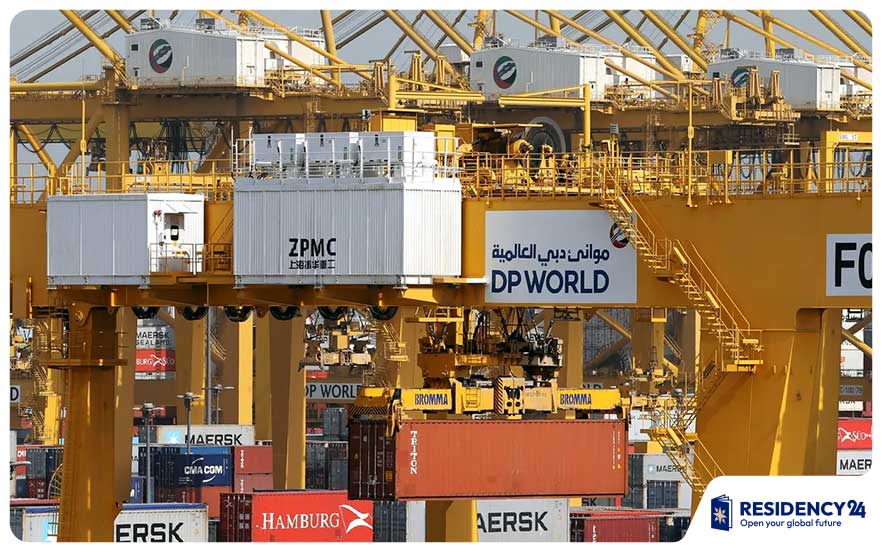
A free zone general trading license can be suitable for companies focused on international trade, re-export, logistics, ecommerce, and regional distribution. Dubai has several free zones that support trading activities, but costs, visa quotas, office requirements, warehouse options, and permitted activities vary.
A free zone may be a better fit if the company:
Trades mainly outside the UAE
Imports and re-exports goods
Needs warehouse or logistics support
Wants a structured setup package
Does not need direct retail access to the mainland
Sells through platforms or distributors
Operates with a smaller team
Wants to start with a flexi-desk or shared office option
DMCC states that companies can apply for multiple licenses or a general trading license, depending on their activities, and its schedule notes that additional activities may have annual fees depending on activity grouping.
Who Needs a General Trading License in Dubai?
Trading ranks among the Best Business Opportunities in Dubai precisely because one license can cover a wide product mix. A general trading license is most useful for businesses that want that product flexibility. If a company trades only one clear category, a specific trading activity may be enough. If the product mix changes often, general trading is usually more practical.
This license may be suitable for:
Import-export companies
Ecommerce product businesses
Wholesale traders
Distribution companies
General suppliers
Marketplace sellers
Corporate procurement businesses
Regional trading offices
Re-export businesses
Entrepreneurs testing several product categories
It may not be necessary for a highly specialized business. For example, a company that only sells perfumes, auto spare parts, or electronics may be able to use a narrower commercial license if the licensing authority approves the activity.
Products You Can Usually Trade
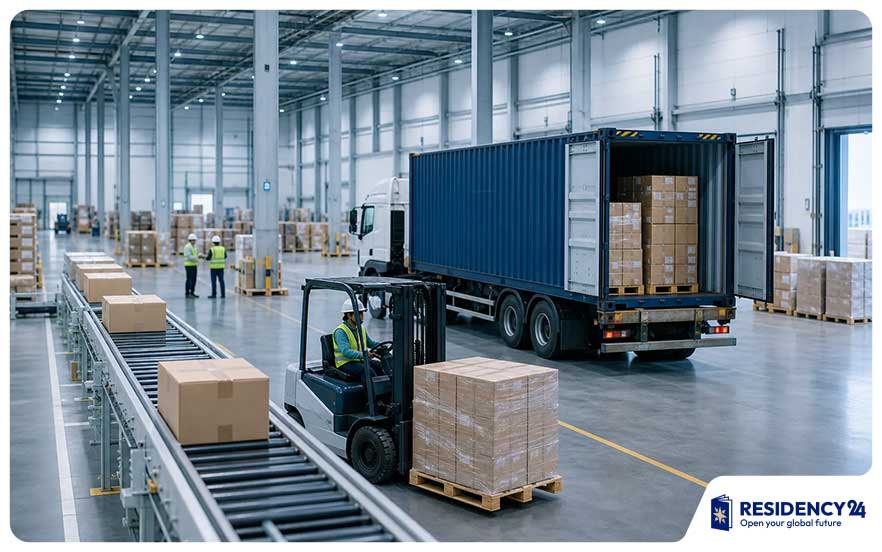
A general trading license can cover many ordinary goods, but the wording "general" does not mean every product is automatically allowed. Some products are restricted, regulated, or require approvals from specialist authorities.
Commonly traded product categories may include:
Electronics and accessories
Clothing and textiles
Household products
Furniture
Office supplies
Gifts and promotional items
General consumer goods
Tools and hardware
Packaging materials
Non-specialized retail goods
Non-regulated commercial products
Products that may require extra approvals include food, cosmetics, medical products, supplements, chemicals, telecom devices, vehicles, tobacco-related products, precious metals, and any goods controlled by customs, health, municipality, media, security, or industry regulators.
General Trading License Cost in Dubai
The cost of a general trading license in Dubai depends on jurisdiction, legal structure, office or flexi-desk requirement, visa quota, approvals, name reservation, initial approval, chamber fees, immigration file, establishment card, and any activity-specific fees. Mainland and free zone costs are not the same.
As a practical estimate, a general trading license in Dubai can often start from the mid-five-figure AED range and increase depending on facilities, visas, warehouses, and approvals. Official Dubai legislation lists AED 15,000 for issuance of a license to conduct a general trading activity, but this is not the full company setup cost because other government, registration, office, immigration, and operational costs may also apply.
Typical cost components include:
Trade name reservation
Initial approval
License issuance fee
General trading activity fee
Memorandum of Association or legal documents
Office lease or flexi-desk
Ejari or facility contract, where applicable
Dubai Chamber or free zone registration
Establishment card
Immigration file
Visa allocation and visa processing
Customs registration
External approvals, if required
Bank account opening support, if needed
The important point is to calculate the total Business Setup Cost in Dubai, not only the license fee. A cheaper license may become more expensive if it has weak visa allocation, limited banking support, no warehouse access, or restrictions on the real trading model.
Documents Required for a General Trading License
Documents vary by authority and shareholder profile, but most applications require basic identity, ownership, and business details. Corporate shareholders need additional documents compared with individual shareholders.
Commonly required documents include:
Passport copies of shareholders
UAE visa page or entry stamp, if available
Emirates ID, if applicable
Passport-size photographs
Proposed trade name
Business activity details
Shareholding structure
Office lease, flexi-desk agreement, or tenancy contract
Initial approval
Memorandum of Association, where applicable
Board resolution for corporate shareholders
Certificate of incorporation for corporate shareholders
Attested parent company documents, where applicable
No-objection certificate, if required in specific cases
Some authorities may request additional documents depending on nationality, activity, legal form, compliance checks, or regulated product categories.
Steps to Get a General Trading License in Dubai
The route follows the same sequence as any other company registration in Dubai, so the setup process is straightforward when the business activity and jurisdiction are clear. Delays usually happen when the business model is unclear, the product category needs external approval, or documents are incomplete.
A practical process looks like this:
Choose mainland or free zone jurisdiction.
Define the trading model and product categories.
Select the legal structure.
Reserve the trade name.
Apply for initial approval.
Prepare legal documents.
Arrange office, flexi-desk, showroom, or warehouse requirements.
Submit the final license application.
Pay the required fees.
Receive the trade license.
Apply for establishment card and immigration file.
Process visas, if needed.
Register with customs, if importing or exporting.
Open a corporate bank account.
Register for VAT or corporate tax, if applicable.
The UAE government's mainland business setup guidance states that starting a business generally involves identifying the activity, selecting the legal form, registering a trade name, getting initial approval, preparing documents, and receiving the business license after approvals and payments.
Legal Structure Options
Whichever route you take to register a company in the UAE, the legal structure affects ownership, liability, banking, visas, tax registration, and future changes. For many trading companies, the most common structure is a Limited Liability Company, but free zones may use FZ-LLC, FZE, FZCO, or similar structures depending on the authority.
Common options include:
Mainland LLC
Single-shareholder LLC
Civil company, where relevant
Branch of a foreign company
Free zone limited liability company
Free zone establishment
Free zone branch
Foreign investors can own many UAE companies fully. The UAE Ministry of Economy states that the Commercial Companies Law reforms granted foreign investors the ability to establish companies and have full ownership of their companies, subject to applicable activity rules and strategic-sector restrictions.
Does a General Trading License Need a Local Sponsor?
Many commercial and industrial activities in Dubai now allow 100% foreign ownership, so a local sponsor is not automatically required for every mainland general trading business. However, ownership rules still depend on activity, legal structure, and whether the business falls under any strategic or restricted category.
Invest in Dubai notes that foreign investors have been able to enjoy 100% ownership in many sectors since 2020. It also provides a foreign ownership restrictions list for activities that do not allow full foreign ownership.
Before applying, investors should confirm:
Whether the selected activity allows 100% foreign ownership
Whether the product category is restricted
Whether a UAE national partner or agent is required
Whether external approval is needed
Whether the chosen legal form is suitable
A general trading license should not be structured only for low setup cost. The structure must also support ownership, banking, contracts, import-export, and future growth.
Office, Warehouse, and Visa Requirements
A general trading business may need an office, flexi-desk, showroom, warehouse, or storage arrangement depending on the licensing authority and business model. A company trading physical goods should also think about logistics before choosing the license.
For small import-export or ecommerce businesses, a flexi-desk or small office may be enough at the beginning. For wholesale, distribution, or inventory-heavy businesses, warehouse access is more important.
Check these points before applying:
Is a physical office mandatory?
Is a flexi-desk acceptable?
How many visas are included or allowed?
Can the company add more visas later?
Is warehouse space available?
Is the warehouse inside a customs-bonded area?
Does the product require special storage?
Is delivery allowed from the facility?
Can the company lease a showroom or retail space later?
The wrong facility choice can limit operations. A company that plans to import container-level inventory should not choose a package designed only for a small consulting-style office.
Customs Registration and Import-Export
A general trading license alone does not automatically complete the import-export process. Companies that import or export goods usually need customs registration and must comply with UAE customs rules, product documentation, HS codes, invoices, certificates of origin, and product-specific approvals.
Import-export businesses should prepare for:
Customs code registration
HS code classification
Commercial invoices
Packing lists
Certificates of origin
Shipping documents
Product labeling rules
Customs duties
VAT on imports, where applicable
Municipality or ministry approvals for regulated goods
Warehouse and logistics arrangements
Dubai is a strong base for regional trade because of ports, airports, free zones, logistics infrastructure, and re-export routes. However, customs and product compliance should be checked before importing the first shipment.
VAT and Corporate Tax
A Dubai general trading company may need to register for VAT if it crosses the UAE VAT registration threshold, and it may also need to register for corporate tax. The UAE standard VAT rate is 5%, unless the supply is zero-rated or exempt under the law.
For corporate tax, the UAE applies 0% on taxable income up to AED 375,000 and 9% on taxable income above AED 375,000.
Trading companies should keep proper records from the beginning:
Sales invoices
Purchase invoices
Import documents
Export documents
Bank statements
Inventory records
Customs declarations
VAT records
Expense receipts
Supplier contracts
Customer contracts
Good accounting is not only for tax filing. It also helps with banking, customs, investor reporting, and future license renewals.
Corporate Bank Account for a General Trading Company
Opening a corporate bank account is one of the most important steps after licensing, and it follows a different track from a personal Bank Account for Non-Residents in the UAE. Banks usually review the business model, shareholders, source of funds, expected transactions, suppliers, customers, countries of trade, and office substance.
A general trading company should prepare:
Trade license
Shareholder documents
Corporate documents
Office lease or facility agreement
Business plan or company profile
Supplier invoices or agreements
Customer contracts, if available
Website or product catalogue
Expected turnover
Countries of import and export
Proof of source of funds
Customs registration, if available
Banking can take longer for trading companies than for simple service businesses because goods movement, cross-border transactions, and supplier countries create more compliance checks.
Mainland vs Free Zone for Ecommerce General Trading
Ecommerce sellers often ask whether they need mainland or free zone licensing. The answer depends on where the customers are, where the stock is stored, and how the goods are delivered.
A mainland license is usually better if the company sells directly to UAE customers, manages local delivery, works with local marketplaces, and wants fewer restrictions on mainland sales.
A free zone license may work if the company:
Sells internationally
Uses third-party logistics
Stores goods in a free zone
Re-exports products
Sells through online channels outside the UAE
Works with a local distributor for UAE sales
If the business will actively sell inside the UAE, the legal sales route should be checked before choosing a free zone only because the package is cheaper.
General Trading License vs Specific Trading License
A general trading license gives more flexibility, while a specific trading license can be cheaper and more focused. The better option depends on product range.
License Type | Best For | Advantage | Limitation |
|---|---|---|---|
Specific trading license | One product category or related categories | Lower cost and clearer activity scope | Less flexibility |
General trading license | Multiple unrelated product categories | Wider trading scope | Usually higher cost |
Ecommerce license | Online selling model | Suitable for digital sales channels | May not cover all import/export or wholesale needs |
Industrial license | Manufacturing or production | Allows production activity | Not the same as trading only |
If a business knows it will trade only one category, a specific license may be more efficient. If the business plans to sell several unrelated categories, general trading is usually safer.
Regulated Goods and External Approvals
Some goods cannot be traded simply because a company has a general trading license. They may need approval from Dubai Municipality, Ministry of Health and Prevention, UAE Media Council, Telecommunications and Digital Government Regulatory Authority, Ministry of Industry and Advanced Technology, customs authorities, or other regulators.
Regulated categories may include:
Food and beverages
Cosmetics
Perfumes in some cases
Medical devices
Pharmaceuticals
Supplements
Chemicals
Telecom equipment
Printed materials
Precious metals and stones
Vehicles and spare parts in some cases
Tobacco-related products
Products with safety standards
The safest approach is to identify the exact products before licensing. A broad license does not remove product-specific compliance obligations.
Renewal of a General Trading License
A general trading license must be renewed regularly, usually annually. Renewal is normally easier than the first setup if the company has kept its documents, lease, immigration file, and compliance records updated.
Before renewal, check:
License expiry date
Office or facility contract validity
Establishment card validity
Visa status
Outstanding fines
Chamber or authority fees
Customs code status
Tax registration and filing status
Required amendments to activities or shareholders
Updated contact details
Late renewal can lead to penalties, banking issues, visa delays, and operational disruption. Trading companies should track renewal dates carefully because they often depend on banking and customs access.
Common Mistakes When Applying
Many investors apply for a general trading license before defining the real operating model. This can create licensing, customs, banking, or sales restrictions later.
Common mistakes include:
Choosing free zone only because it is cheaper
Ignoring mainland sales restrictions
Not checking regulated product approvals
Underestimating total setup cost
Forgetting customs registration
Choosing a facility with too few visas
Not planning warehouse needs
Mixing unrelated activities without approval
Assuming banking will be automatic
Not preparing supplier and customer documents
Ignoring VAT and corporate tax registration
Renewing late or missing compliance deadlines
A good setup starts with the business model, not the cheapest advertised package.
Who Should Choose a Dubai General Trading License?
A Dubai general trading license is a good choice for companies that need flexibility, import-export access, product diversity, and room to expand into different goods. It is especially useful when the business plans to test several product lines or act as a general supplier.
It is suitable if the company:
Will trade multiple unrelated goods
Needs import-export flexibility
Wants to serve different client categories
Plans to grow product lines
Needs wholesale or distribution capability
May shift product focus over time
Wants a long-term trading structure
It may not be the best choice if the business has one narrow product category, limited budget, no import-export activity, or no clear plan for product compliance.
For investors comparing business setup options, residency, property purchase, or long-term company structuring in Dubai, Residency24 works in company setup, residency, property buying, and investment in Dubai.
Conclusion
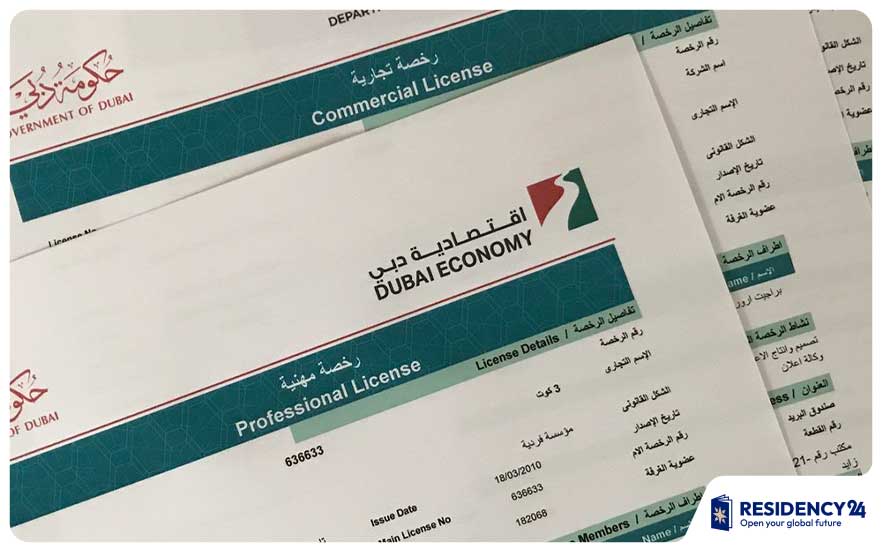
A general trading license in Dubai is a flexible commercial license for businesses that want to trade multiple types of goods through one company. It can be issued through the Dubai mainland or selected free zones, and the right choice depends on whether the company will sell directly in the UAE, import and export goods, hold inventory, use warehouses, hire staff, or trade internationally. Mainland licensing is usually better for direct UAE market access, while free zones can be practical for re-export, ecommerce, logistics, and international trade. Investors should calculate the full cost, including license fees, office or facility, visas, customs registration, approvals, banking, VAT, corporate tax, and renewals. The best setup is the one that matches the actual trading model, not only the lowest initial license price.