 Anahita Attarian
The best city in the UAE for work is usually Dubai if your priority is job volume, private-sector opportunities, international companies, networking, and career mobility. Abu Dhabi is often better for professionals in energy, government, finance, healthcare, education, AI, policy, and large institutional roles. Sharjah can be practical for people who want lower living costs and can manage commuting, while Ras Al Khaimah is more suitable for hospitality, manufacturing, tourism, and industrial roles. The right city depends on your profession, salary level, visa situation, family needs, commute tolerance, and whether you want fast career movement or a more stable work-life structure.
What Is the Best City in the UAE for Work?
Dubai is the best city in the UAE for most job seekers because it has the widest private-sector job market, the strongest international business presence, and the highest concentration of roles in sales, marketing, technology, real estate, finance, hospitality, logistics, tourism, and startups. Abu Dhabi is the best alternative for professionals who want more institutional stability, government-linked employers, energy companies, finance, healthcare, and long-term career security.
For many expats, the decision is not only Dubai vs Abu Dhabi. It is also whether to live near the job, accept a longer commute for cheaper rent, or choose a smaller emirate with fewer jobs but lower daily costs.
Dubai: Best Overall City for Career Growth
Dubai is the strongest all-round choice for work in the UAE because it has the broadest job market. It attracts multinational companies, regional headquarters, agencies, banks, hotels, property firms, logistics companies, fintech startups, ecommerce brands, and consulting firms.
Dubai’s Economic Agenda D33 aims to “double the size of Dubai’s economy over the next decade” and place the city among the top global cities, which explains why Dubai continues to position itself around business growth, private-sector investment, and international talent.
Dubai is especially strong for:
Digital marketing
Sales and business development
Real estate
Tourism and hospitality
Finance and fintech
Logistics and trade
Ecommerce
Technology
Media and creative industries
Consulting
Retail and luxury brands
Events and exhibitions
The main advantage of Dubai is opportunity density. You can change jobs, meet recruiters, attend industry events, build a network, and move between sectors more easily than in most other UAE cities.
The main disadvantage is cost. Rent, transport, schooling, dining, and lifestyle spending can reduce the value of a good salary if the package is not strong enough.
Abu Dhabi: Best for Stability, Government, Energy, and Finance
Abu Dhabi is the best city in the UAE for professionals who want stable employers, structured institutions, and stronger links to government, energy, investment, finance, education, healthcare, and policy. It is less fast-moving than Dubai in some private-sector areas, but it can be stronger for senior, technical, regulated, and government-linked roles.
The emirate is described by the UAE government as a growing innovation hub, leading energy producer, global financial centre, and home to more than 200 nationalities. Abu Dhabi also continues to invest in talent attraction, with official economic material highlighting opportunities in technology, pharmaceuticals, finance, government, and human resources.
Abu Dhabi is especially suitable for:
Oil and gas
Renewable energy
Finance and investment
Banking and asset management
Government and semi-government roles
Healthcare
Education
Aerospace
AI and advanced technology
Policy and research
Engineering
Large corporate operations
Abu Dhabi Global Market has also become a major reason finance professionals consider Abu Dhabi. ADGM reported continued financial ecosystem growth in 2026 and job placement initiatives connected to specialized finance tracks.
The main advantage of Abu Dhabi is career stability. The main disadvantage is that the job market can be less broad than Dubai for some commercial, creative, agency, and startup roles.
Dubai vs Abu Dhabi for Work
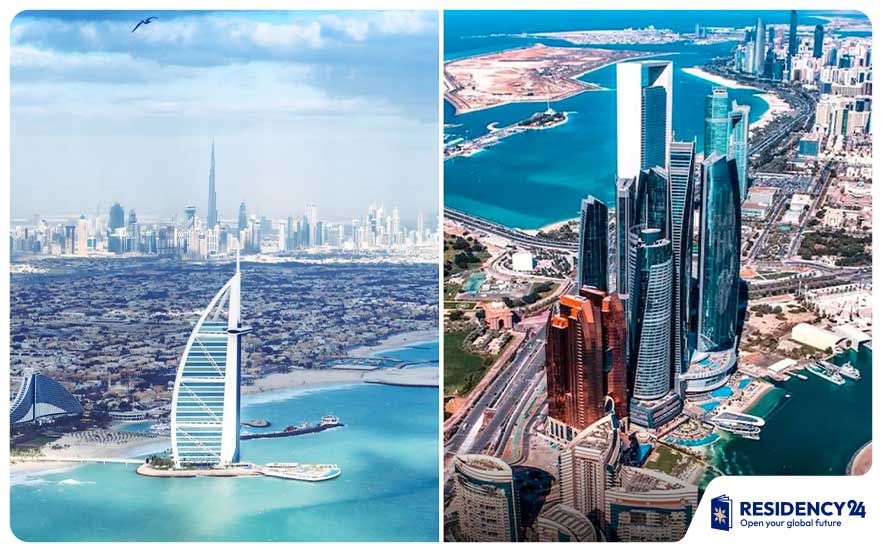
Dubai and Abu Dhabi are both strong work destinations, but they suit different career profiles. Dubai is usually better for opportunity volume and fast career movement. Abu Dhabi is often better for long-term stability and specialized institutional roles.
Factor | Dubai | Abu Dhabi |
|---|---|---|
Best for | Private sector, sales, marketing, tech, real estate, tourism | Government, energy, finance, healthcare, education, AI |
Job volume | Higher across many sectors | Strong but more specialized |
Career mobility | Easier to switch roles | More stable, fewer rapid moves |
Networking | Very strong | Strong in specific sectors |
Cost of living | High, especially in prime areas | High, but lifestyle is often calmer |
Work pace | Faster and more competitive | More structured |
Best fit | Ambitious professionals seeking growth | Professionals seeking stability and institutional roles |
A practical rule is simple: choose Dubai if you want more job options and faster networking. Choose Abu Dhabi if your field matches its core sectors and you value stability over constant movement.
Sharjah: Best for Lower Living Costs and Dubai Access
Sharjah is not usually the strongest city for high-paying international jobs, but it can be a practical place to live and work for people who want lower housing costs, a more family-oriented environment, and access to Dubai’s job market.
Many people live in Sharjah and work in Dubai because rent can be lower. However, the commute can become difficult during peak traffic, especially on routes between Sharjah and Dubai. Recent expat cost comparisons show Sharjah as cheaper than Dubai overall, although exact savings depend on housing area, transport, and family size.
Sharjah can work well for:
Teachers
Healthcare workers
University and education professionals
Retail workers
Administrative roles
Cultural and public-sector roles
Families seeking lower rent
People working in northern or eastern Dubai
The biggest risk is commute fatigue. A lower rent is not always worth it if the person loses two or three hours daily in traffic. Sharjah is best when the workplace is also in Sharjah, near the Dubai-Sharjah border, or accessible through a predictable route.
Ras Al Khaimah: Best for Hospitality, Tourism, and Manufacturing
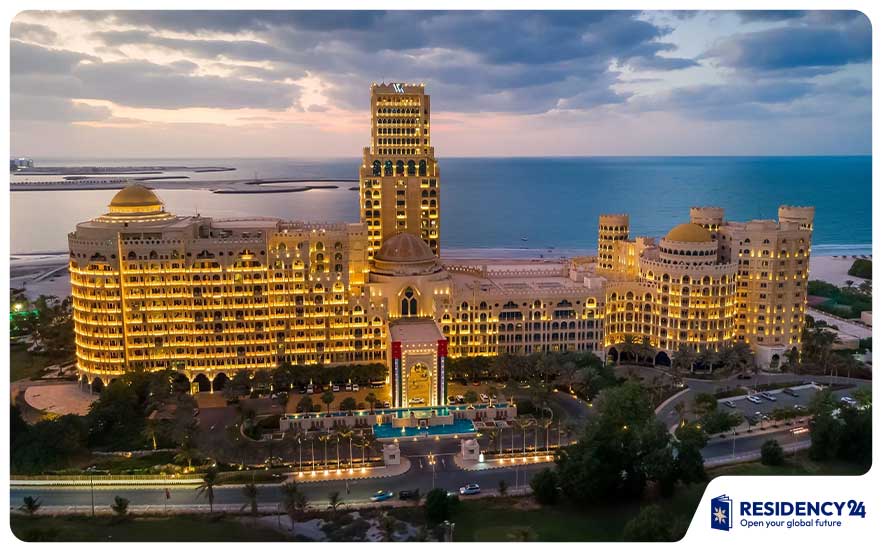
Ras Al Khaimah is a good work destination for people in hospitality, tourism, manufacturing, industrial operations, construction materials, logistics, and selected free-zone businesses. It is not as large as Dubai or Abu Dhabi, but it has a more focused economy and a lower-cost lifestyle.
The UAE government describes Ras Al Khaimah as having a stable and diverse economy, with manufacturing output across construction materials, petrochemicals, ceramics, and pharmaceuticals. The emirate’s own media office also highlights tourism, hospitality, real estate, manufacturing, shipping, transportation, financial services, and digital services as part of its economic profile.
Ras Al Khaimah is suitable for:
Hotel and resort professionals
Tourism workers
Manufacturing specialists
Operations managers
Industrial engineers
Logistics professionals
Real estate and hospitality sales
Free-zone business employees
People who prefer a quieter lifestyle
The main limitation is job volume. Ras Al Khaimah can be a strong fit when your sector is already active there, but it is not ideal for people who need a wide range of job options.
Ajman: Best as a Budget Living Base, Not a Main Career Hub
Ajman is usually better as an affordable place to live than as a primary work destination. It has jobs in education, healthcare, retail, construction, small business, local services, and government-related sectors, but it does not offer the same scale of professional opportunity as Dubai or Abu Dhabi.
Ajman can make sense for people who work nearby, have family priorities, or want lower housing costs. It can also be practical for workers connected to Sharjah, Umm Al Quwain, or northern Dubai.
Ajman is suitable for:
Lower-cost family living
Education and healthcare roles
Small-business employment
Retail and service jobs
People working in Ajman or nearby Sharjah
Residents who do not need daily access to central Dubai
The main issue is limited career mobility. If career growth requires frequent networking, job switching, or access to multinational employers, Dubai or Abu Dhabi will usually be stronger.
Fujairah: Best for Ports, Logistics, Energy, and Marine Work
Fujairah is a more specialized work destination. It is useful for people in shipping, ports, logistics, oil storage, marine services, hospitality, and government-related roles. It offers a quieter lifestyle and lower congestion than Dubai or Abu Dhabi, but the job market is much narrower.
Fujairah can work well if the job offer is already strong and the employer is stable. It is less suitable for people who want to search broadly across industries after arriving.
Fujairah is suitable for:
Marine and shipping professionals
Port operations
Logistics
Oil and energy services
Hospitality
Government and local services
People who prefer a quieter coastal lifestyle
The main point is career flexibility. Before moving to Fujairah, it is better to confirm the employer, salary, housing support, and long-term role stability.
Best UAE City by Profession

The best city in the UAE for work changes by industry. A marketing manager, civil engineer, teacher, hotel manager, and finance analyst may not benefit from the same location.
Profession or Sector | Best City | Why |
|---|---|---|
Digital marketing | Dubai | Agencies, startups, ecommerce, regional brands |
Sales | Dubai | Larger private-sector market and client base |
Real estate | Dubai | Higher market activity and investor demand |
Oil and gas | Abu Dhabi | Energy companies and government-linked entities |
Finance | Dubai or Abu Dhabi | Dubai for commercial finance; Abu Dhabi for ADGM, investment, and institutions |
Hospitality | Dubai or Ras Al Khaimah | Dubai for volume; RAK for resort and tourism growth |
Teaching | Dubai, Abu Dhabi, Sharjah | Strong private-school markets |
Healthcare | Abu Dhabi or Dubai | Larger hospitals, clinics, and specialist employers |
Engineering | Abu Dhabi, Dubai, Ras Al Khaimah | Depends on energy, construction, manufacturing, or infrastructure |
Logistics | Dubai, Jebel Ali, Fujairah, RAK | Trade, ports, shipping, and industrial zones |
Government roles | Abu Dhabi | Federal and emirate-level institutions |
Startups | Dubai | Stronger founder, investor, and tech ecosystem |
Manufacturing | Ras Al Khaimah, Sharjah, Abu Dhabi | Industrial zones and production activity |
Dubai is usually the safest choice when the profession is broad. Abu Dhabi is stronger when the profession is tied to government, energy, finance, research, healthcare, or regulated sectors.
Best UAE City for High Salaries
Abu Dhabi and Dubai usually offer the strongest salary potential in the UAE, but for different reasons. Dubai has more job volume and more private-sector competition. Abu Dhabi has more large institutions, government-linked entities, energy companies, and finance-related employers.
Higher salaries are more common in:
Senior management
Finance
Legal
Energy
Engineering
Technology
AI and data
Healthcare specializations
Real estate sales with commissions
Enterprise sales
Consulting
A high salary in Dubai can be reduced quickly by rent and lifestyle costs. A slightly lower salary in Abu Dhabi, Sharjah, or Ras Al Khaimah may feel better if housing, schooling, and transport costs are lower.
Professionals at the top of these salary bands often qualify for the UAE Golden Visa, which replaces employer sponsorship with a long-term permit and makes moving between emirates or employers much simpler.
The useful measure is not salary alone. It is net monthly comfort after rent, school fees, transport, insurance, and savings.
Best UAE City for Fresh Graduates
Dubai is usually the best UAE city for fresh graduates because it offers more entry-level and junior roles across sales, marketing, customer service, hospitality, real estate, retail, admin, recruitment, and technology support. It also gives young professionals more networking chances.
However, Abu Dhabi may be better for graduates in engineering, energy, finance, healthcare, research, education, and public-sector tracks. ADGM and Abu Dhabi’s talent-focused initiatives show that the capital is also trying to strengthen its professional pipeline.
Fresh graduates should look for:
Training quality
Visa support
Clear job description
Realistic salary
Growth path
Commute cost
Employer reputation
Contract terms
Commission structure, if applicable
The first job in the UAE should not be judged only by salary. A slightly lower salary with better training and visa security may be better than a vague high-commission role with no structure.
Best UAE City for Families Who Work

For working families, Abu Dhabi, Dubai, and Sharjah are usually the main options. Dubai offers more jobs and more schools, but housing and schooling can be expensive. Abu Dhabi offers stability and strong public services, but job options depend more on sector. Sharjah offers lower housing costs, but commute planning is essential.
Families should compare:
Distance to workplace
School availability
School fees
Housing size
Healthcare access
Commute time
Parking
Public transport
Domestic help costs
Weekend lifestyle
Community safety and facilities
Dubai may be best if both parents work in private-sector roles. Abu Dhabi may be better if one or both parents work in government, energy, healthcare, or education. Sharjah may be better if the family’s main pressure is rent and the commute is manageable. Inside Dubai the gap between districts is wide, so shortlisting the Best Neighborhoods in Dubai for Families often matters more than the choice of emirate.
Best UAE City for Remote Workers
Dubai is usually the best UAE city for remote workers who want coworking spaces, networking, events, cafes, international communities, and easy travel. Abu Dhabi is better for remote workers who prefer a calmer lifestyle with strong infrastructure and a more structured city feel.
Sharjah, Ajman, and Ras Al Khaimah may suit remote workers who want lower rent and do not need daily professional networking. The trade-off is fewer business events, fewer coworking options, and less direct access to large client networks.
Remote workers should prioritize:
Internet reliability
Housing cost
Time zone needs
Airport access
Coworking options
Community and networking
Visa route
Health insurance
Lifestyle fit
Remote workers without an employer sponsor also have to settle the permit question before the city question, and the practical comparison is Investor vs Partner vs Freelance Visa UAE rather than which emirate has the best coworking scene.
For freelancers who also need clients, Dubai is still the strongest choice. For remote employees with stable income, smaller emirates can be more cost-effective.
Best UAE City for Entrepreneurs and Business Owners

Dubai is the best UAE city for entrepreneurs who need clients, investors, suppliers, talent, events, and international exposure. It is especially strong for consulting, ecommerce, real estate, marketing, technology, trade, tourism, and professional services.
Abu Dhabi can be better for businesses connected to government, energy, industrial strategy, finance, healthcare, advanced technology, and institutional partnerships. Ras Al Khaimah and Sharjah may be practical for cost-sensitive businesses, manufacturing, trading, and free-zone setups.
Entrepreneurs should compare:
Licensing cost
Office requirements
Visa quota
Target clients
Banking access
Free-zone vs mainland structure
Industry cluster
Talent availability
Logistics
Operating cost
The best city for a business owner is not always the same as the cheapest licensing option. The right location should support sales, hiring, banking, operations, and client trust. Sector weighs as much as licensing cost here: the Best Business Opportunities in Dubai sit in services, trade, and technology, while manufacturing and heavy industry are usually better served from Ras Al Khaimah or Sharjah.
Cost of Living and Work-Life Balance
The best city for work should be judged by income and cost together. Dubai may offer more roles, but it can also create higher monthly expenses. Abu Dhabi can offer strong packages in specific sectors, while Sharjah, Ajman, and Ras Al Khaimah can reduce living costs but may limit job options. Before comparing two offers, it is worth pricing the Cost of Living in Dubai in 2026 line by line, because rent and school fees have moved faster than salaries in most sectors.
A practical comparison:
City | Job Opportunity | Cost Pressure | Work-Life Balance |
|---|---|---|---|
Dubai | Very high | High | Depends heavily on commute and industry |
Abu Dhabi | High in selected sectors | Medium to high | Often more stable |
Sharjah | Moderate | Lower than Dubai | Good if commute is controlled |
Ras Al Khaimah | Sector-specific | Lower to moderate | Quieter lifestyle |
Ajman | Limited to moderate | Lower | Practical for nearby work |
Fujairah | Specialized | Lower to moderate | Quieter and less crowded |
A job in Dubai with a long commute from Sharjah may look good financially but become difficult over time. A job in Abu Dhabi with housing support may create better savings even if the headline salary is similar.
Commute: The Factor Many People Underestimate
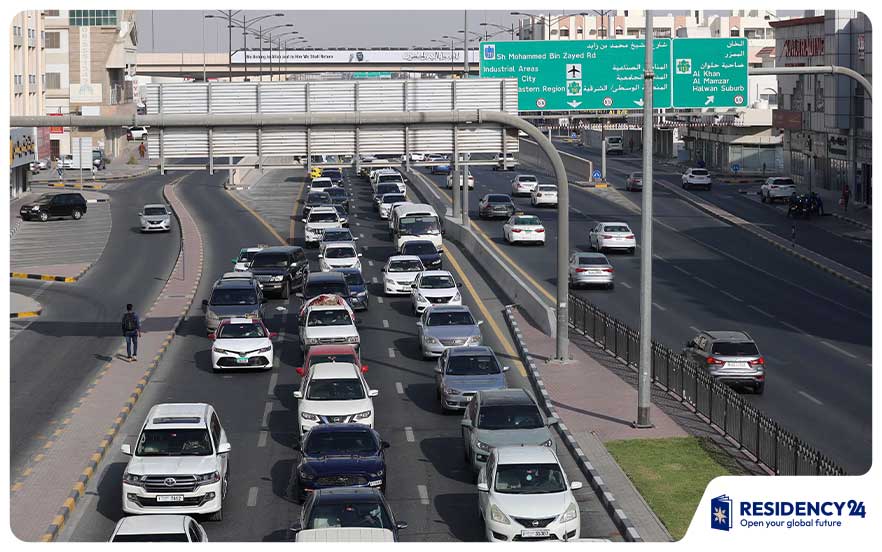
Commute is one of the most important work-life factors in the UAE. The same job can feel very different depending on whether the commute is 15 minutes or 90 minutes each way.
Before choosing where to live and work, check:
Morning traffic
Evening return route
Parking availability
Metro or bus access
Salik tolls
Fuel cost
Taxi availability
School drop-off routes
Weekend access
Whether remote or hybrid work is allowed
Living in Sharjah and working in Dubai can reduce rent, but it may increase daily travel stress. Living near work in Dubai or Abu Dhabi can cost more, but it often improves productivity and routine.
Which UAE City Is Best for Expats?
Dubai is the best UAE city for most expats because it is easier to enter professionally, easier to network, and easier to change jobs. It also has more international schools, business districts, serviced apartments, coworking spaces, and social infrastructure for new arrivals.
Abu Dhabi is best for expats who want stability and have a clear sector match. Sharjah is best for expats with family-cost concerns. Ras Al Khaimah is best for expats in hospitality, manufacturing, and tourism who prefer a slower pace.
New expats should choose based on:
Job offer quality
Visa support
Salary after rent
Employer reputation
Career growth
Commute
Family needs
School access
Healthcare coverage
Long-term residency plans
Most of these points are set by the employer, but the permit behind them is not: UAE residency can be issued through company sponsorship, a free-zone licence, or a property or investment route, and that choice stays with you when you change jobs.
The safest approach is to secure the job first, then choose the city or neighborhood around that job.
Common Mistakes When Choosing a UAE City for Work
Many job seekers choose a city based only on salary or reputation. This can lead to high expenses, long commutes, and weak career fit.
Common mistakes include:
Choosing Dubai without budgeting for rent
Choosing Sharjah without testing the commute
Choosing Abu Dhabi without checking sector demand
Moving to a smaller emirate without backup job options
Accepting a commission-heavy job without reading the contract
Ignoring visa and insurance terms
Comparing salary without comparing living costs
Renting before confirming the workplace location
Assuming all UAE cities have the same job market
Overlooking school fees for families
School fees are the most common blind spot. A place at one of the Top International Schools in Dubai 2026 can cost more per child each year than rent on a family apartment in a smaller emirate, which changes the arithmetic of an otherwise strong offer.
A good UAE work decision should balance salary, sector strength, city costs, commute, and future mobility.
Final Verdict: Which UAE City Should You Choose?
Dubai is the best city in the UAE for work if you want the largest job market, more private-sector roles, stronger networking, and faster career growth. Abu Dhabi is better if your career is linked to energy, government, finance, healthcare, research, AI, policy, or large institutional employers. Sharjah is better if you need lower living costs and can manage the commute. Ras Al Khaimah is better for hospitality, tourism, manufacturing, and industrial roles, while Ajman and Fujairah are more suitable for specific local jobs or quieter, lower-cost living.
For most professionals, Dubai is the best starting point. For specialists, Abu Dhabi may offer the stronger long-term path. For families and cost-sensitive workers, the best city is the one where salary, housing, school, and commute work together. The relocation cases we handle at Residency24 follow the same order almost every time: confirm the offer, confirm the visa route, then choose the address.
Conclusion
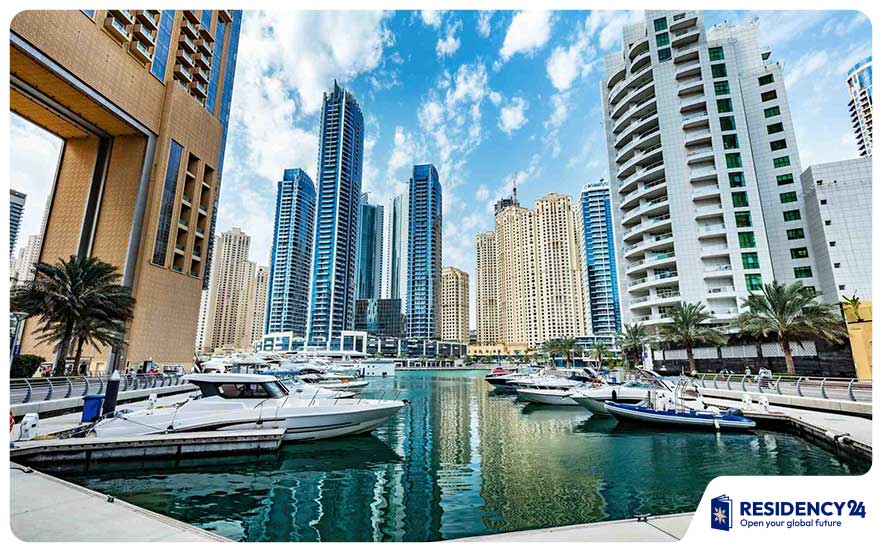
The best city in the UAE for work is Dubai for most job seekers because it offers the widest range of private-sector opportunities, stronger networking, and more career mobility. Abu Dhabi is the strongest alternative for professionals in government-linked sectors, energy, finance, healthcare, education, AI, and institutional roles. Sharjah, Ras Al Khaimah, Ajman, and Fujairah can be practical depending on cost, lifestyle, and sector fit, but they usually offer fewer job options than Dubai or Abu Dhabi. The best decision should not be based only on salary; it should include rent, commute, visa support, school fees, healthcare, and long-term career movement. In the UAE, the right city is the one where your profession has real demand and your monthly budget still works after fixed costs.