 Anahita Attarian
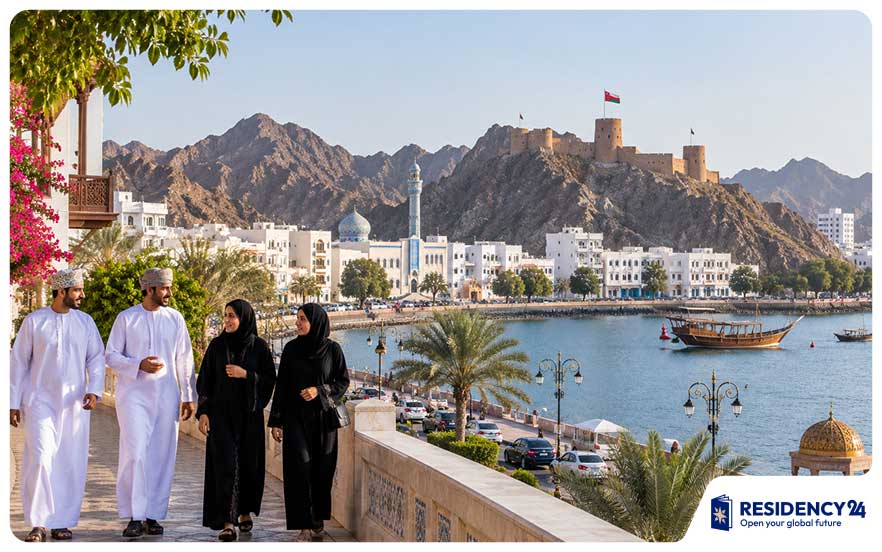
Oman is generally considered one of the safer countries in the Gulf for residents and expats, especially when the question is about everyday crime, family life, public order, and daily personal security. Street crime is low, violent crime is uncommon, and many expats describe Muscat as calm, stable, and family-friendly. That does not mean Oman is risk-free. The main safety concerns for people living in Oman are road accidents, extreme heat, flash floods, regional security tensions, strict local laws, and the need to respect conservative social rules. For most families, professionals, retirees, and long-term expats, Oman can be a safe place to live if housing, transport, healthcare, insurance, and legal compliance are planned properly.
Is Oman Safe to Live?
Yes, Oman is generally safe to live in, especially compared with many regional and international destinations. The country has low street crime, a stable daily environment, and a strong reputation for public order.
Oman’s Foreign Ministry describes the country as one of the safest places in the world with low crime, while the U.S. Department of State notes that street crime is minimal and violent crime is rare. At the same time, several foreign travel advisories in 2026 warn residents and visitors to monitor regional tensions, follow official guidance, and avoid higher-risk areas near Yemen or sensitive military/security facilities.
Oman Safety: Quick Verdict
Safety is one input among several; the wider case for the country is on the investing in Oman page.
Safety Factor | Risk Level | What It Means for Residents |
|---|---|---|
Street crime | Low | Daily life is generally safe, especially in Muscat and established areas |
Violent crime | Low | Serious personal attacks are uncommon, but basic caution is still needed |
Family safety | Strong | Oman is usually comfortable for families and children |
Women’s safety | Generally good | Still use normal caution at night and in isolated areas |
Road safety | Moderate risk | Driving is one of the bigger practical risks |
Regional security | Variable | Monitor current advisories and avoid border/security-sensitive areas |
Weather and natural hazards | Seasonal risk | Heat, cyclones, and flash floods need planning |
Legal/cultural risk | Important | Local laws are strict and should be respected |
Healthcare safety | Good in Muscat | Insurance and private healthcare access matter |
Outdoor safety | Depends on preparation | Mountains, wadis, desert, and sea trips need planning |
The short answer is that Oman is safe for normal daily living, but not casual about rules, roads, weather, or regional context.
Crime in Oman
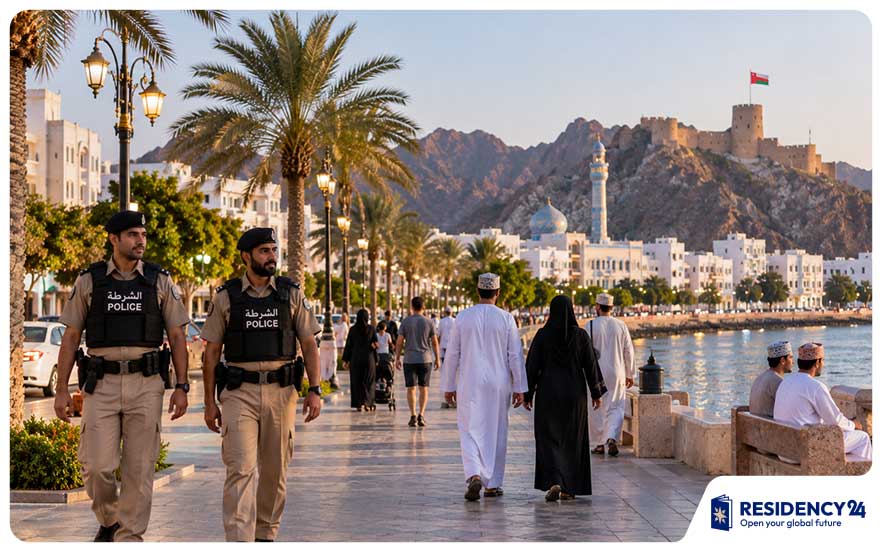
Crime is one of the lowest practical concerns for most expats living in Oman. Petty theft can happen, but it is not usually a defining part of daily life. Residents can generally move around Muscat, shop, go to restaurants, take children to school, and use public spaces without the constant security pressure found in many larger cities.
The U.S. Department of State states that Oman has minimal street crime and that violent crime is rare. Oman’s own Foreign Ministry also describes the country as having one of the lowest crime rates, while still advising basic precautions such as keeping passports, money, and valuables secure.
Common-sense precautions still matter:
Lock your car and home.
Do not leave bags visible in vehicles.
Keep passports and important documents secure.
Use reputable taxi, ride-hailing, or transport options.
Be careful with online money requests and job scams.
Avoid isolated areas late at night.
Report incidents through official police channels.
Oman is safe, but it is not a place where residents should ignore basic personal security.
Is Muscat Safe to Live?
Muscat is generally the safest and most practical city in Oman for expats because it has the strongest mix of housing, schools, hospitals, embassies, police presence, services, and international communities. It is also calmer than many Gulf capitals.
Muscat is suitable for:
Families with children
Single professionals
Teachers
Healthcare workers
Oil and gas professionals
Diplomats
Retirees
Remote workers with legal residence
Business owners
Daily safety in Muscat is usually strong in established areas such as Qurum, Madinat Sultan Qaboos, Al Mouj, Al Khuwair, Ghubrah, Bousher, Azaiba, Seeb, and Ruwi. The more important practical risks are usually traffic, summer heat, housing maintenance, and being far from school or work.
Is Oman Safe for Families?
School provision matters as much as crime figures for families weighing the region - Top International Schools in Dubai 2026 shows what the alternative looks like. Oman is generally very safe for families. The country’s slower pace, conservative social environment, low street crime, and strong family culture make it comfortable for children and parents.
Families usually appreciate:
Calm residential areas
Lower public disorder
Respectful social environment
Good private schools in Muscat
Outdoor weekend options
Beaches, mountains, and wadis
Safer-feeling public spaces
Less aggressive nightlife culture than some larger cities
The main family safety issues are practical rather than crime-related. Parents should check school transport, car-seat rules, housing safety, pool safety, heat exposure, healthcare access, and family visa status. GOV.UK notes that if you live in Oman, you should carry your Omani ID, and its safety guidance also includes road rules such as seatbelts for all passengers and child car seats for children aged three and under.
For families, Oman’s safety is strongest when daily logistics are planned well.
Is Oman Safe for Women?
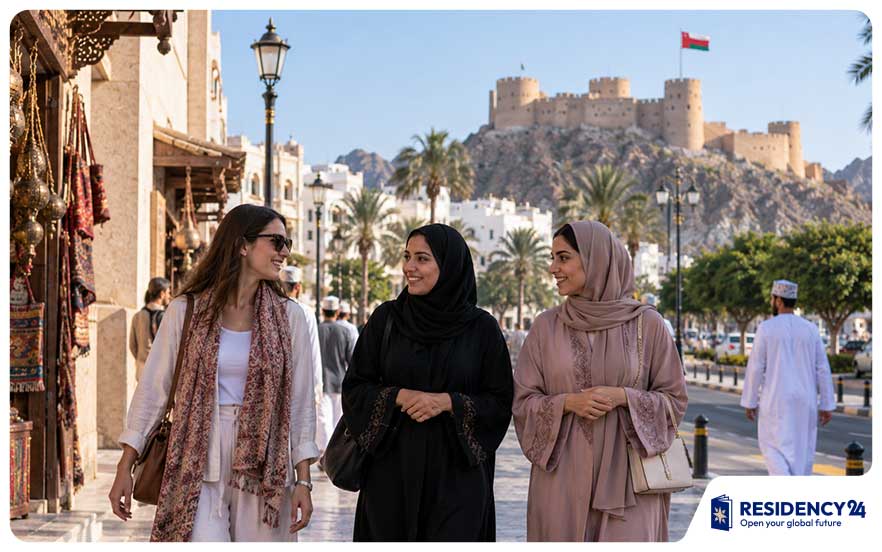
Oman is generally safe for women, including expat women, but normal personal caution is still important. Women can work, drive, shop, study, and live independently, especially in Muscat. The social environment is conservative, so dress, behavior, and public interaction should be adapted to local norms.
GOV.UK states that personal attacks against foreign nationals, including sexual assault and rape, are relatively rare but do happen, and advises care when walking or travelling alone, particularly at night.
Practical safety advice for women includes:
Avoid walking alone late at night in isolated areas.
Use reliable taxi or ride-hailing options.
Dress modestly in public areas.
Avoid remote camping alone.
Keep emergency contacts saved.
Choose housing with good lighting, parking, and access control.
Be cautious with dating apps and online contacts.
Know where the nearest police station and hospital are.
Oman is usually comfortable for women who respect the local environment and use normal urban caution.
Is Oman Safe for Single Expats?
Oman is safe for single expats, but the experience depends on lifestyle expectations. A single person who enjoys quiet routines, outdoor life, gyms, small social circles, and professional stability may find Oman easy. A person looking for nightlife, dense social variety, or a fast dating scene may find it too quiet.
Single expats should pay attention to:
Housing location
Driving and transport
Social isolation
Night-time movement
Health insurance
Work visa status
Local rules around relationships and alcohol
Emergency support network
Oman is safer than many countries in terms of crime, but it is more conservative than many Western or highly international cities. Legal and cultural awareness matters.
Is Oman Safe for Retirees?
Oman can be safe and comfortable for retirees who have a valid residence route, stable income, health insurance, and access to private healthcare. The calm lifestyle, natural scenery, and low crime environment can suit retirees well.
Retirees should check:
Residence eligibility
Health insurance coverage
Access to hospitals and specialists
Medication availability
Heat tolerance
Car dependency
Housing accessibility
Emergency contacts
Estate and inheritance planning
Home-country tax and pension rules
Muscat is usually the safest choice for retirees because it has better healthcare, embassies, housing services, private clinics, and transport options than smaller cities. Smaller towns can be pleasant but may not offer the same medical depth.
Is Oman Safe for Children?
Oman is generally safe for children, especially in family-oriented neighborhoods and school communities. Children can grow up in a relatively calm environment with access to beaches, outdoor activities, and private schools.
The key child-safety risks are:
Road accidents
Pool safety
Heat exhaustion
School transport quality
Food allergies and medical access
Outdoor trips to wadis or mountains
Unsupervised beach or sea activity
Housing hazards in older properties
The Ministry of Foreign Affairs lists 9999 as the emergency number for ambulance help, and the U.S. advisory also lists 9999 for police, ambulance, or fire. Parents should keep this number saved and make sure older children know how to use it.
Road Safety in Oman
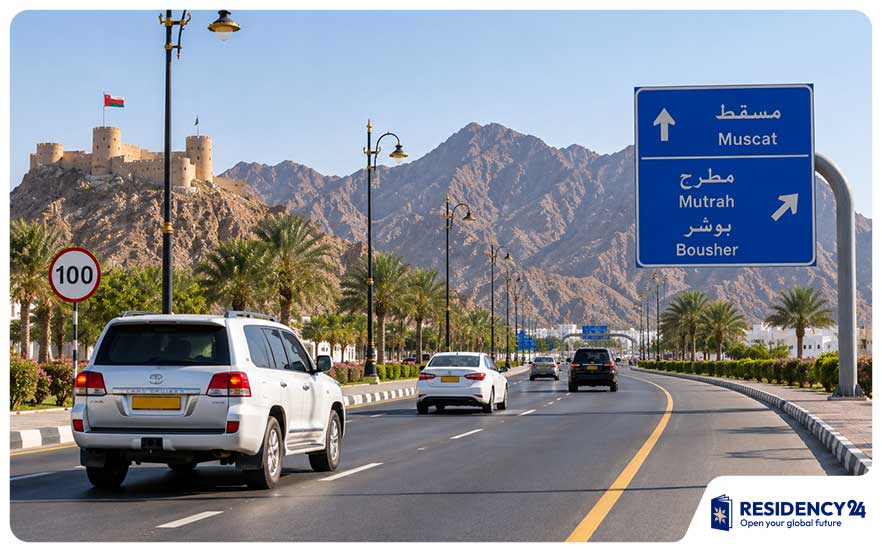
Road safety is one of the main risks of living in Oman. Roads are generally good, especially in Muscat and between major cities, but driving standards can vary, and long-distance roads, desert routes, mountain roads, and wadis require caution.
GOV.UK notes that driving can be dangerous outside Muscat, with risks including wandering camels and goats, sudden floods in dry riverbeds, and less disciplined driving standards than in the UK. It also states that Oman has strict traffic enforcement, with severe penalties for some offences.
Residents should take road safety seriously:
Wear seatbelts every time.
Use child car seats.
Avoid mobile phone use while driving.
Do not drink and drive.
Avoid speeding on highways.
Watch for animals outside cities.
Do not cross flooded wadis.
Use a 4WD for mountain or desert routes.
Keep water in the car.
Check tyres before long drives.
Carry emergency numbers.
Follow Royal Oman Police instructions after accidents.
For many expats, the biggest everyday safety adjustment is not crime. It is driving.
Regional Security Risk
Oman is domestically stable, but it sits in a region where security conditions can change. This is especially relevant in 2026, when several foreign advisories have highlighted risks linked to regional tensions.
GOV.UK’s Oman travel advice, current on 26 August 2026, warns that the Middle East situation remains unpredictable and refers to strikes and retaliatory attacks in the region, including Oman, against U.S. military and civilian infrastructure. The U.S. Department of State issued a Level 3 “Reconsider travel” advisory for Oman on 27 June 2026 because of terrorism and armed conflict risks, with a specific “Do Not Travel” warning for the Yemen border area.
For residents, this does not mean normal daily life in Muscat is unsafe. It means people living in Oman should:
Monitor official advisories.
Avoid the Yemen border area.
Stay away from military and security facilities.
Follow Royal Oman Police and official government instructions.
Keep travel documents valid.
Prepare for possible flight or airspace disruption.
Keep emergency supplies at home.
Register with their embassy if their country offers that service.
Avoid demonstrations and large political gatherings.
Oman’s daily domestic safety is strong, but regional risk should not be ignored.
Terrorism Risk
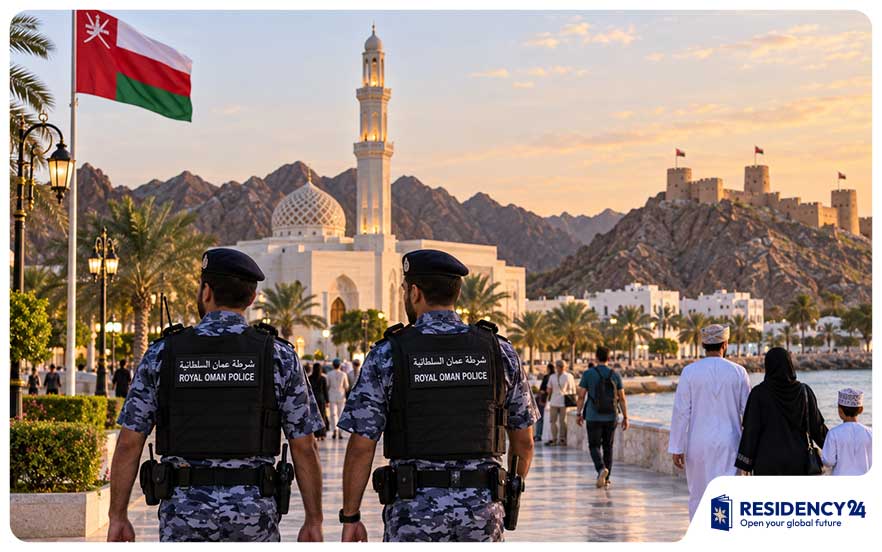
Terrorism risk in Oman is low compared with conflict areas, but it is not zero. Foreign advisories warn that attacks can happen with little warning and that places visited by foreigners, religious sites, transport hubs, malls, hotels, and public gatherings can be targets in many countries.
GOV.UK references the July 2024 shooting incident near a mosque in Wadi Kabir, Muscat, where six people were killed and others injured. The U.S. advisory also warns of terrorism risk and lists potential targets such as political, cultural, religious, transport, market, shopping, entertainment, and government locations.
Practical resident behavior is simple:
Stay aware in crowded places.
Avoid large unplanned gatherings.
Monitor official alerts.
Do not approach security incidents.
Avoid photographing security operations.
Follow police instructions immediately.
Keep embassy and emergency contacts saved.
The risk is not part of normal daily life for most residents, but awareness is necessary.
Natural Hazards and Weather Safety
Oman is safe to live in, but its natural environment needs respect. Extreme heat, flash floods, tropical cyclones, mountain terrain, desert routes, and sea conditions can all create risks.
GOV.UK states that tropical cyclones from the Indian Ocean sometimes affect Oman in July and August and can disrupt services and utilities. It also warns that flash floods can cause injuries and deaths, and that wadis are prone to flash flooding after heavy rainfall from October to March.
Residents should prepare for:
Summer heat
Dehydration
Heat exhaustion
Flash floods
Cyclones
Mountain-road risk
Desert travel risk
Sea and boating risk
Power or utility disruption during severe weather
Basic safety steps include checking weather warnings, avoiding wadis during and after rain, carrying water, not hiking in extreme heat, using a proper vehicle for remote trips, and keeping emergency supplies at home.
Outdoor Safety in Oman
Oman is excellent for outdoor living, but outdoor safety depends on preparation. Many of the country’s best experiences are in wadis, mountains, deserts, beaches, and remote coastal areas. These are not controlled urban environments.
GOV.UK advises following marked trails when hiking, warns that extreme heat has caused deaths from dehydration and heat exhaustion, and says desert and mountain road trips can be dangerous without a well-equipped 4WD.
For outdoor trips:
Check the weather before leaving.
Avoid wadis after rain.
Use a 4WD where needed.
Travel in convoy for remote areas.
Carry extra water.
Tell someone your route.
Carry a charged phone or satellite phone.
Avoid hiking in peak heat.
Use life jackets on boats.
Do not swim in rough sea conditions.
Follow local warnings and closure signs.
Oman is safe for outdoor life when people treat nature seriously.
Healthcare Safety
Oman has good healthcare access in Muscat, especially through private clinics and hospitals, but residents should not move without health insurance. Medical access outside Muscat can be more limited, especially in remote areas.
GOV.UK’s living-in-Oman guidance states that Oman does not have a reciprocal health agreement with the UK and advises residents to have appropriate health insurance. It also notes that most Omani employers provide medical cover for foreign national employees.
Before moving, check:
Employer insurance network
Family coverage
Maternity coverage
Dental and optical limits
Chronic medication coverage
Emergency treatment
Specialist access
Ambulance and evacuation coverage
Hospitals near home and school
Coverage outside Muscat
Healthcare safety in Oman depends less on crime and more on preparation. A good insurance policy is essential.
Legal and Cultural Safety
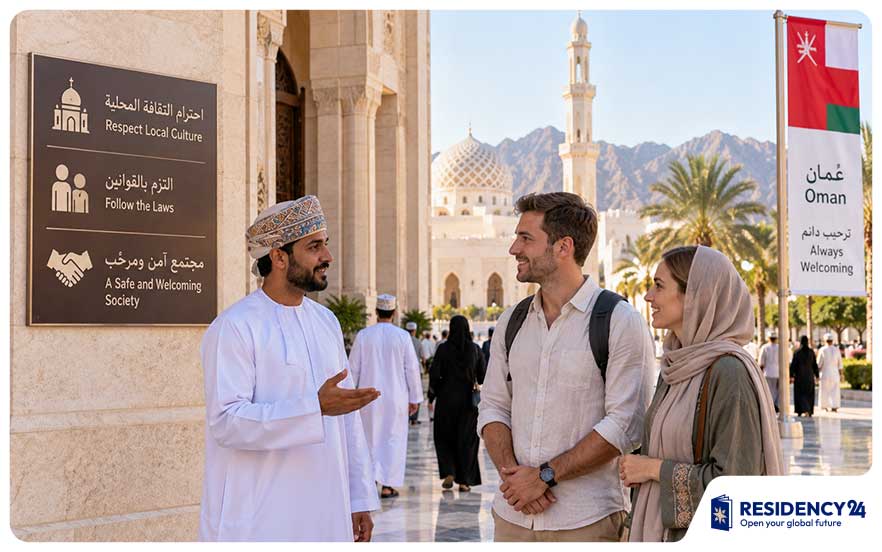
Oman is safe, but it is not legally casual. The country has conservative social rules, Islamic legal norms, and strict penalties for some behavior that might be treated more lightly elsewhere.
Oman’s Foreign Ministry advises conservative dress, respect for local customs, permission before photographing people, and warns that photographing some government or military sites is not allowed. It also states that alcohol is only allowed in licensed venues, public drunkenness is an offence, e-cigarettes are illegal, and eating, drinking, or smoking in public during Ramadan daylight hours is forbidden.
GOV.UK adds that public swearing or rude gestures, including while driving, can be illegal, and that social media content can also create legal problems. It also warns that same-sex sexual activity is illegal in Oman.
Residents should be careful about:
Public behavior
Alcohol use
Social media posts
Photography
Drones
Public affection
Dress codes
Ramadan rules
Debt and unpaid bills
Driving offences
Relationship and family law
Business permits and work authorization
For expats, the biggest legal risk is often assuming Oman works like their home country. It does not.
Financial and Debt Safety
Financial safety in Oman also means avoiding unpaid debts, bounced cheques, unpaid rent, traffic fines, and unresolved bills. These can create serious consequences for foreign residents.
GOV.UK states that foreign nationals must pay all debts and traffic fines before leaving Oman and warns that financial crimes and unpaid bills can lead to imprisonment, fines, deportation, frozen bank accounts, asset seizure, blocked access to future sponsors, and delays or prevention from leaving the country.
Residents should manage:
Rent cheques
Car loans
Credit cards
Utility bills
Traffic fines
Company debts
School fees
End-of-service settlement
Bank account closure before exit
Visa cancellation before leaving permanently
Oman is safe for financially organized residents. It can become risky for people who ignore debts or paperwork.
Is Oman Safe for LGBT+ Expats?
Oman is not legally safe for LGBT+ expats in the same way as liberal jurisdictions. Same-sex sexual activity is illegal, and public expression of LGBT+ identity can carry legal and social risk.
GOV.UK states that same-sex sexual activity is illegal in Oman, while the U.S. advisory states that same-sex relationships are criminalized and can be subject to imprisonment.
This does not mean every LGBT+ person will face a visible issue in private daily life, but it does mean legal risk is real. LGBT+ expats should understand the law before moving, avoid public exposure that could create risk, and review advice from their embassy or trusted legal sources.
Is Oman Safe for Western Expats?
Oman is generally safe for Western expats, but Western residents should be aware of regional advisories, cultural rules, legal differences, and political sensitivities. Daily crime risk is low, but behavior that may be normal in Western countries can be illegal or socially unacceptable in Oman.
Western expats should be especially careful about:
Alcohol laws
Public drunkenness
Public arguments
Social media posts
Photographing people or official sites
Drones
Dress codes
Public displays of affection
Relationship laws
Debt and cheques
Driving offences
Regional political discussions
GOV.UK specifically advises residents and visitors to respect local traditions, laws, customs, and religions at all times because Oman’s laws and customs differ from those in the UK.
Is Oman Safe Compared With Dubai?
The two differ far more on cost and pace than on personal safety; Cost of Living in Dubai in 2026 and UAE vs Oman vs Turkey put numbers on that. Oman and Dubai are both generally safe, but they feel different. Dubai is more urban, faster, more commercial, and more internationally serviced. Oman is quieter, more conservative, more nature-focused, and usually lower-pressure.
Oman may feel safer for people who value:
Quiet neighborhoods
Family routine
Low street crime
Less nightlife
Slower daily pace
Natural outdoor life
Conservative social environment
Dubai may feel safer for people who value:
More hospitals and specialists
Larger transport network
More international schools
Larger expat community
More regulated service infrastructure
More lifestyle choices
Easier airport connectivity
Dubai offers more systems and services. Oman offers more calm and social quiet. The safer choice depends on the person’s lifestyle and risk profile.
Safest Places to Live in Oman
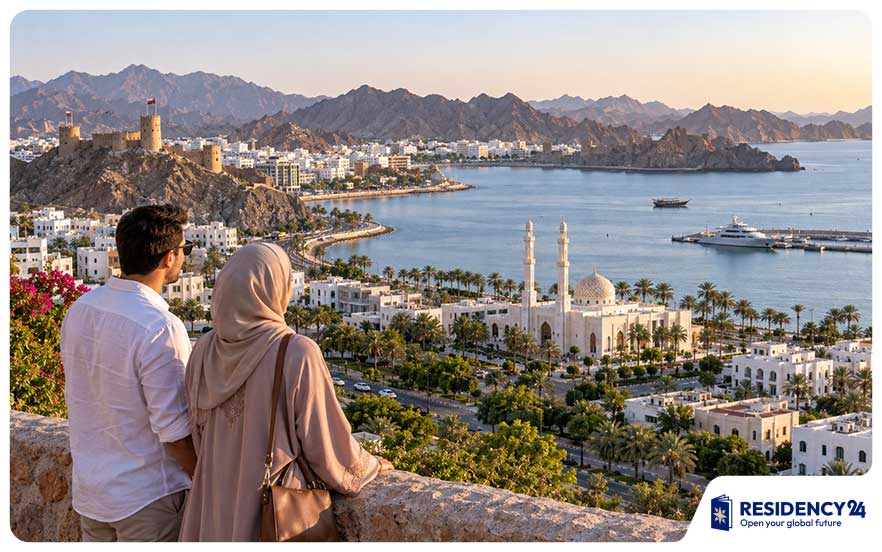
Where you settle usually follows the residence route - see Oman investor residency and buy property in Oman. For most expats, the safest practical choice is Muscat. Within Muscat, safety is usually less about crime and more about housing quality, commute, access to hospitals, school routes, and neighborhood maintenance.
Common expat-friendly areas include:
Al Mouj
Qurum
Madinat Sultan Qaboos
Al Khuwair
Ghubrah
Bousher
Azaiba
Seeb
Ruwi
Outside Muscat, Salalah, Sohar, Nizwa, Sur, and Duqm can be safe, but they are more job- or lifestyle-specific. The smaller the city, the more important it is to check healthcare, school, transport, and expat support before moving.
Safety Checklist Before Moving to Oman
Getting the visa, housing and banking sequence right removes most of the avoidable risk: Residency24 works across residency, property purchase, company formation and investment planning. Before moving to Oman, check the safety basics:
Confirm your visa and sponsor.
Make sure your residence card process is clear.
Review current travel advisories.
Choose housing near school or work.
Check building safety and maintenance.
Confirm health insurance coverage.
Save emergency number 9999.
Arrange reliable transport.
Learn local driving rules.
Avoid remote travel without preparation.
Understand Ramadan rules.
Follow alcohol laws.
Do not use drones without a licence.
Avoid photographing people or official sites without permission.
Keep debts, fines, and bills clear.
Register with your embassy if available.
Keep copies of passport, visa, ID, insurance, and lease documents.
This checklist covers the risks that affect residents in real life.
Common Safety Mistakes Expats Make in Oman
Most safety problems for expats in Oman are avoidable. They usually come from underestimating roads, heat, local law, or documentation.
Common mistakes include:
Driving too fast on highways
Crossing flooded wadis
Hiking without enough water
Ignoring cyclone or weather warnings
Assuming public drunkenness is tolerated
Using e-cigarettes
Flying drones without permission
Taking photos of people or official sites
Not carrying Omani ID as a resident
Signing rent cheques without budgeting properly
Ignoring traffic fines
Moving without proper health insurance
Treating Oman like Dubai or Europe socially
Camping alone in remote areas
Not monitoring regional security alerts
Oman is safe when people adapt to the country’s rules and environment.
Who Is Oman Safest For?
Oman is especially safe and suitable for people whose lifestyle matches the country’s pace and culture.
Oman is a strong fit for:
Families with children
Professionals with stable employment
Teachers
Healthcare workers
Oil and gas employees
Engineers
Retirees with private income
Remote workers with legal residence
Outdoor-oriented expats
People who prefer quiet living
Oman may be less suitable for:
People who want nightlife-heavy living
People who dislike driving
People who need a large social scene
People who want liberal relationship laws
People who travel often to regional conflict-sensitive areas
People who do not want to follow conservative public norms
People without health insurance or legal residence
Safety is partly about the country and partly about fit. Oman is safest for residents who respect that fit.
Conclusion
Oman is safe to live in for most expats, families, professionals, and retirees, especially in Muscat and established residential areas. Crime levels are low, violent crime is rare, and daily public life is generally calm. The main safety risks are not usually street crime; they are road accidents, extreme heat, flash floods, remote outdoor travel, strict local laws, financial obligations, and changing regional security conditions. Oman is also a conservative country, so residents should respect dress codes, alcohol rules, Ramadan restrictions, photography limits, drone laws, and public-behavior rules. For people who want a stable, quiet, family-friendly Gulf lifestyle, Oman can be one of the safer places to live. The best approach is to move with proper visa status, health insurance, reliable housing, safe transport, and a clear understanding of local law.
Frequently Asked Questions
Is Oman safe for expats?
Yes, Oman is generally safe for expats. Street crime is low, violent crime is rare, and daily life is calm, especially in Muscat. Expats should still follow local laws, drive carefully, and monitor regional advisories.
Is Oman safe for families?
Yes, Oman is usually very safe for families. It has a quiet lifestyle, low public disorder, family-friendly neighborhoods, and good private schools in Muscat. Road safety, heat, school transport, and healthcare access should still be planned.
Is Muscat safe at night?
Muscat is generally safe at night in established areas, but normal caution is still needed. Avoid isolated places, use reliable transport, and take extra care when walking or travelling alone late at night.
What is the biggest safety risk in Oman?
For most residents, the biggest practical safety risk is road travel. Extreme heat, flash floods, remote outdoor trips, and strict legal rules are also important risks.
Is Oman safer than Dubai?
Both Oman and Dubai are generally safe. Oman feels quieter and more conservative, while Dubai has more services, transport, healthcare choice, and international infrastructure. The safer choice depends on lifestyle, family needs, and risk profile.