 Anahita Attarian
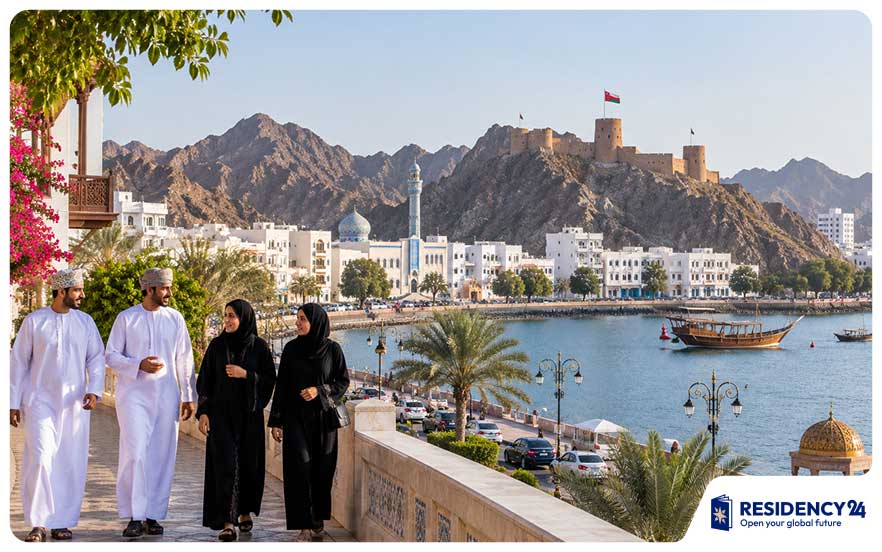
Living in Oman as an expat is usually quieter, more family-oriented, and less commercially intense than living in Dubai, Doha, or Riyadh. The country appeals to foreign professionals, teachers, healthcare workers, engineers, energy-sector employees, business owners, retirees, and families who want a safer Gulf lifestyle with lower daily pressure. Muscat is the main expat base, but Salalah, Sohar, Duqm, Nizwa, and Sur can also suit specific jobs or lifestyle needs. The main things to check before moving are visa sponsorship, family eligibility, rent, school fees, healthcare, transport, cultural rules, and whether the salary package covers housing, education, insurance, and annual flights.
Is Oman a Good Place to Live as an Expat?
Oman can be a good place to live as an expat if you want safety, slower daily life, natural landscapes, family-friendly routines, and a more conservative but welcoming social environment. It is less suitable if you want intense nightlife, a large public transport network, very high salary growth, or the same level of international entertainment found in Dubai.
The strongest expat fit is usually a person or family with stable employment, good health insurance, a car, and a clear housing or school plan. The weakest fit is someone who arrives without a job, expects informal work flexibility, or underestimates school and housing costs.
Living in Oman as an Expat: Quick Summary
Factor | What Expats Should Know |
|---|---|
Main expat city | Muscat |
Best for | Families, professionals, teachers, engineers, healthcare workers, business owners |
Lifestyle | Quiet, safe, conservative, outdoor-oriented |
Main cost drivers | Rent, school fees, car ownership, private healthcare, imported goods |
Work visa | Usually employer-sponsored |
Family visa | Available under conditions for spouse and children below 21 |
Healthcare | Private healthcare and insurance are important for expats |
Tax | No broad personal income tax in force yet, but PIT starts in 2028 above OMR 42,000 annual income |
Transport | Car ownership is usually necessary |
Weekend | Friday and Saturday |
Main adjustment | Slower pace, conservative customs, heat, limited public transport |
Oman is not the cheapest Gulf country for every lifestyle, but it is often more controllable than the UAE or Qatar if rent and school costs are managed.
Best Cities in Oman for Expats

Muscat is the best city in Oman for most expats because it has the widest choice of jobs, schools, hospitals, restaurants, housing, embassies, and services. Other cities can work well when the job is tied to energy, logistics, ports, tourism, education, or government projects.
City | Best For | Main Limitation |
|---|---|---|
Muscat | Corporate jobs, families, international schools, healthcare, embassies | Higher rent and traffic than smaller cities |
Salalah | Tourism, slower lifestyle, Dhofar climate, families | Fewer international school and corporate options |
Sohar | Industrial, logistics, port, manufacturing jobs | More job-specific expat community |
Duqm | Project-based industrial and logistics work | Limited lifestyle infrastructure compared with Muscat |
Nizwa | Education, local lifestyle, lower-cost living | Fewer expat services |
Sur | Coastal living, energy-sector access, quieter routine | Smaller job and school market |
For most newcomers, Muscat is the safest first choice. Smaller cities can be good, but they require more research before relocation.
Visa and Residency for Expats in Oman
The routes and their thresholds are summarised on the Oman investor residency page. Most expats live in Oman through employment sponsorship, investor residency, property-linked residence, or family joining visas. The right route depends on whether the person is an employee, business owner, investor, property owner, spouse, or dependent.
For employment, the Royal Oman Police states that a work visa is granted at the request and responsibility of a local sponsor, and the applicant must not be below 21. The occupation on the visa application must match the labour permit, and the application normally requires a passport valid for at least six months, labour permit, and other documents depending on nationality and profession.
Every foreigner residing in Oman must obtain a residence card, and the government residence-card service lists required documents such as the application form, original passport, Ministry of Labour data form for private-sector workers, employer letter for government workers, and medical examination.
Work Visa and Employment Sponsorship
For most expats, the employer controls the work-visa process. This makes the quality of the employer important. A good job offer should clearly state salary, housing allowance, medical insurance, annual leave, probation, school allowance, family visa support, air tickets, and end-of-service benefits.
Before accepting a job in Oman, check:
Is the employer the actual sponsor?
Is the job title correct in the labour permit?
Does the salary match the contract?
Is housing included or separate?
Is family sponsorship included?
Does medical insurance cover private hospitals?
Are annual flights included?
Who pays visa and medical costs?
What happens if the contract ends early?
Is the role affected by Omanisation policies?
Some jobs are more restricted for foreign workers because of Omanisation. Expats should check whether their profession is open, restricted, or subject to changing labour-market rules before resigning from a job elsewhere.
Family Visa for Expats in Oman

Oman allows eligible expatriate employees to bring family members under a family joining visa. The Royal Oman Police describes the family joining visa as available for an expatriate employee’s spouse and children below 21, valid for two years and multi-entry. The listed requirements include a senior job according to GCC standards, accommodation rented in the employee’s name or employer’s name, and a monthly salary of at least RO 600.
Families should check the family-visa file before relocating. Documents may include passport copies, photos, employer forms, salary proof or bank statements, authenticated marriage certificate, and residential lease agreement.
A family move to Oman should not be planned only around the employee’s visa. The spouse and children need their own dependent status, school placements, insurance, and housing documents.
Investor and Property Residence Options
Ownership rules, eligible zones and transfer costs are covered under buy property in Oman. Oman also has residence options for investors and certain property owners. Gov.om states that residential unit owners within integrated tourism complexes can obtain a residence visa valid for two years, with required documents including passport copy, personal photo, property ownership copy, and a letter indicating the property location.
Oman also has a Golden Residency program for business owners, entrepreneurs, and investors. The official portal says applicants may qualify by starting or investing in a business, owning property in tourism zones, buying bonds or listed shares, holding a fixed-term deposit, employing 50 or more Omanis, or being nominated by an invested company.
The government’s business platform also describes an Investor Residence Platform offering 5- or 10-year renewable permits, with property ownership outside integrated tourism complexes and family sponsorship among program features.
These routes should be checked carefully before buying property or starting a company. Property ownership and long-term residence are connected only when the investment meets the relevant program conditions.
Cost of Living for Expats in Oman
For the obvious comparison point, Cost of Living in Dubai in 2026 gives the Gulf benchmark most people arrive with. The cost of living in Oman is moderate by Gulf standards, but it depends heavily on rent, schools, car use, and lifestyle. A single expat in Muscat can often live comfortably with controlled rent and moderate spending. A family with children in international schools needs a much larger package.
Muscat rent data for 2026 shows average monthly rent around OMR 190 for a studio, OMR 280 for a one-bedroom apartment, and OMR 600 for a three-bedroom apartment. The same source notes that Muscat rents are often paid quarterly or bi-annually in advance, which matters for cash-flow planning.
A practical monthly budget:
Household Type | Controlled Budget | Comfortable Budget |
|---|---|---|
Single expat | OMR 500–800 | OMR 800–1,300 |
Couple | OMR 800–1,400 | OMR 1,400–2,300 |
Family without international school | OMR 1,300–2,200 | OMR 2,200–3,500 |
Family with international school | OMR 2,000–4,000 | OMR 4,000–6,000+ |
Oman’s inflation rate rose 3.2% year on year in July 2026, with food and non-alcoholic beverages up 7.3% and transport up 6.5%, according to NCSI data reported by Times of Oman. This means grocery and transport budgets should include a buffer, especially for families.
Housing in Oman for Expats
Most expats rent before buying. This is practical because it gives time to understand commute, school routes, heat, traffic, neighborhood character, and landlord standards.
Popular Muscat areas for expats include:
Al Mouj
Qurum
Madinat Sultan Qaboos
Al Khuwair
Ghubrah
Bousher
Azaiba
Seeb
Ruwi
Premium areas usually offer better facilities, newer homes, and stronger expat communities, but rent and service costs are higher. More practical districts can reduce costs significantly while still giving access to schools, offices, and supermarkets.
Before signing a lease, check:
Payment schedule
Security deposit
Maintenance responsibility
Air conditioning condition
Parking
Water pressure
Internet availability
Pest control
Building management
Distance to school and office
Whether the lease supports family visa documentation
The cheapest apartment is not always the best value. In Oman, poor air conditioning, weak maintenance, or long commute can make a cheaper home expensive in daily life.
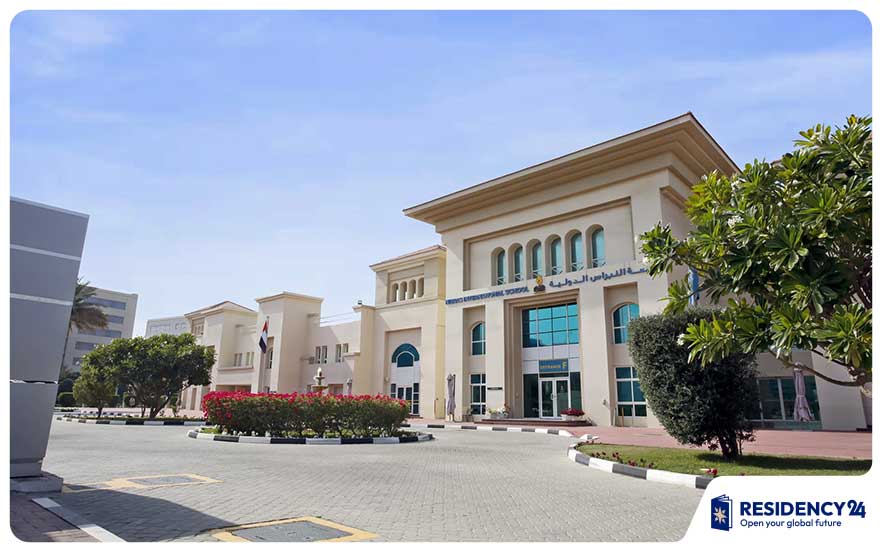
Schools for Expat Families

School fees are one of the biggest costs for expat families in Oman. Muscat has a range of British, American, IB, Indian, and international schools, but fees vary widely.
Muscat International School by Amity lists 2026/27 annual tuition from OMR 3,680 for FS1 to OMR 7,500 for Year 12, and notes that uniforms, transport, ministry textbooks, and external activities require additional fees. ABA Oman International School lists a non-refundable enrolment fee structure for KG to Grade 12 students, including options of RO 3,500 or instalments depending on the payment route.
Families should budget for:
Tuition
Registration or enrolment fees
Assessment fees
Uniforms
Books and ministry textbooks
School transport
Activities
Exam fees
Learning support
Capital or infrastructure fees
Laptop or device requirements
A salary package without school allowance can be weak for a family, even if the base salary looks attractive.
Healthcare and Insurance
Expats should check health insurance carefully before moving to Oman. A policy should not be judged only by whether it exists; the hospital network, exclusions, maternity terms, dental coverage, co-payments, and emergency coverage matter.
Oman’s Dhamani platform is a national health insurance platform designed to connect insurance and healthcare institutions and streamline health insurance transactions. The Financial Services Authority has described Dhamani as part of a compulsory health insurance framework for private-sector employees, expatriates, and visitors.
Before accepting a job offer, ask:
Which hospitals are included?
Is family coverage included?
Are pre-existing conditions covered?
Is maternity covered?
Are dental and optical included?
What are the co-payments?
Is emergency treatment covered?
Is treatment outside Oman covered?
Does the policy cover chronic medication?
For families, health insurance can be more important than a small salary difference.
Transport and Driving
Car ownership is usually necessary for expats in Oman. Muscat has buses and taxis, but public transport is not enough for every daily routine, especially school runs, family life, and suburban housing.
Mwasalat operates Muscat city routes connecting areas such as Al Mabelah, Muscat International Airport, Ruwi, Wadi Kabir, Al Alam Palace, Burj Sahwa, Al Khuwair, and Azaiba. Still, many expats need a car because housing, schools, offices, supermarkets, beaches, and weekend destinations are spread out.
Driving costs include:
Car purchase or lease
Insurance
Registration
Fuel
Parking
Maintenance
Tyres
Repairs
Possible second car for families
A family should decide early whether one car is enough. In many households, one working adult and one school-running adult make two cars more practical.
Work Culture in Oman
Salary bands and hiring depth are thinner than the UAE - see Best City in the UAE for Work for the contrast. Work culture in Oman is usually formal, relationship-based, and less aggressive than some larger Gulf markets. Hierarchy matters, but communication is often polite and indirect. Decisions may take longer than expected, especially when government approvals, senior sign-off, or cross-department coordination is involved.
The standard working week in Oman is commonly Sunday to Thursday, with Friday and Saturday forming the weekend; Visit Oman also notes this working-week pattern for visitors planning around embassies and services.
Expats should adapt to:
Formal greetings
Respect for hierarchy
Slower decision cycles
Careful written communication
Ramadan working-hour changes
Public holiday adjustments
Relationship-building before direct negotiation
Different expectations between government, family businesses, and multinationals
Oman rewards patience. A direct style can work, but it should not become blunt or dismissive.
Culture and Daily Etiquette

Oman is conservative, but usually welcoming toward foreigners who respect local customs. The Ministry of Foreign Affairs advises visitors to dress conservatively, especially at religious sites, avoid noisy or unruly behaviour, ask permission before photographing people, and avoid photographing some government or military sites.
Alcohol is available in licensed venues such as hotels, restaurants, and clubs, but public drunkenness and drinking alcohol in public are offences. The same official guidance states that the legal drinking age is 21 and that importing or using e-cigarettes is illegal in Oman.
During Ramadan, eating, drinking, and smoking in public during daylight hours are forbidden for Muslims and non-Muslims. Expats should be especially careful about public behavior, dress, workplace scheduling, and restaurant opening hours during this period.
Safety and Quality of Life
Oman is widely seen as one of the safer countries in the region. The Ministry of Foreign Affairs describes Oman as one of the safest and most relaxing countries to visit and advises normal precautions such as keeping passports, money, and valuables secure.
Quality of life is strongest for people who enjoy:
Beaches
Mountains
Wadis
Desert trips
Camping
Diving
Hiking
Quiet weekends
Family routines
Low-pressure social life
The Ministry of Foreign Affairs describes Oman’s landscape as varied, from the Al Hajar Mountains and Jabal Akhdar to the Sharqiyah Sands, Dhofar, Musandam, wadis, beaches, turtle sanctuaries, and coastal wildlife.
Oman is not designed around constant entertainment. Its strength is outdoor life, stability, and lower social noise.
Weather and Climate
Oman has a hot climate, and summer can be difficult for newcomers. Muscat and northern Oman are very hot from late spring through early autumn, while Dhofar has a different seasonal pattern during Khareef.
The Ministry of Foreign Affairs states that September to March is the ideal time to visit Oman, with climate around 25 to 30°C, while the Al Hajar mountains and Dhofar can remain more moderate during summer.
Expats should plan for:
High summer electricity bills
Indoor routines during hot months
Car maintenance under heat
Strong sun exposure
Hydration
School and outdoor activity timing
Weekend trips to mountains or Dhofar during hotter periods
A home with efficient air conditioning is not a luxury in Oman. It is a basic quality-of-life requirement.
Taxes for Expats in Oman
Oman has historically been attractive for expats because there has been no broad personal income tax like in many Western countries. However, this is changing for higher earners.
Oman issued Royal Decree No. 56/2025 on Personal Income Tax. The Tax Authority states that the law applies to natural persons whose total annual income exceeds OMR 42,000, with a 5% tax rate on taxable income, and that the law will enter into force at the beginning of 2028.
This means most expats in 2026 are not yet paying this new PIT, but higher earners should prepare for the 2028 change. The Tax Authority also states that approximately 99% of the population is not expected to be subject to the tax.
Expats should also consider:
Home-country tax residence
Double-tax rules
Rental income outside Oman
Investment income
Company ownership
End-of-service payments
Cross-border consulting income
Tax planning matters more for high-income expats, consultants, business owners, and people with income in multiple countries.
Banking and Money Management

Opening an account before residency is issued is rarely straightforward anywhere in the Gulf; Bank Account for Non-Residents in the UAE shows how the same problem is handled next door. Oman’s banking system is stable, but expats should prepare documents before opening an account. Banks may request residence card, passport, salary certificate, employer letter, tenancy contract, and local mobile number.
A practical banking setup includes:
Local salary account
Debit card
Credit card, if needed
Online banking
Mobile wallet or payment app
International transfer method
Emergency cash reserve
Home-country account kept active
The Omani rial is a strong currency and is pegged to the US dollar, which makes budgeting more stable than in countries with volatile exchange rates. Expats sending money home should still watch transfer fees, bank spreads, and timing.
Social Life for Expats
Social life in Oman is quieter and more community-based than in larger expat hubs. Friendships often form through work, schools, sports clubs, compounds, religious communities, outdoor groups, and children’s activities.
Common expat social channels include:
School parent groups
Company networks
Sports clubs
Hiking groups
Diving groups
Gym communities
Embassy events
Religious communities
Neighborhood compounds
Volunteer groups
The adjustment can be harder for single expats who expect a large nightlife scene. It is easier for families, outdoor people, and professionals who prefer smaller social circles.
Pros of Living in Oman as an Expat
Oman has several practical advantages for expats who want stability and a slower lifestyle.
Main advantages include:
Safe daily environment
Family-friendly lifestyle
Beautiful natural landscapes
Less commercial pressure than Dubai
Strong outdoor activities
Friendly local culture
Good private healthcare in Muscat
Good international school options in Muscat
Lower rent than many premium Gulf locations
Stable currency
Conservative but welcoming social environment
The biggest advantage is balance. Oman gives Gulf salaries and infrastructure with a calmer pace of life.
Cons of Living in Oman as an Expat
Oman also has limitations. These are not always deal-breakers, but they should be understood before relocation.
Main disadvantages include:
Limited public transport
Car dependency
Hot summers
Smaller job market than UAE or Saudi Arabia
Fewer nightlife and entertainment options
School fees can be high
Some professions are affected by Omanisation
Slower bureaucracy
Fewer international flights than Dubai
Smaller expat scene outside Muscat
Family visa conditions can limit relocation plans
High imported-goods costs
Oman is usually better for people who value calm and stability more than speed and variety.
Living in Muscat as an Expat

Muscat is the default expat choice because it has the strongest mix of work, schooling, hospitals, shopping, restaurants, embassies, and housing options. It is spread along the coast, so daily life depends heavily on where you live compared with work and school.
Muscat suits:
Corporate professionals
Teachers
Healthcare workers
Embassy staff
Energy-sector employees
Families with children
Consultants
Business owners
Retirees with private income
A good Muscat setup usually means living close to either school or work. Trying to optimize rent only can create daily commuting stress.
Living in Salalah as an Expat
Salalah is quieter than Muscat and has a different climate pattern because of Khareef, the seasonal monsoon in Dhofar. It can be attractive for people who want a slower pace, greenery during the season, and a smaller community.
Salalah suits:
Tourism workers
Education workers
Families seeking a quieter city
Retirees
People who prefer a slower coastal lifestyle
Professionals tied to Dhofar-based roles
The limitation is choice. There are fewer international school, specialist healthcare, and corporate job options than in Muscat.
Living in Sohar or Duqm as an Expat
Sohar and Duqm are more job-specific expat destinations. They can work well for people in ports, logistics, industrial projects, oil and gas, manufacturing, and infrastructure.
These cities suit:
Engineers
Project managers
Port and logistics professionals
Industrial workers
Construction specialists
Energy-sector employees
The main issue is lifestyle fit. The job may be good, but the social and family infrastructure may feel limited compared with Muscat.
Moving to Oman With Children
Moving to Oman with children can work well if school, housing, and healthcare are planned early. Oman is family-friendly, but school availability and fees should be checked before arrival.
Before moving with children:
Shortlist schools before choosing housing.
Check curriculum continuity.
Confirm annual tuition and extra fees.
Ask about transport routes.
Check waiting lists.
Confirm family visa eligibility.
Check pediatric healthcare access.
Choose housing near school or work.
Budget for uniforms and activities.
Plan summer indoor routines.
For many expat families, school location should decide the neighborhood, not the other way around.
Moving to Oman as a Single Expat
Single expats can live well in Oman, but the experience depends on personality. People who enjoy outdoor life, gyms, quiet routines, small friend groups, and professional stability usually adapt better.
Single expats should think carefully about:
Housing location
Car access
Social groups
Gym or sports routines
Weekend activities
Dating and social expectations
Work-life balance
Travel budget
Saving goals
Oman can be excellent for saving money if rent and lifestyle are controlled. It can feel too quiet for people who want dense nightlife or constant events.
Moving to Oman as a Retiree

Oman can be attractive for retirees who want safety, nature, warm weather, and a slower pace. However, retirement in Oman requires a clear residence route, private healthcare plan, and realistic cost planning.
Retirees should check:
Residence eligibility
Health insurance
Access to private hospitals
Medication availability
Housing accessibility
Car dependency
Heat tolerance
Community and social life
Estate planning
Home-country pension and tax rules
Retirement in Oman works best when the person has stable income and does not depend on finding work locally.
Common Mistakes Expats Make in Oman
Many expat problems are avoidable. The main mistakes happen before arrival, not after.
Common mistakes include:
Accepting a salary without calculating rent and school fees
Assuming public transport is enough
Moving before family visa eligibility is confirmed
Ignoring health insurance details
Renting too far from school or work
Underestimating summer heat
Expecting Dubai-style entertainment
Not checking Omanisation rules for the profession
Signing a lease without checking maintenance
Assuming every property gives residence
Ignoring cultural rules during Ramadan
Not planning tax changes from 2028 for higher earners
A good Oman relocation is planned around the full package, not only the base salary.
Checklist Before Moving to Oman
Visa route, company and property decisions are best sequenced together: Residency24 works across residency, company formation, property purchase and investment planning, and the country case sits on investing in Oman. Before relocating to Oman, use this checklist:
Confirm visa type and sponsor.
Confirm job title and contract terms.
Check family visa eligibility.
Calculate rent by area.
Check school fees before accepting the salary.
Review health insurance network.
Plan car purchase, lease, or rental.
Check work location and commute.
Prepare attested documents.
Confirm residence card process.
Budget for deposits and advance rent.
Learn basic cultural rules.
Prepare for summer heat.
Keep home-country bank and tax records updated.
Build an emergency fund before arrival.
This checklist is especially important for families because the first-year costs can be high.
Conclusion
Living in Oman as an expat can be a strong choice for people who want safety, family stability, outdoor life, and a quieter Gulf lifestyle. Muscat is the best base for most expats because it offers the strongest mix of jobs, schools, healthcare, housing, and services, while Salalah, Sohar, Duqm, Nizwa, and Sur suit more specific work or lifestyle needs. The main practical issues are visa sponsorship, residence card, family visa eligibility, rent, school fees, private healthcare, car dependency, and cultural adjustment. Oman is usually calmer and less expensive than some larger Gulf hubs, but it is not automatically cheap, especially for families using international schools. A good move depends on the full employment package, not just the headline salary. Expats who plan housing, schooling, insurance, transport, and residency before arrival usually adapt much more easily.