 Anahita Attarian
A digital nomad visa is a temporary residence permit that allows remote workers, freelancers, business owners, or employees of foreign companies to live legally in another country while earning income from outside that country. It is designed for people who do not need a local employer but want more legal stability than a tourist visa provides. Most digital nomad visa programs require proof of remote work, minimum income, health insurance, a clean criminal record, accommodation details, and valid travel documents. The exact rules vary by country, so a digital nomad visa should be checked as an immigration, tax, and lifestyle decision, not only as a travel option.
What Does a Digital Nomad Visa Mean?
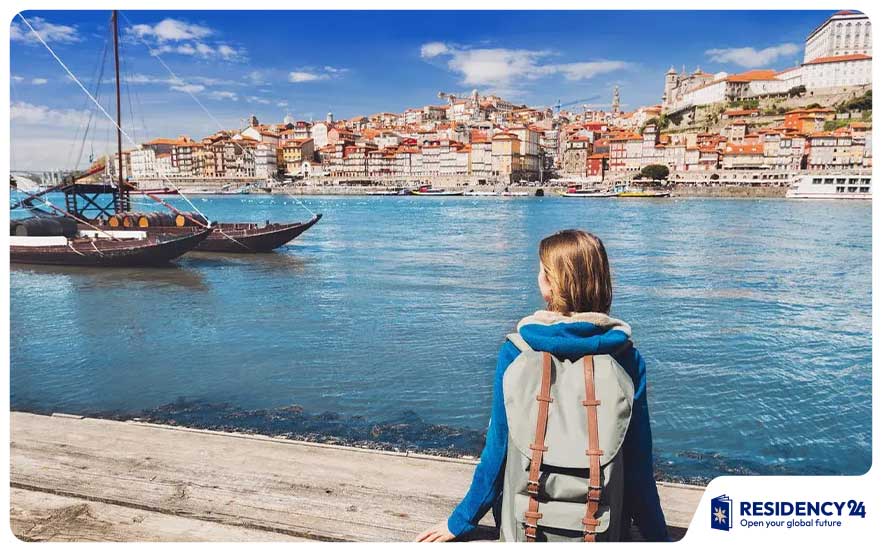
A digital nomad visa means a country gives a foreign remote worker legal permission to live there for a defined period while working online for an employer, clients, or a business based outside that country. It is not usually a local work visa because it does not allow the person to take a normal job with a local employer.
In practical terms, it fills the gap between tourism and immigration. A tourist visa is for short visits, while a digital nomad visa is for people who want to stay longer, rent accommodation, open local accounts where allowed, use local services, and work remotely without violating visitor rules.
Who Is a Digital Nomad Visa For?
A digital nomad visa is for people whose income is not tied to a physical workplace. The applicant usually works online and can prove that their money comes from outside the host country.
Common applicants include:
Remote employees working for a foreign company
Freelancers with international clients
Consultants working online
Startup founders running a company remotely
Software developers
Designers and marketers
Writers, editors, and content specialists
Coaches, trainers, and online educators
Ecommerce business owners
Investors or business operators who manage work remotely
The key point is income source. Most countries want to see that the applicant will not compete directly in the local job market.
Digital Nomad Visa vs Tourist Visa
A tourist visa is for travel, not long-term remote work. Some people work quietly while traveling on tourist status, but that does not always make it legal. A digital nomad visa gives a clearer legal basis for remote work and longer residence.
Feature | Tourist Visa | Digital Nomad Visa |
|---|---|---|
Main purpose | Short visit, tourism, family visit | Remote work and temporary residence |
Work permission | Usually not for work | Remote work for foreign income is usually allowed |
Typical stay | Shorter | Often 6 months to 2 years, depending on country |
Income proof | Usually not required | Commonly required |
Health insurance | Sometimes required | Usually required |
Local employment | Not allowed | Usually not allowed |
Tax impact | Usually limited for short stays | Can become relevant depending on duration |
Family inclusion | Limited | Often possible in some programs |
A tourist visa may be enough for a short trip. A digital nomad visa is more suitable when the person plans to stay for months, rent a home, keep working, and avoid immigration uncertainty.
Digital Nomad Visa vs Work Visa

A work visa usually allows a person to work for a local employer in the destination country. A digital nomad visa usually allows remote work for a foreign employer, foreign clients, or a business registered elsewhere.
This distinction matters. A person with a digital nomad visa may be allowed to live in Spain, Portugal, the UAE, or another country while working for overseas clients, but they may not be allowed to take a local full-time job unless the visa rules specifically permit it.
Feature | Digital Nomad Visa | Traditional Work Visa |
|---|---|---|
Employer location | Usually outside the host country | Usually inside the host country |
Local job market access | Usually restricted | Usually allowed |
Sponsorship | Often self-sponsored | Often employer-sponsored |
Best for | Remote workers and freelancers | Employees hired locally |
Income requirement | Common | Depends on job and employer |
Flexibility | Higher for remote work | Tied to employer or job type |
The wrong visa type can create legal problems. A remote worker should not assume that a digital nomad visa allows all types of work. The UAE shows how granular the categories get, and the Investor vs Partner vs Freelance Visa UAE routes each carry different work rights.
How Does a Digital Nomad Visa Work?
A digital nomad visa works by giving temporary legal residence to a person who can support themselves through remote income. The applicant usually applies through a consulate, immigration portal, or government platform, submits documents, pays fees, and waits for approval.
A typical process looks like this:
Choose the destination country.
Check nationality eligibility.
Confirm the minimum income requirement.
Prepare proof of remote work.
Get valid health insurance.
Prepare bank statements and tax records.
Obtain a police clearance certificate, if required.
Arrange accommodation, if required.
Submit the visa or residence application.
Enter the country and complete residence registration, if required.
Renew or leave before the permit expires.
Some countries issue a visa first and then require a residence permit after arrival. Others issue a residence permit directly. Spain, for example, describes its digital nomad route as a visa for foreign nationals who want to carry out remote work or professional activities for companies outside Spain using computer, telematic, or telecommunications systems.
Common Digital Nomad Visa Requirements
Requirements vary, but most digital nomad visa programs focus on the same question: can this person live here without needing local employment or public support?
Common requirements include:
Valid passport
Remote employment contract or client contracts
Proof of business ownership, if self-employed
Bank statements
Minimum monthly income
Health insurance
Clean criminal record
Accommodation address
Application form
Passport photos
Application fee
Tax identification or tax documents, in some countries
Marriage or birth certificates for family members
Income requirements are one of the biggest differences between countries. Some countries require modest proof of funds; others require a high monthly income that excludes many freelancers.
Minimum Income Requirements
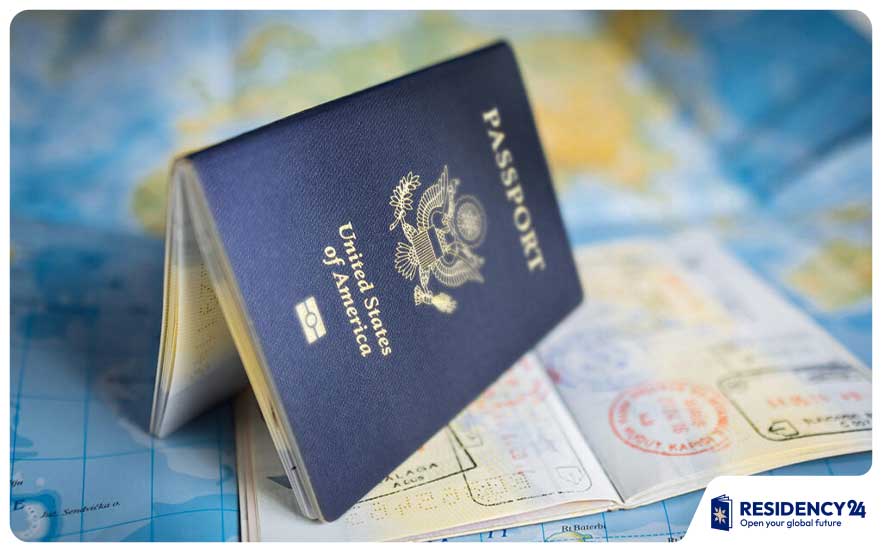
Most digital nomad visa programs require applicants to show a stable monthly income. This protects the host country from people arriving without enough money to support themselves.
Income may be accepted from:
Salary from a foreign employer
Freelance contracts
Consulting income
Dividends from a remote business
Business ownership income
Long-term service agreements
Recurring client payments
Bank statements usually need to show recent income, not only savings. Some countries accept savings as support; others focus mainly on regular monthly income. Abu Dhabi’s remote work visa guidance, for example, lists a bank statement for the last six months proving a deposit or monthly income of at least USD 3,500 or equivalent.
Examples of Digital Nomad Visa Programs
Digital nomad visas do not all work the same way. Some are short-stay remote work permits. Some are residence visas. Some can lead to longer residence. Others are simple one-year permits with limited renewal options.
Country or Destination | Common Route | General Structure |
|---|---|---|
UAE | Virtual work / remote work residence | Allows remote workers to live in the UAE while working for an employer outside the UAE |
Spain | Digital nomad visa / international teleworker residence | For remote work or professional activity for companies outside Spain |
Portugal | D8 / remote work visa routes | For remote workers with foreign income, with temporary-stay and residence pathways |
Croatia | Digital nomad temporary stay | Temporary residence for remote workers |
Greece | Digital nomad visa | Remote work residence for non-EU nationals |
Estonia | Digital nomad visa | Remote work visa for eligible remote workers |
Barbados | Welcome Stamp | Long-stay remote work arrangement |
The OECD noted that the first digital nomad visa schemes appeared in OECD countries in 2020 and that special remote-worker statuses have continued to spread.
UAE Digital Nomad Visa Example
The UAE has a virtual work residence route that allows a foreigner to live in the UAE while working remotely for an organization outside the country. Dubai’s GDRFA describes the virtual work residence permit as a one-year renewable permit for a foreigner working remotely for an organization outside the UAE, without needing a guarantor or host inside the country.
This type of visa can be relevant for remote workers who want Dubai or Abu Dhabi as a base while keeping their foreign job or client income. For applicants comparing remote-work residence, company setup, property purchase, or longer-term residency options in Dubai, Residency24 works in residency, company setup, property buying, and investment in Dubai.
The UAE route is useful because it offers legal UAE residency without a local employer. Applicants still need to check health insurance, income proof, passport validity, application fees, and emirate-specific requirements.
Spain Digital Nomad Visa Example
Spain’s digital nomad route is designed for foreign nationals who want to work remotely for companies located outside Spain. It can apply to salaried remote workers and self-employed professionals, but the rules differ depending on whether the person is employed or independent.
Spain also offers a residence application for international remote workers, and official guidance states that foreign nationals issued a residence visa under this route may remain in Spain for one year while being authorized to reside there.
Spain may be suitable for applicants who want access to a European lifestyle, Schengen travel, and a more formal residence pathway. However, applicants must review social security, tax, income, professional, and family rules carefully before applying.
Portugal Digital Nomad Visa Example
Portugal has remote-work visa routes commonly associated with the D8 digital nomad category. Official Portuguese visa information refers to temporary stay routes for foreign citizens who are not nationals of EU, EEA, or Swiss states and who want to carry out temporary dependent or independent professional activity in Portugal for less than one year.
Portugal-related consular and visa application materials also list remote-work and digital nomad categories, including temporary remote work and professional activity done remotely.
Portugal can be attractive for remote workers who want a European base, but it is not a simple “move and work online” decision. Applicants should check the current income threshold, tax residence consequences, appointment availability, accommodation requirements, and document legalization rules before planning the move.
Main Benefits of a Digital Nomad Visa
A digital nomad visa gives remote workers more stability than frequent tourist entries. It can make housing, banking, insurance, school access for children, and long-term planning easier, depending on the country.
The main benefits are:
Legal permission to stay longer
Clearer remote-work status
Less dependence on tourist visa renewals
Better ability to rent accommodation
Possible family inclusion
Access to local services, depending on country
More stable base for remote work
Potential path to longer residence in some countries
Better credibility with landlords, banks, and service providers
The biggest benefit is legal clarity. A person who lives somewhere for months while working online should not rely only on assumptions about tourist status.
Main Limitations and Risks
A digital nomad visa is not a perfect solution for every remote worker. It can be expensive, document-heavy, and tax-sensitive. Some programs do not lead to permanent residence, and some restrict local work.
Important limitations include:
Minimum income requirements
Health insurance requirements
Application fees
Tax residence risk
No local employment rights in many countries
Limited renewal period
Document legalization and translation costs
Slow processing in some countries
Housing proof requirements
Family income requirements
Possible banking difficulties
Changing immigration rules
Banking is a common friction point, and opening a Bank Account for Non-Residents in the UAE carries its own document and balance conditions, with comparable checks in most other destinations.
A digital nomad visa should be reviewed with a practical question: does the benefit of legal residence justify the cost, paperwork, and possible tax exposure?
Tax Rules for Digital Nomads

Tax is one of the most misunderstood parts of digital nomad visas. A visa gives immigration permission; it does not automatically decide where the person pays tax.
Tax may depend on:
Number of days spent in the country
Tax residence rules
Source of income
Employer location
Client location
Double tax treaties
Social security rules
Whether the person is employed or self-employed
Whether the employer creates a taxable presence
Local registration requirements
The OECD has highlighted that cross-border remote work can raise questions about taxable presence and international tax rules, especially when employees work from a country different from the employer’s location.
Before applying, remote workers should check whether the destination country treats them as tax residents after a certain number of days. This is especially important for employees, business owners, and high-earning freelancers.
Can You Bring Family Members?
Many digital nomad visa programs allow spouses and children, but the rules vary. Some countries require higher income for dependents. Others ask for family documents, health insurance for each person, birth certificates, marriage certificates, and school registration later.
Family applicants should check:
Whether dependents are allowed
Extra income required per family member
School access for children
Health insurance for each dependent
Accommodation size requirements
Document attestation rules
Whether the spouse can work
Renewal rules for dependents
For families, the visa decision should include cost of living, schooling, healthcare, housing, and long-term residence options. A country that works well for a solo freelancer may not be practical for a family of four.
Can You Work for Local Clients?
In many countries, a digital nomad visa does not allow unrestricted work for local employers or local clients. The purpose of the visa is usually to attract foreign income, not to open the local labor market.
Some countries allow limited local client work for self-employed applicants. Others prohibit it or require a separate work permit, company registration, tax registration, or professional license.
Before accepting local work, check:
Whether local employment is allowed
Whether local freelance work is allowed
Whether a tax number is required
Whether a business license is needed
Whether professional registration is required
Whether the visa becomes invalid if income shifts locally
In the UAE, serving local clients normally means holding a licence first, and the Free Zone vs. Mainland in Dubai choice determines who the business is allowed to invoice.
This is one of the most important compliance points. A digital nomad visa is not the same as permission to work in every possible way.
How Long Does a Digital Nomad Visa Last?
Digital nomad visas commonly last from six months to two years, with some countries offering renewals. The initial period depends on the country and visa type.
Common structures include:
Six-month remote work stay
One-year digital nomad visa
One-year visa followed by residence permit
Two-year residence permit
Renewable temporary residence
Residence route that may count toward long-term stay
The duration should be checked alongside renewal rules. A one-year visa may be enough for a temporary move, but not for someone seeking long-term residence, tax planning, or family relocation.
How Much Does a Digital Nomad Visa Cost?
The cost of a digital nomad visa includes more than the government application fee. Applicants often need insurance, translations, notarization, apostilles, police certificates, tax documents, travel, accommodation deposits, and professional advice.
Possible costs include:
Visa application fee
Residence card fee
Health insurance
Police clearance
Document translation
Apostille or legalization
Notary fees
Immigration adviser fees
Tax adviser fees
Flights
Accommodation deposit
Local registration fees
Family document costs
A low application fee does not always mean the move is cheap. Housing and tax impact can matter more than the visa fee itself, and for anyone choosing Dubai as a base the Cost of Living in Dubai in 2026 decides the real budget far more than the application fee does.
Is a Digital Nomad Visa a Path to Permanent Residence?
Some digital nomad visas can support a longer residence pathway, but many do not automatically lead to permanent residence or citizenship. The answer depends on the country’s immigration law and whether time spent on that visa counts toward long-term residence.
A visa may be:
Purely temporary
Renewable but not a settlement route
A residence permit that counts toward long-term residence
Convertible to another visa
Linked to tax residence and local registration
Available only for a limited number of years
In the UAE, for example, long-term status runs through a separate route such as the UAE Golden Visa rather than through the remote-work permit itself.
Applicants who want permanent residence should not choose a country only because it has a digital nomad visa. They should confirm whether the visa counts toward settlement, what language or integration rules apply, and whether long absences break residence continuity.
Best Candidates for a Digital Nomad Visa
A digital nomad visa works best for people with stable remote income, clean documents, flexible employers, and a clear reason to stay in one country longer than a tourist visa allows.
It is usually a good fit for:
Remote employees with written approval to work abroad
Freelancers with stable recurring clients
Business owners with foreign income
Consultants with online delivery
People who want legal residence for 6 to 24 months
Families who need school and housing stability
High earners who can meet income thresholds
Remote workers who want a base rather than constant travel
It may not be a good fit for people with unstable income, no tax plan, unclear employment status, or a need to work locally.
What to Check Before Applying
Before applying for a digital nomad visa, review immigration, tax, employer, and lifestyle factors together. The visa may look simple online, but a weak plan can create problems after arrival.
Use this checklist:
Is your nationality eligible?
Is your income high enough?
Does your employer allow work from abroad?
Will your income remain foreign-sourced?
Do you need tax advice?
Does the visa allow family members?
Can you afford housing in the destination?
Is health insurance accepted?
Are documents easy to legalize?
Can you renew the visa?
Does time on the visa count toward long-term residence?
Are you allowed to serve local clients?
Can you open a bank account?
What happens if your job or client contract ends?
The strongest applications usually have clear remote-work proof, stable income, complete documents, and a realistic plan for living costs.
Common Mistakes Digital Nomads Make
Many applicants treat a digital nomad visa as a travel product. It is better to treat it as a temporary residence decision.
Common mistakes include:
Applying without checking tax residence rules
Assuming tourist work is always legal
Believing the visa allows local employment
Ignoring employer approval
Underestimating health insurance requirements
Using savings when monthly income is required
Not preparing bank statements early
Forgetting document translation or legalization
Choosing a country only because it is popular online
Not checking renewal rules
Ignoring family and school costs
Not planning what happens if income changes
A digital nomad visa is useful when it matches the applicant’s real work model. It can create unnecessary complexity when the person only needs a short stay.
Conclusion
A digital nomad visa is a temporary residence option for remote workers who earn income from outside the country where they want to live. It gives more legal certainty than a tourist visa and is usually designed for employees, freelancers, consultants, entrepreneurs, and business owners who can work online. Most programs require proof of remote work, minimum income, health insurance, valid documents, and sometimes police clearance or accommodation proof. The main benefits are longer legal stay, clearer remote-work status, and better stability for housing and daily life. The main risks are tax exposure, local-work restrictions, renewal limits, and changing immigration rules. Before applying, remote workers should check not only the visa requirements but also tax, employer approval, family needs, cost of living, and long-term residence goals.