Renting vs. buying in the UAE depends on how long you plan to stay, your cash budget, income stability, lifestyle needs, mortgage eligibility, and whether you want property exposure as an investment. Renting is usually better for people who need flexibility, are new to the country, or do not want to commit a large down payment. Buying is often better for people planning to stay several years, who have stable income, enough upfront cash, and want to build equity or benefit from rental income and capital appreciation. The right choice is not universal; it depends on the total cost of renting, the full cost of ownership, and the risk of needing to move sooner than expected.
Is It Better to Rent or Buy in the UAE?
It is better to rent in the UAE if you need flexibility, are unsure about your job or location, or do not want to commit a large upfront amount. It is better to buy if you plan to stay long-term, can afford the down payment and fees, and want ownership, stability, or investment returns.
The UAE Government confirms that expatriates can buy property in the UAE, but property ownership rules differ from one emirate to another. In Dubai, foreign ownership is generally allowed in designated freehold areas, while other emirates have their own ownership structures and rules.
Renting in the UAE
Renting is the more flexible option. It allows residents to move between neighborhoods, change property size, adjust lifestyle, and avoid the upfront cost of buying. This is useful for people who are new to the UAE, changing jobs, testing different communities, or unsure how long they will stay.
Renting also shifts many long-term property risks to the landlord. The tenant does not carry market price risk, mortgage risk, major building ownership risk, or resale timing risk. However, rent can increase, lease renewals can be stressful, and tenants may have limited control over renovations, pets, furnishing, and long-term stability.
Buying in the UAE

Buying gives more control and can make sense for people who plan to stay in the UAE for several years. Instead of paying rent to a landlord, the owner builds equity through mortgage repayment or owns the property outright.
Buying may also appeal to investors. A property can generate rental income, benefit from capital appreciation, or support long-term residency planning if it meets the relevant visa conditions. However, ownership comes with costs that renters do not pay, including transfer fees, mortgage fees, service charges, maintenance, insurance, and resale costs.
For buyers comparing property ownership, residency, and investment planning in Dubai, Residency24 works in areas such as buying property, UAE residency, company setup, and Dubai investment structuring.
Renting vs Buying: Quick Comparison
Renting and buying solve different problems. Renting is mainly about flexibility. Buying is mainly about control, stability, and asset ownership.
Factor | Renting | Buying |
Upfront cost | Lower | Much higher |
Flexibility | High | Lower |
Long-term stability | Depends on landlord and lease | Higher |
Monthly cost | Rent only, plus utilities and fees | Mortgage, service charges, maintenance, insurance |
Market risk | Low | Higher |
Equity building | No | Yes |
Renovation control | Limited | Higher |
Best for | Short stays, new residents, uncertain plans | Long-term residents, investors, stable earners |
Exit process | Lease notice and move-out | Sale, transfer, mortgage settlement |
Investment potential | None directly | Rental yield and capital growth possible |
The decision should be based on total cost over time, not only monthly rent versus mortgage payment.
Upfront Costs of Renting
Renting in the UAE usually requires less upfront capital than buying, but tenants still need to prepare for several initial costs. In Dubai, tenancy contracts are commonly registered through Ejari, Dubai’s official rental registration system. Dubai Land Department describes Ejari as the service that allows customers to register or renew a tenancy contract in Dubai.
Typical upfront rental costs may include:
Security deposit
First rent payment
Agency commission
Ejari registration
Utility connection deposit
Moving costs
Furnishing, if the property is unfurnished
Chiller or district cooling deposits, where applicable
The rent payment structure also matters. Some landlords accept monthly payments, but many still prefer one, two, four, or six cheques. Fewer cheques may sometimes reduce rent, but they increase upfront cash pressure.
Upfront Costs of Buying
Buying property in the UAE requires a much larger cash commitment. Even if the buyer uses a mortgage, the bank will not usually finance the full purchase price.
Typical upfront buying costs include:
Down payment
Property transfer fee
Real estate agency commission
Trustee or registration office fee
Mortgage arrangement fee
Mortgage registration fee
Valuation fee
Life insurance
Property insurance
Service charge adjustment
Conveyancing or legal support
Moving and furnishing costs
In Dubai, market guides commonly identify the Dubai Land Department transfer fee as 4% of the property value, in addition to other registration and purchase-related costs.This is why buyers should budget beyond the down payment.
Monthly Cost Comparison
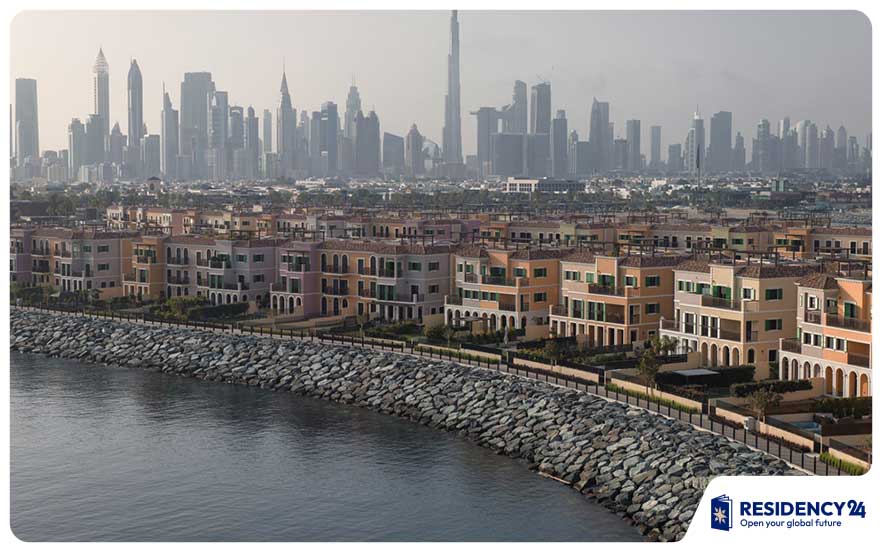
A mortgage payment can sometimes look similar to rent, but ownership has extra monthly and annual costs. Comparing only rent and mortgage is incomplete.
A renter usually pays:
Rent
Utilities
Internet
Cooling, where applicable
Minor tenant responsibilities under the lease
An owner may pay:
Mortgage installment
Service charges
Maintenance
Property insurance
Life insurance for mortgage
Utilities
Cooling
Repair costs
Owners’ association-related charges
Vacancy costs, if the property is rented out
A buyer should calculate the full annual cost and divide it monthly. A property with a low mortgage payment but high service charges may not be cheaper than renting.
How Long Should You Stay Before Buying Makes Sense?
Buying usually makes more sense when the owner plans to hold the property for several years. The reason is simple: buying and selling both involve transaction costs. If the owner sells too soon, transfer fees, agency fees, mortgage fees, and market movement can reduce or eliminate the benefit of ownership.
As a practical rule, buying becomes more reasonable when:
You expect to stay at least 5 years
Your income is stable
You have enough cash after paying upfront costs
The property fits your medium-term lifestyle
You are comfortable with market risk
You can rent it out if you move
You are not relying on a quick resale profit
Shorter stays usually favor renting unless the property is bought mainly as an investment and the numbers work independently of personal use.
Mortgage Considerations
Most buyers who do not purchase in cash need a mortgage. Mortgage approval depends on income, credit profile, debt burden, age, employment type, property value, bank policy, and down payment.
A mortgage buyer should consider:
Loan-to-value ratio
Down payment requirement
Interest or profit rate
Fixed or variable rate
Bank arrangement fee
Valuation fee
Life insurance
Early settlement fee
Monthly payment after the fixed period
Whether the property is approved by the bank
Mortgage pre-approval should come before making a serious offer. A buyer should not assume that the bank will approve the full amount or value the property at the agreed price.
Renting Gives Flexibility
Flexibility is the strongest reason to rent. This matters in the UAE because many residents move for jobs, school catchment areas, family size, commute changes, or lifestyle preferences.
Renting is useful when:
You are new to the UAE
You do not know which neighborhood suits you
Your job may change
Your family size may change
You want to test a community before buying
You may leave the UAE within a few years
You do not want exposure to property market risk
You want to keep cash liquid
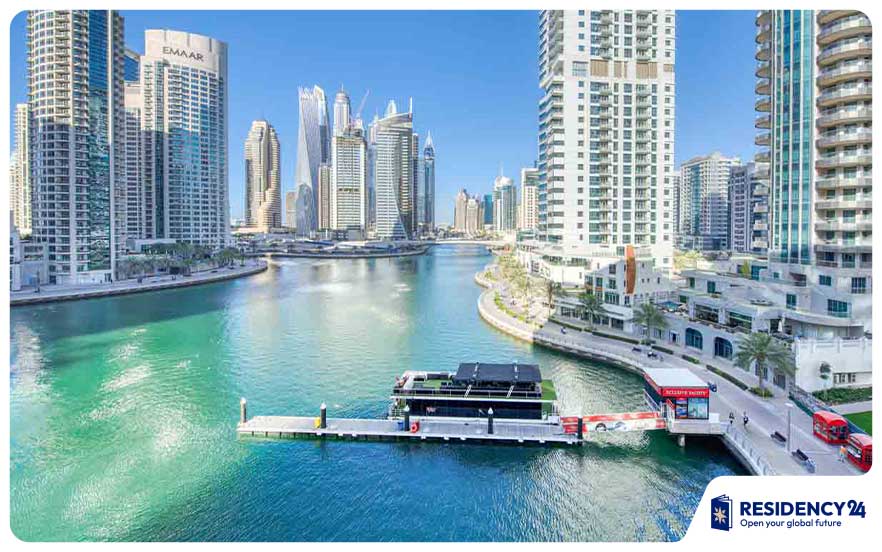
A tenant can move from Dubai Marina to Dubai Hills, from Abu Dhabi city to Yas Island, or from a one-bedroom apartment to a villa without selling an asset. That flexibility has value.
Buying Gives Stability
Buying is stronger for stability. Owners are not exposed to landlord decisions, renewal negotiations, or unexpected move-out requests in the same way tenants are. They can also renovate, furnish, and plan around the property more confidently.
Buying is useful when:
You know where you want to live
Your children are settled in nearby schools
Your job or business is stable
You want predictable long-term housing
You want to build equity
You want rental income potential
You want to hedge against rent increases
You are comfortable with ownership responsibilities
Ownership can also support long-term financial planning. However, it should not be treated as risk-free. Property prices and rents can move in both directions.
Renting vs Buying for Families
Families often value stability, school access, space, and community. Buying can make sense if the family has chosen a long-term neighborhood and expects to remain in the UAE for several years.
Renting may be better for families that are still testing locations. School admissions, commute time, building quality, community facilities, and access to parks or clinics may look different after living in the area for a few months.
Families should compare:
School location
Commute time
Parking
Maintenance quality
Community facilities
Noise and construction nearby
Future family size
Rent increase risk
Mortgage affordability
Exit options if relocation happens
A family home should be chosen for practical daily life, not only investment yield.
Renting vs Buying for Investors
For investors, the decision is not about personal lifestyle. It is about yield, capital growth, liquidity, risk, and management effort.
A property investor should calculate:
Gross rental yield
Net rental yield after service charges and costs
Vacancy risk
Maintenance reserve
Management fees
Financing cost
Transaction costs
Expected holding period
Exit liquidity
Supply pipeline in the area
Tenant demand
Some 2026 Dubai market reports indicate continued rental strength but also warn that future supply and handovers may affect price and rent dynamics in certain areas. Recent reporting has also noted oversupply pressure as a risk for Dubai despite strong broader UAE real estate momentum.
An investment property should be tested under conservative assumptions. The numbers should still work if rent is lower than expected or the unit is vacant for a period.
Rent Increases and Lease Renewal
Renting can become less predictable when rents rise. In Dubai, rent changes are linked to tenancy rules and market benchmarks, but tenants still need to manage renewal timelines and documentation.
Tenants should pay attention to:
Lease renewal notice period
Rent increase notice
Ejari registration
Number of cheques
Maintenance obligations
Early termination clause
Subletting rules
Occupant registration requirements
Handover condition
Security deposit refund process
Dubai Land Department’s Ejari service confirms that tenants can register or renew tenancy contracts and receive the e-contract registration certificate through official channels. A properly registered lease helps protect both tenant and landlord rights.
Service Charges and Maintenance for Buyers
Service charges are one of the most important ownership costs in the UAE. They are paid by property owners for the maintenance and management of shared areas and building facilities.
Service charges can cover:
Security
Cleaning
Common area electricity
Building maintenance
Pool and gym upkeep
Landscaping
Elevators
Facilities management
Reserve fund
Master community charges
A buyer should review service charges before purchase. Two properties with similar prices can have very different annual ownership costs. High service charges can reduce rental yield and increase the real cost of living in the property.
Buying Off-Plan vs Renting
Off-plan property can be attractive because payment plans may reduce short-term cash pressure compared with buying a completed property. However, off-plan ownership does not solve housing needs immediately unless the buyer already has somewhere to live.
A buyer who purchases off-plan may still need to rent until handover. That means they may pay rent and developer installments at the same time.
Off-plan buyers should consider:
Developer reputation
Handover timeline
Payment plan
Escrow account
Construction progress
Service charge expectations
Resale restrictions
Mortgage availability near completion
Rental demand after handover
Off-plan can work for investors or future homeowners, but it should be treated differently from buying a ready property for immediate use.
Buying as a Non-Resident
Non-residents can buy property in designated areas in the UAE, depending on the emirate and ownership rules. Dubai is one of the most accessible markets for foreign buyers, especially in freehold areas.
Non-resident buyers should consider:
Higher mortgage down payment requirements
Bank account limitations
Source of funds documentation
Remote transaction risks
Property management needs
Tenant management
Service charge payment
Tax implications in their home country
Currency risk
Exit planning
A non-resident buyer should not rely only on projected rental income. The property should be manageable from abroad, with clear documentation and a reliable local process.
Lifestyle Factors
The rent-or-buy decision is partly financial and partly practical. A cheaper property may not be the right choice if it creates a long commute, poor school access, or daily inconvenience.
Lifestyle factors include:
Commute time
School access
Public transport
Parking
Building quality
Community facilities
Noise
Construction nearby
Pet rules
Furnishing needs
Access to supermarkets and clinics
Future family plans
Renting lets you test these factors before committing. Buying is better once you are confident the location fits your life.
When Renting Is Better
Renting is usually better when flexibility and cash preservation matter more than ownership.
Renting is likely the better choice if:
You may leave the UAE soon
Your job is uncertain
You are new to the country
You do not know your preferred area
You cannot afford the full buying costs
You want to avoid maintenance risk
You do not want a mortgage
You prefer to invest your cash elsewhere
You expect your space needs to change
You are uncomfortable with property market risk
Renting is not wasted money if it prevents a poor purchase. It can be the safer option while you learn the market.
When Buying Is Better
Buying is usually better when the buyer has stable income, long-term plans, and enough cash to handle the upfront and ongoing costs.
Buying is likely the better choice if:
You plan to stay in the UAE for several years
You have stable income or business revenue
You can afford the down payment and fees
You have emergency savings after purchase
You know the area well
You want long-term housing stability
You want exposure to property growth
You can rent the property if you move
You understand service charges and maintenance
You are comfortable with resale risk
Buying should be a planned financial decision, not a reaction to rising rent.
A Simple Rent vs Buy Calculation
A practical rent-versus-buy calculation should compare the total cost of each option over the expected holding period.
For renting, calculate:
Annual rent
Security deposit
Agency fee
Ejari or registration fee
Utility deposits
Moving costs
Expected rent increases
For buying, calculate:
Down payment
Purchase fees
Mortgage payments
Interest cost
Service charges
Maintenance
Insurance
Property value change
Rental income, if applicable
Selling costs
Cash tied up in the property
Then compare the two over 3, 5, and 10 years. If buying only works under very optimistic price growth assumptions, renting may be safer.
Common Mistakes to Avoid
Many people make the rent-or-buy decision based on emotion, pressure, or simple monthly comparisons. That can lead to expensive mistakes.
Common mistakes include:
Comparing rent only with mortgage payment
Forgetting transfer fees and service charges
Buying before understanding the neighborhood
Ignoring future job or visa uncertainty
Underestimating maintenance costs
Assuming property prices always rise
Not checking mortgage pre-approval
Buying a property that is hard to rent or sell
Ignoring commute and school access
Not budgeting for vacancy if investing
Overstretching cash for the down payment
Renting without registering the tenancy properly
A good decision should still make sense under conservative assumptions.
Conclusion

Renting is better in the UAE when flexibility, lower upfront cost, and short-term mobility matter most. Buying is better when the buyer has long-term plans, stable income, enough upfront cash, and a clear reason to own property. Renting protects liquidity and allows residents to test locations before committing. Buying can provide stability, equity, rental income, and long-term investment exposure, but it also brings transaction costs, service charges, mortgage obligations, maintenance, and market risk. The best decision comes from comparing the full cost of renting and owning over the expected stay period, not from looking only at monthly rent or mortgage payments.