Average rental yield in Dubai is one of the main figures investors use to compare property income potential. In simple terms, rental yield shows how much annual rent a property can generate compared with its purchase price. Dubai generally offers stronger gross rental yields than many mature global property markets, especially in apartment communities where demand is supported by tenants, new residents, business travelers, and short-term accommodation demand. As a practical market range, many Dubai apartments sit around 6% to 8% gross rental yield, while villas often sit lower, usually around 4% to 6.5%, depending on location, entry price, unit size, service charges, and tenant demand. Recent market reports place Dubai’s average rental yield around the high-6% to low-7% range, with affordable apartment communities often producing the highest percentage returns.
What Is the Average Rental Yield in Dubai?
The average rental yield in Dubai is commonly around 6% to 8% gross for apartments and around 4% to 6.5% gross for villas. Smaller apartments in affordable or mid-market communities usually produce higher rental yields, while luxury villas and prime waterfront properties often produce lower percentage yields but may offer stronger capital appreciation.
A property with a 7% gross rental yield means the annual rent equals 7% of the property’s purchase price. For example, if an apartment costs AED 1,000,000 and rents for AED 70,000 per year, its gross rental yield is 7%.
Rental Yield Meaning in Dubai Real Estate
Rental yield is the annual rental income of a property expressed as a percentage of its value. It helps investors compare properties with different prices, locations, sizes, and rent levels.
The formula is simple:
Gross rental yield = Annual rent ÷ Property purchase price × 100
If a studio in JVC costs AED 700,000 and rents for AED 56,000 per year, the gross rental yield is:
56,000 ÷ 700,000 × 100 = 8%
This does not mean the investor keeps the full 8%. Gross yield does not include service charges, maintenance, vacancy, management fees, mortgage cost, furnishing, insurance, or transaction costs.
Gross Rental Yield vs Net Rental Yield
Gross rental yield is useful for quick comparison, but net rental yield gives a more realistic picture. Net yield shows what remains after recurring costs are deducted from rental income.
Net rental yield = Net annual rental income ÷ Total property cost × 100
Net annual rental income usually deducts:
Service charges
Property management fees
Maintenance and repairs
Vacancy allowance
Insurance
Letting fees
Furnishing replacement, if furnished
Holiday home operating costs, if short-term rental
Mortgage interest, if financed
A Dubai apartment may show a 7.5% gross yield but deliver 5% to 6% net yield after costs. In high-service-charge buildings, the gap between gross and net yield can be larger.
Average Rental Yield by Property Type in Dubai
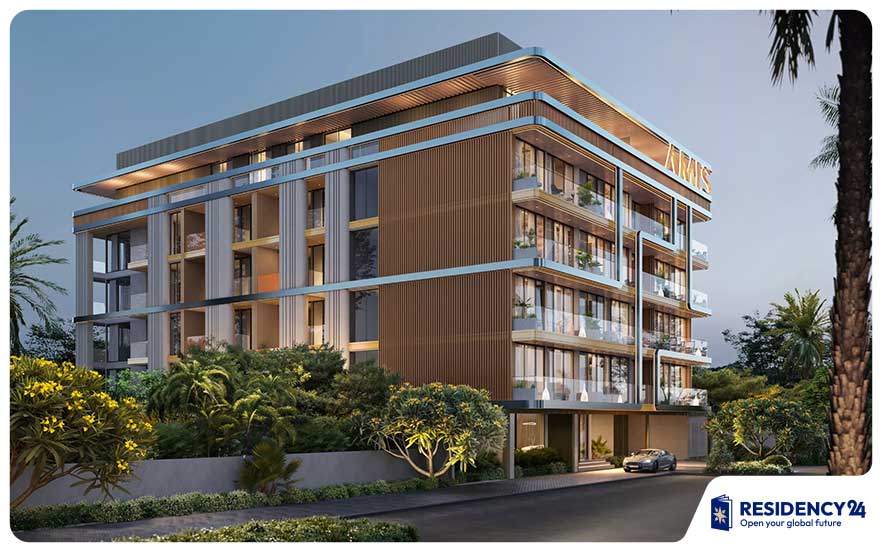
Apartments usually generate higher rental yields than villas in Dubai because entry prices are lower, tenant demand is broader, and smaller units can rent efficiently relative to purchase price. Villas often have higher total rent, but their purchase prices are also much higher.
Property Type | Typical Gross Rental Yield | General Investor Profile |
Studio apartments | 7% to 9% | Income-focused investors seeking lower entry price |
1-bedroom apartments | 6.5% to 8.5% | Balanced rental demand and resale liquidity |
2-bedroom apartments | 5.5% to 7.5% | Couples, small families, and long-term tenants |
3-bedroom apartments | 4.5% to 6.5% | Family tenants and premium communities |
Townhouses | 4.5% to 6.5% | Families seeking space and privacy |
Villas | 4% to 6.5% | Long-term family demand and capital appreciation |
Luxury waterfront homes | 3.5% to 5.5% | Wealth preservation and lifestyle-led investment |
Bayut’s 2025 Dubai sales market report found that the highest apartment rental returns were generally in the 8% to 10% range, while the best-performing villa communities had average ROIs above 6%.
Highest Rental Yield Areas in Dubai
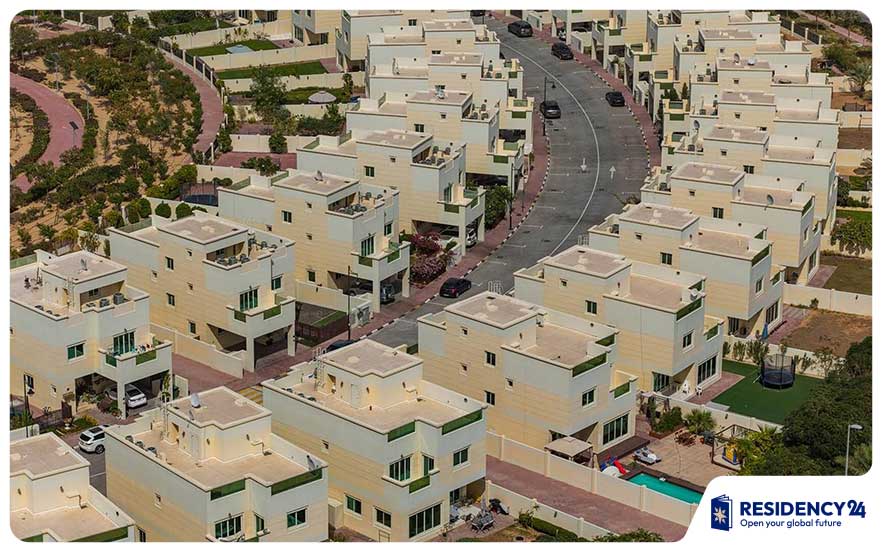
The highest rental yield areas in Dubai are often affordable and mid-market apartment communities. These areas attract tenants because rents are more accessible, transport links are practical, and the purchase price is still low enough to support strong percentage returns.
Area | Common Property Type | Typical Yield Profile | Why It Can Perform Well |
International City | Studios and 1-bedroom apartments | High | Low entry price and steady tenant demand |
Dubai Investment Park | Apartments | High | Affordable pricing and industrial/business access |
Discovery Gardens | Apartments | High | Metro access, practical layouts, and mid-market rents |
Jumeirah Village Circle | Studios, 1-bedroom, townhouses | Medium to high | Large tenant base and broad investor activity |
Dubai Silicon Oasis | Apartments | Medium to high | Value pricing and access to academic/business zones |
Dubai Sports City | Apartments | Medium to high | Lower purchase prices and tenant demand from nearby districts |
Business Bay | Apartments | Medium | Central location and business-travel demand |
Jumeirah Lake Towers | Apartments | Medium | Metro access and Marina-adjacent location |
Dubai Marina | Apartments | Medium | Strong liquidity, tourism appeal, and established demand |
Downtown Dubai | Apartments | Medium to lower | High rent but higher entry price and service charges |
Palm Jumeirah | Apartments and villas | Lower to medium | Premium rents but high capital value |
Arabian Ranches | Villas | Lower to medium | Stable family demand but higher purchase prices |
Property Finder’s 2025 investment report placed Dubai’s average rental yield at 7.4%, with affordable communities reaching up to 9.4%. Bayut also reported International City, Dubai Investment Park, and Discovery Gardens as strong apartment ROI areas, with International City reaching 10.3% in its 2025 data.
Why Affordable Areas Often Have Higher Rental Yields
Affordable areas often produce higher rental yields because the purchase price is relatively low compared with annual rent. A budget apartment may not generate a large absolute rental amount, but it can produce a strong percentage return.
For example, a studio bought for AED 550,000 and rented for AED 45,000 generates a higher yield than a luxury apartment bought for AED 3,000,000 and rented for AED 180,000.
The first property produces:
45,000 ÷ 550,000 × 100 = 8.18% gross yield
The second property produces:
180,000 ÷ 3,000,000 × 100 = 6% gross yield
This is why income-focused investors often compare areas such as JVC, International City, Discovery Gardens, Dubai Silicon Oasis, and Dubai Investment Park before looking at prime luxury districts.
Why Prime Areas Can Have Lower Yields
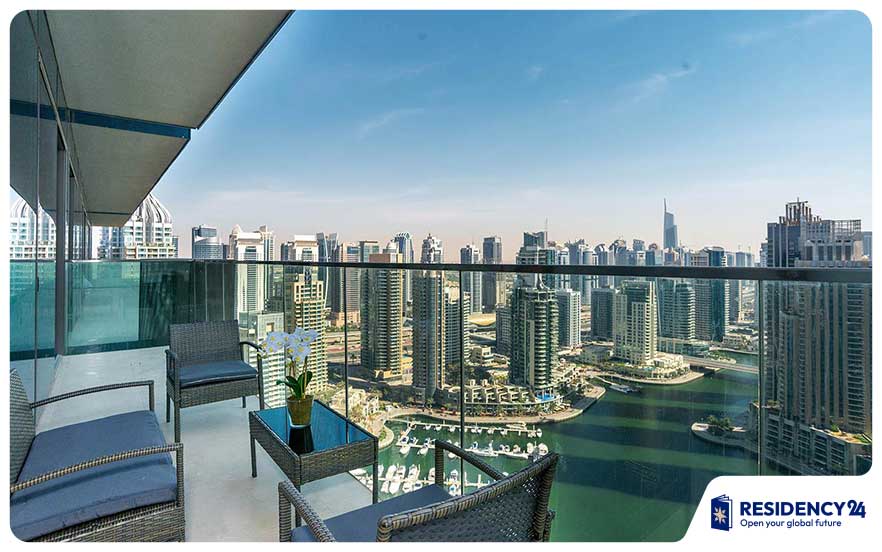
Prime areas such as Downtown Dubai, Palm Jumeirah, Dubai Marina, and Jumeirah Beach Residence can generate high annual rents, but property prices are also high. This often compresses the rental yield percentage.
Lower yield does not automatically mean poor investment. Prime properties may offer:
Stronger resale liquidity
Better capital appreciation potential
Easier tenant attraction
Premium short-term rental demand
Higher-quality infrastructure
Stronger global recognition
More resilient long-term desirability
For investors comparing Dubai rental yield, the key question is not only “Which area has the highest yield?” It is also “Which property offers the best balance between income, resale value, risk, and long-term demand?”
Apartment Rental Yield in Dubai
Apartments are usually the main choice for rental yield investors in Dubai. Studios and 1-bedroom apartments often produce the strongest percentage returns because they attract single professionals, couples, new residents, short-term renters, and tenants looking for manageable monthly rent.
Apartment yields are usually strongest when the property has:
Efficient layout
Reasonable service charges
Good building maintenance
Parking
Public transport access
Nearby supermarkets and services
Strong tenant demand
Competitive purchase price
A studio with a poor layout, weak building management, or high service charges may underperform even in a high-yield area. Building-level due diligence matters as much as neighborhood choice.
Villa Rental Yield in Dubai
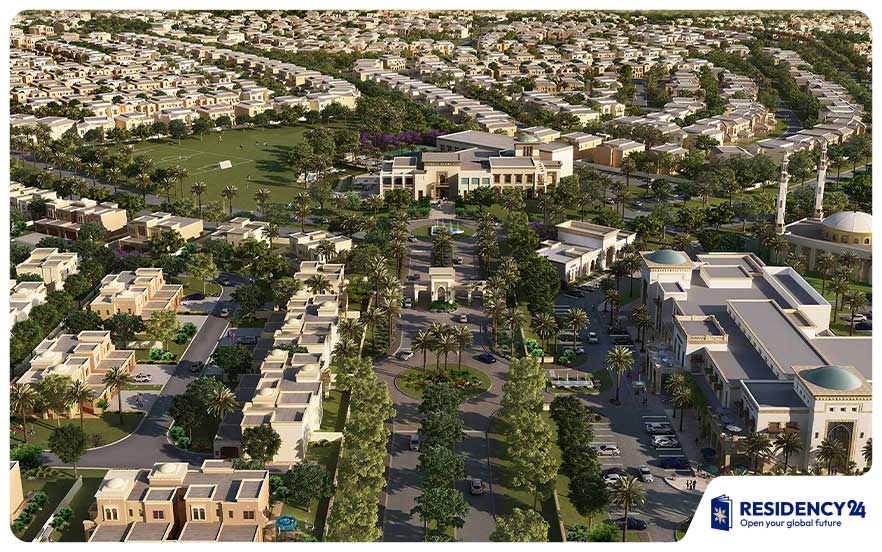
Villa rental yield in Dubai is usually lower than apartment yield, but villas can still be attractive for investors who want stable family tenants and long-term capital growth. Villa communities such as Arabian Ranches, Dubai Hills Estate, The Springs, Mudon, Jumeirah Village Circle, and DAMAC Hills 2 can attract families seeking more space.
Villas often have stronger demand from tenants who stay longer, especially families with children in nearby schools. This can reduce vacancy and turnover costs.
However, villas also involve higher maintenance exposure. Investors should check:
AC condition
Roof and waterproofing
Landscaping cost
Community fees
Pool maintenance, if applicable
Pest control
External paint and structural condition
Tenant maintenance expectations
A villa with a 5.5% gross yield may still be a good investment if vacancy is low, tenant quality is stable, and capital appreciation potential is strong.
Short-Term Rental Yield vs Long-Term Rental Yield
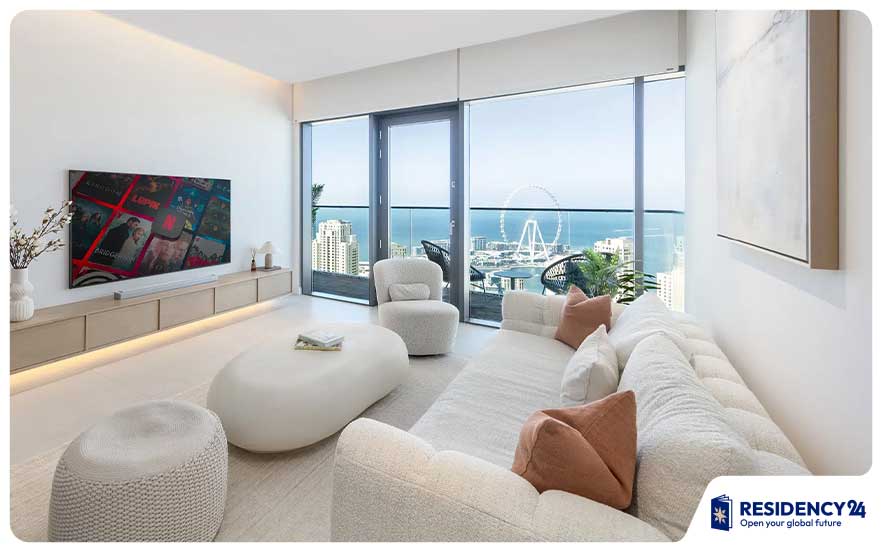
Short-term rentals can generate higher gross income than annual leases in some Dubai areas, especially in Dubai Marina, Downtown Dubai, Palm Jumeirah, JBR, Business Bay, and selected holiday-friendly buildings. However, higher revenue does not always mean higher net yield.
Short-term rental costs can include:
Holiday home permit
Furnishing and styling
Utilities
Cleaning
Guest supplies
Platform fees
Property management
Higher maintenance
More frequent furniture replacement
Seasonal vacancy
Dynamic pricing tools
Long-term rental is usually simpler and more predictable. Short-term rental may be better for investors who can manage hospitality operations or hire a reliable operator.
Dubai’s Department of Economy and Tourism requires holiday homes to be registered and approved before listing, so investors should confirm compliance before assuming short-term rental income.
What Affects Rental Yield in Dubai?
Rental yield in Dubai changes according to the relationship between rent, purchase price, and ongoing cost. Two apartments in the same area can produce different yields if one has a better view, lower service charges, better furnishing, or stronger building management.
The main factors are:
Purchase price
Annual rent
Service charges
Unit size
Layout efficiency
Building age
Location inside the community
Parking availability
Metro or road access
Nearby schools and offices
Tenant demand
Furnishing quality
Vacancy rate
Management fees
Maintenance condition
Mortgage cost
Off-plan payment structure
Handover timing
Dubai Land Department’s Rental Index is useful for checking rental benchmarks by property type and location. It does not replace market comparison, but it helps investors understand rental reference levels before buying or renewing leases.
How to Calculate Net Rental Yield Before Buying
A realistic Dubai rental yield calculation should include all ownership and operating costs. Investors often overestimate income when they look only at advertised rent. If you are planning to buy a house in Dubai, comparing rental yield alongside service charges, maintenance costs, and long-term resale potential can help you make a more informed investment decision.
Use this structure:
Item | Example |
Purchase price | AED 1,000,000 |
Annual rent | AED 75,000 |
Gross yield | 7.5% |
Service charges | AED 12,000 |
Maintenance allowance | AED 4,000 |
Property management | AED 3,750 |
Vacancy allowance | AED 3,000 |
Net rental income | AED 52,250 |
Net yield | 5.22% |
In this example, the property looks like a 7.5% investment at first, but the net yield is closer to 5.22%. This is still reasonable if the location is liquid, tenant demand is stable, and resale potential is acceptable.
Good Rental Yield in Dubai
A good rental yield in Dubai depends on property type, area, investment goal, and risk tolerance. For most investors, the following ranges are practical:
Yield Level | Interpretation |
Below 4% gross | Usually weak for income unless capital appreciation is the main goal |
4% to 5.5% gross | Common in prime or villa communities |
5.5% to 7% gross | Balanced and acceptable in many established areas |
7% to 8.5% gross | Strong for apartments if costs are controlled |
Above 8.5% gross | High-yield range, often in affordable areas or smaller units |
A high gross yield should be checked carefully. Sometimes high yield reflects low purchase price, but sometimes it reflects building risk, weaker resale demand, difficult tenant profile, or high future maintenance.
Example Rental Yield Calculations in Dubai
Example 1: Studio Apartment in a High-Yield Area
A studio apartment costs AED 600,000 and rents for AED 50,000 per year.
50,000 ÷ 600,000 × 100 = 8.33% gross rental yield
This may be attractive for an income-focused investor. The final decision should depend on service charges, vacancy, building quality, and resale liquidity.
Example 2: 1-Bedroom Apartment in Business Bay
A 1-bedroom apartment costs AED 1,300,000 and rents for AED 90,000 per year.
90,000 ÷ 1,300,000 × 100 = 6.92% gross rental yield
This is a balanced profile because Business Bay can attract business tenants, young professionals, and short-term stays, but the net yield depends heavily on service charges.
Example 3: Villa in a Family Community
A villa costs AED 3,800,000 and rents for AED 210,000 per year.
210,000 ÷ 3,800,000 × 100 = 5.52% gross rental yield
The percentage is lower than many apartments, but the property may attract long-term family tenants and offer better capital appreciation if the community remains in demand.
Highest Yield Does Not Always Mean Best Investment
The highest rental yield in Dubai is not always the best investment choice. A property can show a strong yield because the price is low, but that low price may reflect weak building quality, poor maintenance, oversupply, limited resale demand, or tenant instability.
Before choosing a high-yield property, check:
Is the building well managed?
Are service charges reasonable?
Is tenant demand stable?
Are there many similar vacant units?
Is the area improving or declining?
Is the property easy to resell?
Is the rent realistic or inflated?
Are there future handovers that may increase supply?
Is the unit suitable for long-term rent if short-term rental slows?
For investors comparing rental yield as part of property purchase, residency, or long-term investment planning in Dubai, Residency24 works in property buying, company setup, residency, and investment in Dubai.
Ready Property vs Off-Plan Property for Rental Yield
Ready properties are easier to evaluate for rental yield because the investor can compare actual rents, service charges, building quality, vacancy, and tenant demand. Off-plan properties require more assumptions.
Ready property advantages:
Immediate rental income
Clear rent comparison
Known service charges
Existing building condition
Easier mortgage valuation
Lower handover uncertainty
Off-plan property advantages:
Lower initial payment in some projects
Potential capital appreciation before handover
Newer building quality
Flexible payment plans
Access to emerging communities
For yield-focused investors, ready property is usually easier to analyze. Off-plan property may be suitable when the investor is also targeting capital growth, payment flexibility, or early entry into a developing area.
Service Charges and Their Impact on Yield
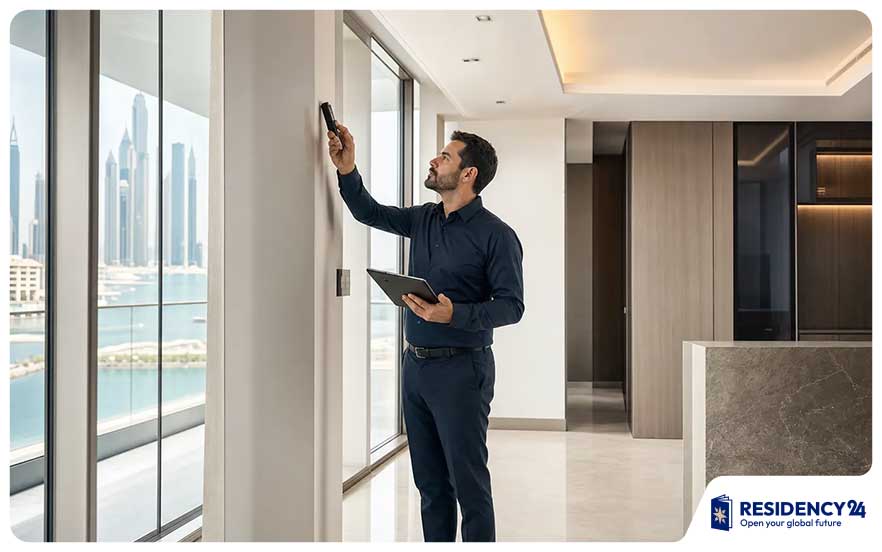
Service charges can significantly reduce net rental yield in Dubai. Two apartments with the same rent and purchase price may produce different net returns if one building has much higher annual service charges.
High-service-charge buildings are common in areas with:
Luxury amenities
Hotel-style facilities
Large pools and gyms
Waterfront maintenance
Premium common areas
Branded residences
High-rise towers with complex systems
Before buying, investors should request the latest service charge information and compare it with similar buildings. A building with high rent but excessive service charges may produce weaker net yield than a simpler building in a less famous area.
Rental Yield and Capital Appreciation
Rental yield measures income, while capital appreciation measures property value growth. A strong Dubai property investment should be judged by both. Many international investors also consider residency in Dubai when evaluating property investments, as their long-term relocation or lifestyle plans may influence the type of property they choose.
High-yield areas can be good for cash flow, but prime and master-planned communities may offer stronger long-term price growth. This is why investors often choose between two strategies:
Income strategy: Focus on rental yield, lower entry price, and tenant demand.
Growth strategy: Focus on location quality, future infrastructure, scarcity, and resale value.
A balanced strategy looks for both acceptable rental yield and credible appreciation potential. For many investors, a property with 6.5% gross yield in a strong, liquid area may be better than a property with 9% gross yield in a weaker building.
Main Risks Affecting Dubai Rental Yield
Dubai rental yield can change when rents, prices, supply, regulations, or tenant demand change. Investors should not assume current rent will continue unchanged.
Key risks include:
New supply in the same area
Rent correction after rapid growth
Higher service charges
Maintenance surprises
Tenant vacancy
Building quality issues
Mortgage rate changes
Short-term rental restrictions
Weak resale demand
Overpaying during a hot market
Reuters reported in 2025 that Fitch expected Dubai property prices to face downward pressure through late 2025 and 2026 due to increased housing supply after strong price growth. This does not mean every area or property will fall equally, but it shows why investors should stress-test rental yield and not rely on optimistic assumptions.
Practical Checklist Before Buying for Rental Yield
Before buying a rental property in Dubai, investors should review the income, cost, and exit position together.
Use this checklist:
Confirm realistic annual rent from comparable units.
Check Dubai Land Department rental benchmarks.
Calculate gross and net rental yield.
Review service charges.
Inspect building maintenance and common areas.
Compare vacancy in the same building.
Check parking and access.
Review tenant demand by unit type.
Estimate management and maintenance costs.
Confirm short-term rental rules if relevant.
Compare resale transactions.
Avoid relying only on developer or broker projections.
Calculate conservative, normal, and optimistic yield scenarios.
The best rental yield decision is based on verified numbers, not only advertised returns.
Conclusion

Average rental yield in Dubai is usually around 6% to 8% gross for apartments and around 4% to 6.5% gross for villas, although the actual return depends on location, purchase price, rent, service charges, vacancy, and management quality. Affordable and mid-market apartment communities often deliver the strongest percentage yields, while prime areas may offer lower yields but better liquidity and long-term capital appreciation. A good Dubai rental yield should be judged on net income, not only gross rent. Investors should compare area-level demand, building-level costs, unit layout, service charges, tenant profile, and resale prospects before buying. The strongest investment is rarely the one with the highest advertised yield; it is the property where income, risk, and exit value are properly balanced. For qualifying investors, certain real estate investments may also be considered as part of the eligibility assessment for a Dubai Golden Visa, provided all legal requirements and investment criteria are met.